


Introduction
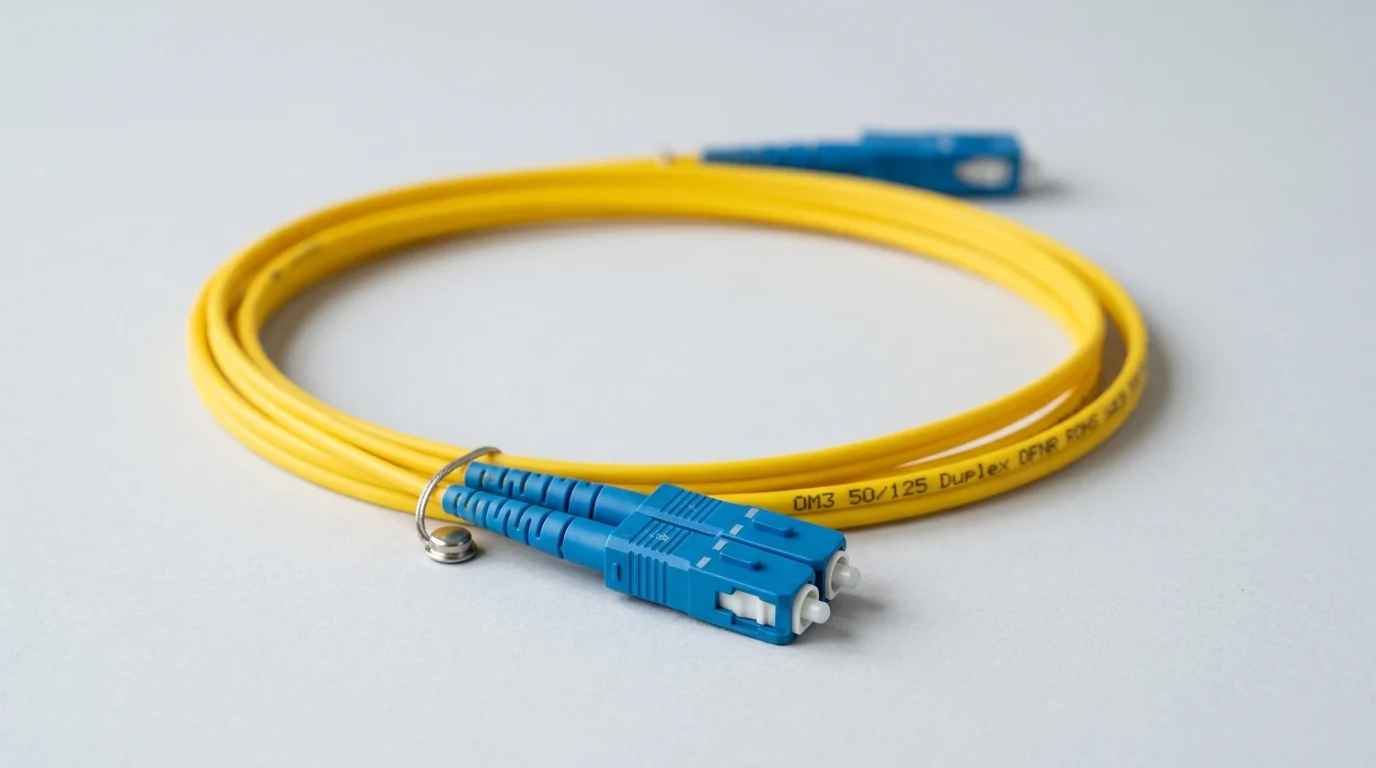
In FTTH rollouts, small optical components often determine whether installations move quickly or stall in costly rework. Among them, the fiber patch cord plays a direct role in link stability, activation speed, and ongoing maintenance demands, especially when networks scale across thousands of homes. This article explains how reliable patch cords and pigtails support faster provisioning by reducing failure points at the physical layer. It also outlines the performance factors that matter most, including insertion loss, return loss, durability, and handling quality, so readers can better evaluate components that improve deployment efficiency and long-term network performance.
Why Fiber Patch Cord Reliability Affects FTTH Deployment Speed
In large-scale Fiber-to-the-Home (FTTH) networks, the physical layer's integrity dictates the overall deployment velocity and long-term operational expenditure. While optical line terminals (OLTs) and passive splitters represent significant capital investments, the seemingly humble fiber patch cord often serves as the critical bottleneck in network activation. Industry data indicates that approximately 60% to 70% of network faults in access networks occur at the drop cable or patch cord level, primarily due to improper handling, inferior component quality, or environmental degradation.
When a fiber patch cord fails during the provisioning phase, it necessitates costly truck rolls and troubleshooting hours that severely impact the cost-per-subscriber metric. Ensuring high reliability in these optical assemblies enables technicians to achieve first-time-right installations, accelerating the time-to-revenue for service providers.
Key performance factors for fiber patch cords and pigtails
The optical performance of a fiber patch cord and pigtail is fundamentally governed by its insertion loss (IL) and return loss (RL). In high-speed Gigabit Passive Optical Networks (GPON) and XGS-PON architectures, optical power budgets are strictly constrained, typically allowing between 28 dB and 35 dB of total optical loss. Utilizing Grade B connectors, which feature a mean insertion loss of ≤ 0.12 dB and a maximum of ≤ 0.25 dB, ensures that the patch cord consumes a negligible fraction of this budget.
Furthermore, return loss is critical for preventing signal degradation caused by back-reflections, which can destabilize laser transmitters. Premium pigtails and patch cords must consistently deliver an RL of ≥ 60 dB for Angled Physical Contact (APC) polishes, maintaining signal integrity even under fluctuating thermal conditions within street cabinets or customer premises.
Common failure modes in fiber patch cord assemblies
Even with high-grade components, failure modes frequently emerge due to manufacturing defects or installation practices. End-face contamination remains the leading cause of optical link failure; a single microscopic dust particle near the fiber core can increase insertion loss by over 1.0 dB. Consequently, strict adherence to factory-level cleaning and sealing protocols is non-negotiable.
Another prevalent failure mode is micro-bending and macro-bending induced by improper routing. When technicians route standard fiber patch cords through congested distribution frames, violating the minimum bend radius can induce severe macro-bend loss. For instance, bending a legacy G.652.D fiber beyond its 30 mm radius threshold can result in signal attenuation exceeding 0.5 dB per loop at 1550 nm, leading to intermittent connection drops and immediate service degradation.
How to Compare Fiber Patch Cord and Pigtail Specifications

Navigating the dense landscape of optical component specifications requires a rigorous, comparative approach. Procurement engineers must evaluate a fiber patch cord not merely as a commodity, but as a highly engineered transmission medium tailored to specific environmental and architectural demands. Selecting the correct specifications ensures interoperability, minimizes optical power penalties, and guarantees compliance with regional fire safety regulations.
Comparing specifications involves analyzing the core fiber geometry, connector precision, and the mechanical properties of the outer jacket. A systematic evaluation prevents the deployment of sub-optimal assemblies that could degrade prematurely in harsh Outside Plant (OSP) environments or violate strict indoor building codes.
Technical criteria that matter most
The foremost technical criterion is the optical fiber standard. Modern FTTH deployments heavily favor bend-insensitive fibers (BIF) categorized under the ITU-T G.657 standard, which drastically reduce attenuation when routed around tight corners in Multi-Dwelling Units (MDUs). Additionally, the jacket material dictates both mechanical durability and safety compliance. Indoor applications mandate Low Smoke Zero Halogen (LSZH) jackets to prevent toxic gas emissions during a fire, with European deployments often requiring CPR ratings of B2ca or Cca.
Connector polish types—specifically Ultra Physical Contact (UPC) versus Angled Physical Contact (APC)—also represent a critical decision point. Because APC connectors utilize an 8-degree angle to direct reflected light into the cladding, they achieve superior return loss (≥ 60 dB) compared to UPC connectors (≥ 50 dB). This makes APC the de facto standard for analog RF video overlays and next-generation coherent PON systems.
Comparison table for evaluating options
To facilitate optimal selection, network architects must weigh the bend radius capabilities against the expected macro-bend loss at critical operating wavelengths (such as 1550 nm and 1625 nm). The following table compares common single-mode fiber types used in patch cords and pigtails:
| Fiber Standard | Minimum Bend Radius | Macro-bend Loss (1 loop @ 1550nm) | Primary FTTH Application |
|---|---|---|---|
| ITU-T G.652.D | 30.0 mm | ≤ 0.10 dB | Outside plant feeder cables, straight routing |
| ITU-T G.657.A1 | 10.0 mm | ≤ 0.75 dB | Standard indoor drops, moderate bends |
| ITU-T G.657.A2 | 7.5 mm | ≤ 0.50 dB | Tight MDU routing, compact wall outlets |
| ITU-T G.657.B3 | 5.0 mm | ≤ 0.15 dB | Extreme in-home wiring, stapled routing |
By standardizing on G.657.A2 or B3 for all subscriber-facing fiber patch cord assemblies, operators can significantly mitigate the risk of installation-induced attenuation, even when technicians operate in highly confined spaces.
Best Practices for Procurement, Testing, and Deployment
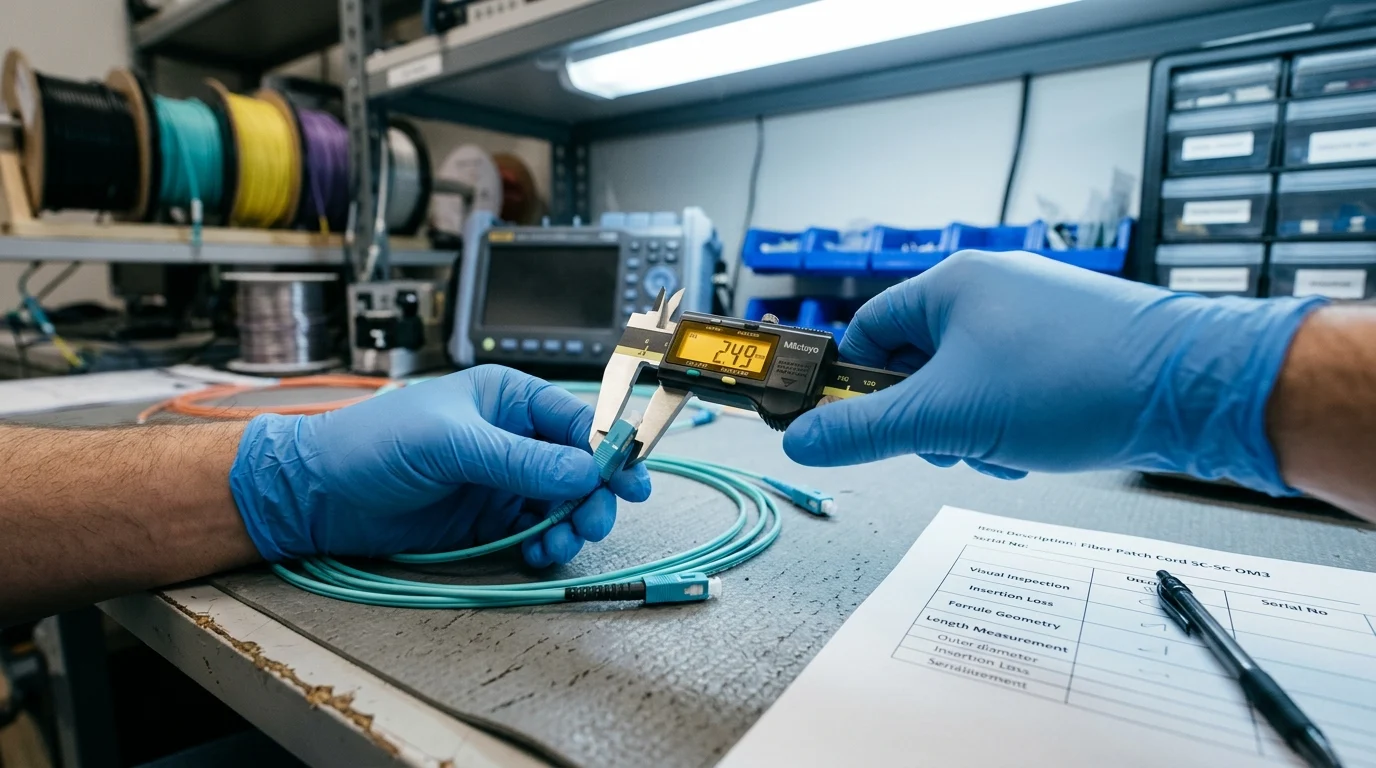
Transitioning from specification analysis to mass deployment requires robust procurement strategies and stringent quality assurance frameworks. When sourcing hundreds of thousands of optical components, minor variances in manufacturing tolerances can scale into catastrophic network-wide vulnerabilities. Therefore, establishing a disciplined methodology for supplier qualification, batch testing, and inventory standardization is imperative for safeguarding FTTH capital investments.
Best practices dictate that operators move away from purely cost-driven procurement toward total-cost-of-ownership (TCO) models. This involves factoring in the hidden costs of field failures, replacement logistics, and the administrative overhead of managing diverse inventory units.
How to qualify fiber patch cord suppliers
Qualifying a fiber patch cord manufacturer requires auditing both their production capabilities and their quality control transparency.
Key Takeaways
- The most important conclusions and rationale for Fiber Patch Cord
- Specs, compliance, and risk checks worth validating before you commit
- Practical next steps and caveats readers can apply immediately
Frequently Asked Questions
What makes a fiber patch cord reliable for FTTH deployment?
Look for low insertion loss, high return loss, clean end faces, and bend-insensitive fiber. These reduce faults and help technicians complete installs on the first visit.
Why is APC often preferred over UPC in FTTH networks?
APC usually offers higher return loss, around 60 dB or better, which reduces back-reflection and helps keep lasers stable in GPON and XGS-PON links.
How can contamination affect a fiber patch cord?
Even tiny dust on the end face can raise insertion loss by over 1 dB. Always inspect and clean connectors before plugging them in.
What fiber type is best for tight routing in FTTH cabinets or MDUs?
Use G.657 bend-insensitive fiber. It performs better around tight bends and lowers the risk of macro-bend loss in crowded pathways.
When should LSZH jackets be used on patch cords?
Use LSZH for indoor installations where fire safety matters. It helps reduce toxic smoke and is often required for building-code compliance.