


Introduction
For large rollouts, a basic PDU can look like a commodity item, but procurement decisions at volume have real cost, compatibility, and reliability implications. This guide outlines what IT procurement managers should evaluate before placing bulk orders, from outlet configuration and input power requirements to rack fit, certifications, supplier consistency, and lifecycle support. It also highlights where low upfront pricing can create downstream risks in deployment, maintenance, or standardization. By the end, readers will have a practical framework for comparing vendors, tightening specifications, and sourcing basic PDU hardware with fewer surprises across data center and branch environments.
Why bulk sourcing of basic PDU hardware requires careful planning
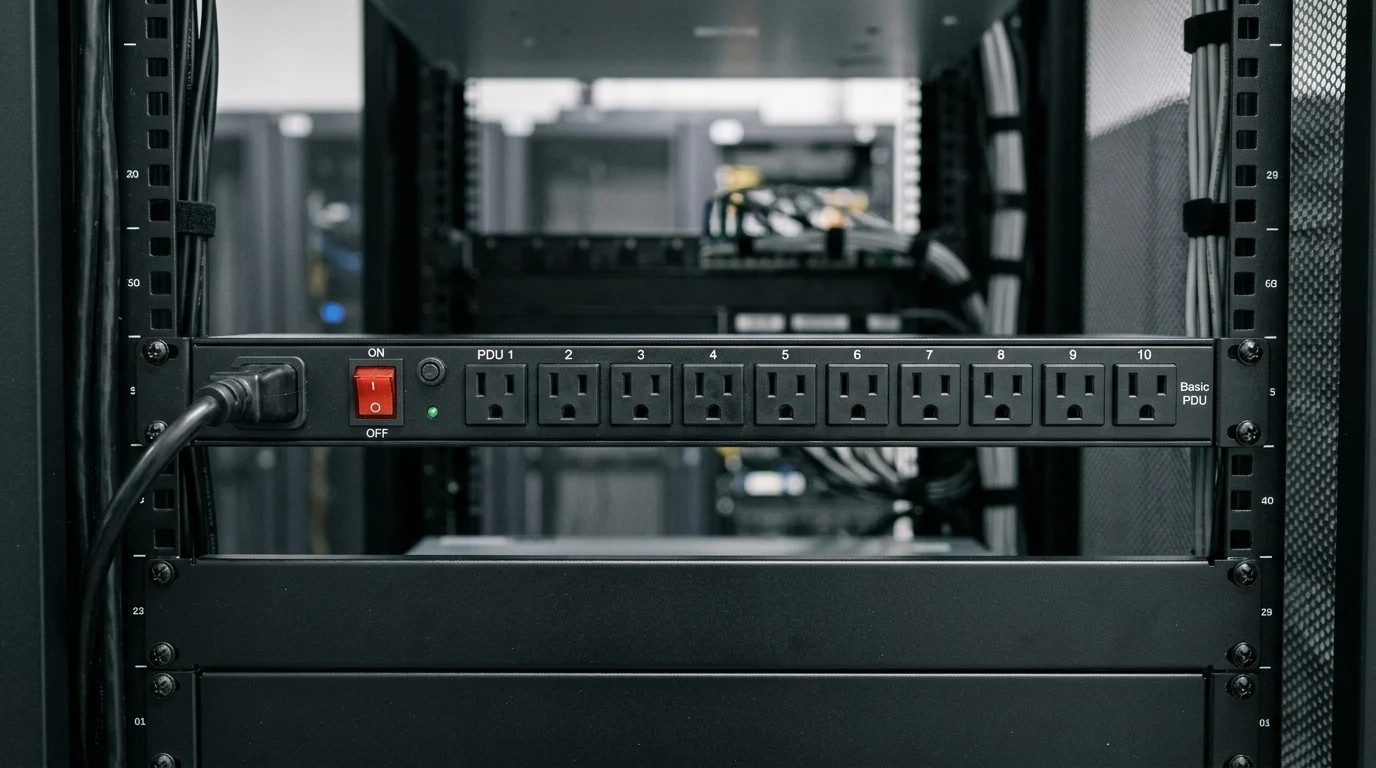
When I sit down to plan a new data center floor or a massive network closet refresh across multiple branch offices, power distribution is always top of mind. It’s incredibly easy to get distracted by flashy intelligent rack power with colorful touchscreens and environmental sensors. However, for a huge percentage of our deployments—especially edge computing sites or standard server farms—a solid Basic PDU is exactly what we need.
Sourcing these at scale isn’t just about clicking “add to cart.” When you’re buying 500 or 1,000 units at a time, a seemingly simple $25 price difference per unit translates to a $25,000 budget swing. That is real money that could be reallocated to active networking gear or cooling infrastructure. Therefore, careful upfront planning is absolutely critical to make sure we aren’t sacrificing reliability for a quick discount.
Defining a basic PDU for commercial use
What exactly are we looking at when we spec out a basic unit for commercial use? In my experience, it’s a zero-intelligence, highly reliable power strip built specifically for unforgiving industrial environments. We don’t need SNMP network cards, remote port switching, or per-outlet power metering. We just need uncompromised, continuous power delivery.
I expect these units to have a Mean Time Between Failures (MTBF) exceeding 100,000 hours. Once they are bolted into the back of a server rack and loaded with critical gear, I never want to think about them again. The focus shifts entirely to physical robustness rather than digital features.
Hidden risks in cost, uptime, and standardization
The hidden risks of cheaping out on a Wholesale PDU order can be catastrophic to your operations. If you accept a seemingly low 3% defect rate to save a few bucks on the initial purchase, you’re looking at 15 dead units in a 500-rack deployment. That translates to potential downtime for hundreds of servers and massive SLA penalties.
I also worry heavily about mechanical standardization. If you don’t standardize your chassis lengths, mounting bracket styles, and power cord locations, your cabling teams will waste hours customizing wire runs for every single rack. I’ve seen poor standardization drive up installation labor costs by 15% to 20%, completely wiping out any savings gained during the hardware procurement phase.
Key specifications to compare in basic PDU options
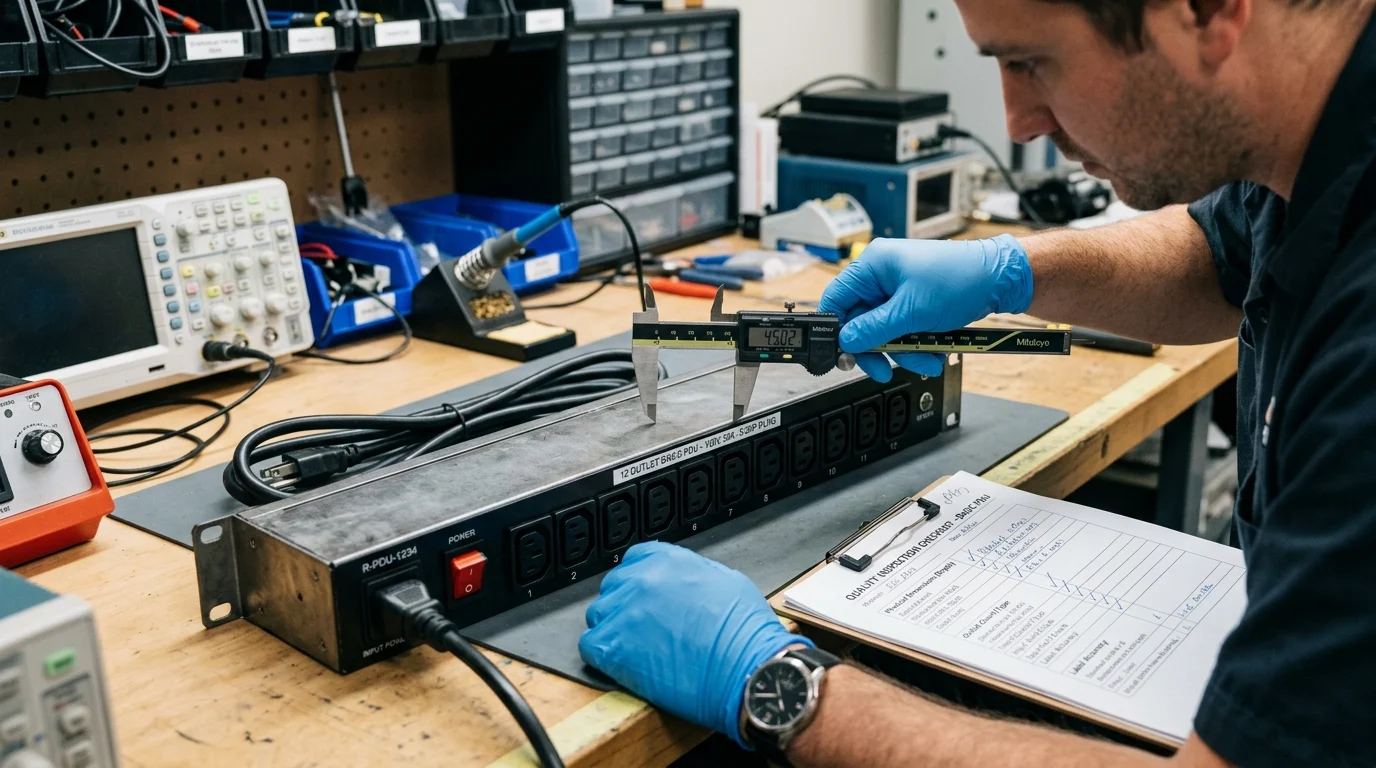
Before I send out an official Request for Quote (RFQ), my team and I tear down the specification sheets line by line. I always tell my junior buyers that a power distribution unit is essentially a metal box housing wires and receptacles—so the absolute quality of those three physical components dictates the lifespan of the product. We have to look past the marketing fluff and focus strictly on the engineering specifications.
Core criteria for comparing basic PDUs
The core criteria I use for comparing options start with the chassis material and internal wiring architecture. I exclusively look for heavy-duty extruded aluminum or thick powder-coated steel. Flimsy plastic chassis are a hard pass for our enterprise environments, as they warp under high heat.
Internally, solid copper busbars or high-gauge internal wiring (like 10 AWG or 12 AWG, depending on the amperage rating) are non-negotiable to prevent heat buildup. Regulatory certifications matter immensely; I always verify UL 62368-1, cTUVus, or CE compliance to keep our insurance providers, facility managers, and local safety inspectors happy. Failing a fire inspection because of non-compliant hardware is a nightmare I prefer to avoid.
Power ratings, outlet types, plugs, and mounting
The actual hardware configuration is where the rubber meets the road. We have to match the power ratings, outlet types, and input plugs perfectly to our facility’s upstream electrical infrastructure. Whether we are mounting 1U horizontal units for top-of-rack network switches or massive 0U vertical sticks for dense hyperconverged compute racks, the math has to work flawlessly. We also look for physical features like locking C13 and C19 receptacles to prevent accidental disconnects during maintenance.
| Specification | Standard Density (Edge/Network) | High Density (Core Compute) |
|---|---|---|
| Form Factor | 1U or 2U Horizontal | 0U Vertical (Full Height, 60″+) |
| Input Amperage | 15A / 16A / 20A | 30A / 32A / 60A |
| Common Input Plug | NEMA 5-15P or IEC C20 | NEMA L6-30P or IEC 60309 |
| Outlet Mix | 8x to 12x C13 | 24x C13 + 6x C19 |
| Max Power Capacity | ~1.4 kW to 3.6 kW | ~7.3 kW to 11.5+ kW |
| Circuit Protection | 15A Breaker | Dual 20A Hydraulic Magnetic |
How to source, validate, and negotiate basic PDU orders
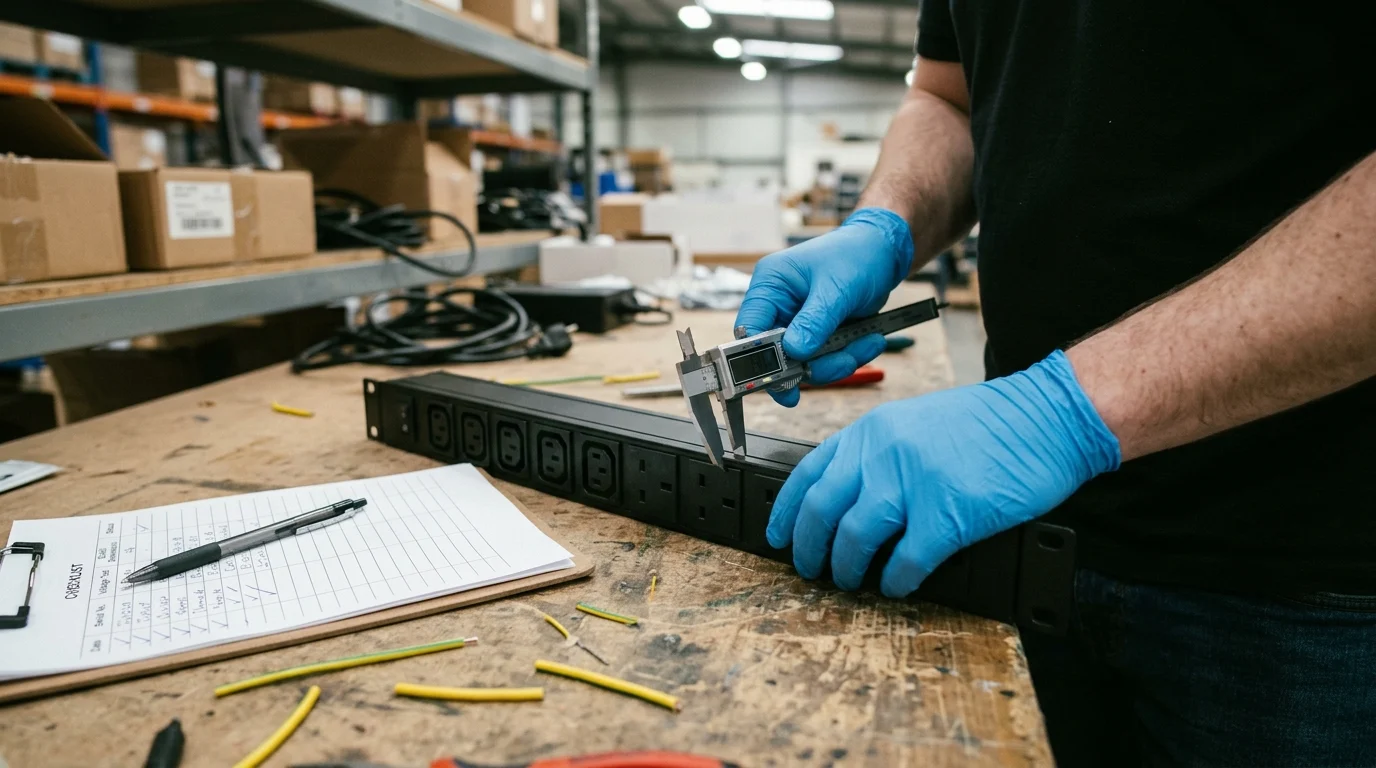
Finding the right technical specifications is only half the battle. The other half is mastering the complex Supply Chain mechanics required to actually get the hardware onto your loading dock on time, intact, and under budget. Navigating international shipping, factory production schedules, and quality assurance requires a very systematic approach.
Supplier qualification steps
My supplier qualification steps are rigorous and unyielding. I don’t just casually browse B2B marketplaces; I want established, factory-direct relationships. First, I request their ISO 9001 certification documentation and a detailed breakdown of their internal QA processes.
Then, I mandate sample units. We put these physical samples through dielectric withstand (hi-pot) testing, ground continuity checks, and physical drop tests. If the supplier’s sample passes our lab validation, we sit down to discuss production lead times. A highly reliable factory should be able to comfortably turn around a 500-unit custom order in 4 to 6 weeks, assuming no major global component shortages or logistics hiccups.
Final buying and negotiation checklist
When it’s time to actually execute the Bulk Order, I rely on a strict negotiation checklist. In modern IT Procurement, successful negotiation isn’t just about haggling over the base unit price. I always factor in the Minimum Order Quantity (MOQ)—usually targeting pricing tiers around 100, 250, or 500 units to unlock deep volume discounts.
I also negotiate shipping Incoterms to
Key Takeaways
- The most important conclusions and rationale for Basic PDU
- Specs, compliance, and risk checks worth validating before you commit
- Practical next steps and caveats readers can apply immediately
Frequently Asked Questions
What should I prioritize when bulk sourcing basic PDUs?
Focus on amperage, outlet mix, plug type, mounting style, and certifications. For large orders, standardizing these specs cuts installation time and avoids costly mismatches.
Why choose a basic PDU instead of an intelligent model?
Use a basic PDU when you only need reliable power distribution. It lowers unit cost, reduces failure points, and fits edge sites, branch offices, and standard server racks.
Which certifications should a basic PDU have?
Look for UL 62368-1, cTUVus, or CE, based on your region and site requirements. These help with safety compliance, inspections, and insurance approvals.
How do I match a basic PDU to my rack power setup?
Verify facility voltage, input amperage, plug type, outlet type, and form factor before ordering. Common choices are 1U horizontal for network racks and 0U vertical for dense cabinets.
Can Newsunn support custom basic PDU orders for large projects?
Yes. Newsunn offers basic PDU options through its product range, and custom configurations can help align outlet layout, cord length, and mounting with your deployment standard.