


Introduction
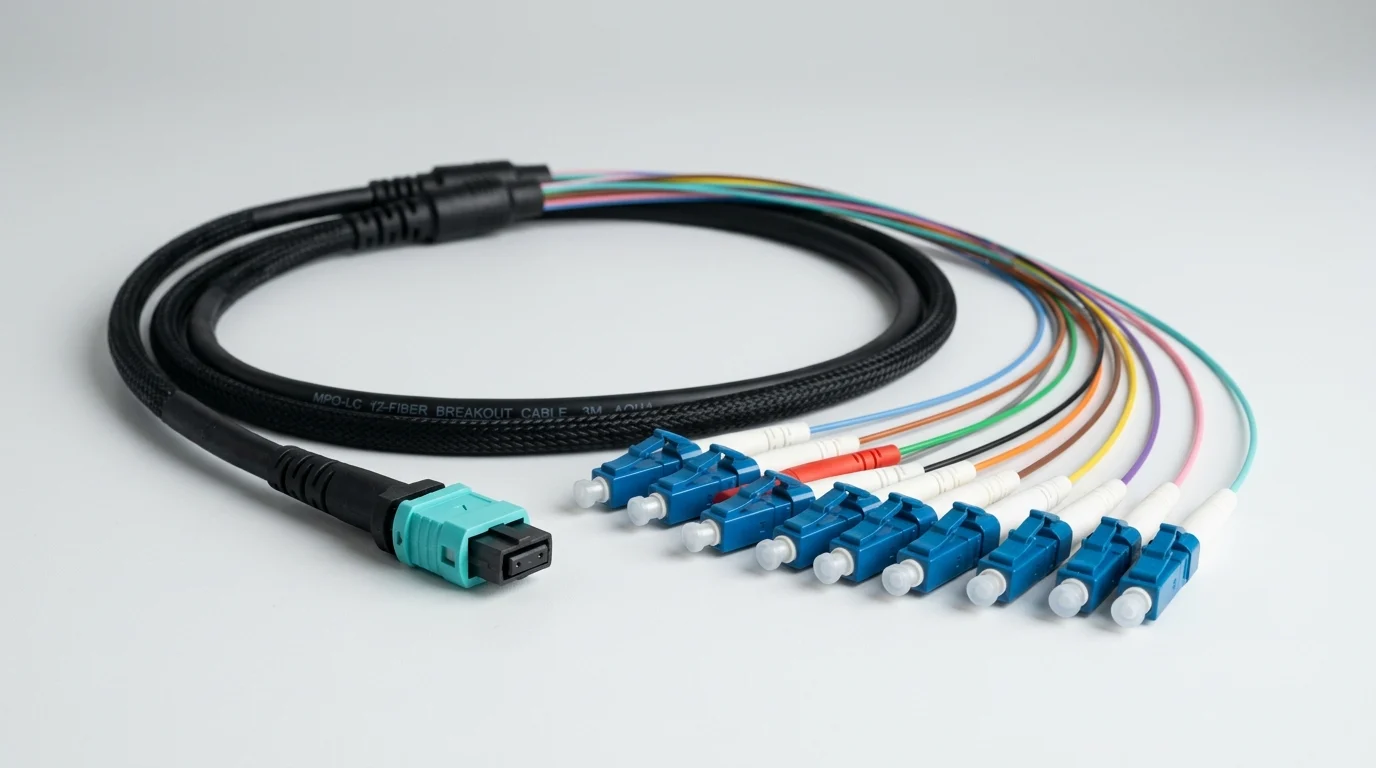
For high-density switch-to-server links, installation time often depends less on network design than on how quickly fiber can be terminated, routed, and verified. MPO breakout harness cables change that equation by replacing much of the field splicing and connector assembly with factory-terminated, ready-to-deploy components. This article explains how that shift can reduce deployment time by as much as 50%, where the labor savings come from, and why pre-terminated assemblies also help reduce bottlenecks, skill requirements, and installation risk. With that foundation, it becomes easier to evaluate whether MPO breakout harness cables fit your next data center build or upgrade.
Why MPO Breakout Harness Cables Reduce Deployment Time
If you manage data center build-outs, you know the pressure to get facilities online faster. We constantly chase tighter deadlines, and physical layer installation is often the biggest time sink. That is exactly why switching to MPO Breakout Harness Cables for high-density switch-to-server connections is highly effective.
By moving away from traditional field splicing and relying on pre-engineered lengths, deployment timelines can be cut in half. It is a massive shift from a slow construction mindset to a highly efficient assembly approach.
Building the Business Case
When building a business case, the math is straightforward. Traditional field termination requires skilled technicians, expensive splicing equipment, and significant time. Field splicing a high-density 144-fiber distribution link can easily take 8 to 10 hours of active labor. By switching to pre-terminated trunks and breakout harnesses, teams can rack and patch that same link in under 3 hours. These field termination savings quickly offset any upfront premium paid for factory-assembled cables.
Removing Deployment Bottlenecks
Beyond raw labor hours, deployment bottlenecks are a major concern. Finding qualified fiber technicians is challenging, and waiting for them to troubleshoot a bad field splice can easily derail a weekend cutover. Factory-terminated cables come with a certified defect rate that is typically less than 0.1%. Because the endfaces are polished and tested in a cleanroom, the on-site troubleshooting loop is eliminated, allowing for truly rapid deployment without frustrating project pauses.
What to Compare When Specifying an MPO Breakout Harness
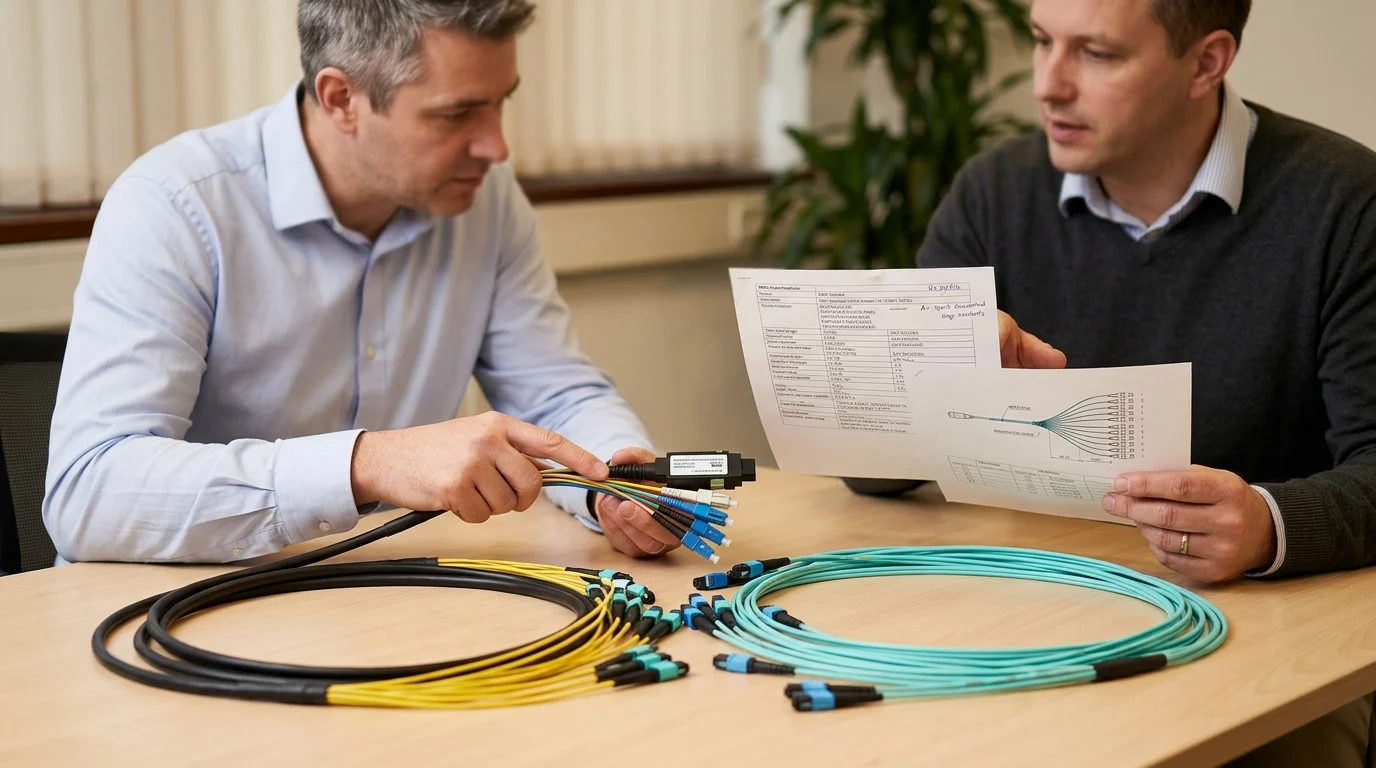
Once you decide on pre-terminated cables, the next hurdle is specifying the right ones. Not all harnesses are created equal, and choosing the cheapest option is a recipe for disaster when pushing higher data rates.
You must match the cable’s optical performance to your specific transceiver budgets, especially as networks move to 100G, 400G, and beyond.
Key Technical Specifications
When reviewing a spec sheet for a pre-terminated fiber harness, Insertion Loss (IL) is the first metric to check. For standard multimode OM4 MPO connectors, you might see an IL of 0.75 dB. While that used to be acceptable, the exceptionally tight optical budgets of modern PAM4 transceivers require low-loss connectors with a maximum IL of 0.35 dB, or even 0.25 dB for ultra-low loss applications. Return Loss (RL) is also critical; ensure it stays above 20 dB for multimode to prevent signal reflection issues that cause bit errors.
Comparison Criteria and Tables
To simplify the selection process, it helps to build a quick comparison matrix before approving an MPO assembly for the vendor list. Here is a breakdown of typical criteria:
| Specification | Standard MPO Harness | Low-Loss MPO Harness |
|---|---|---|
| Max Insertion Loss (IL) | 0.75 dB | 0.35 dB |
| Return Loss (RL) | > 20 dB (Multimode) | > 20 dB (Multimode) |
| Target Application | 10G / 40G legacy | 100G / 400G+ high-density |
| Typical Cost Premium | Baseline | +15% to 20% |
Paying a 15-20% premium upfront for low-loss performance prevents the need to rip and replace the cabling plant during the next major hardware refresh.
How to Choose the Right MPO Breakout Harness Cable

Next comes the procurement and logistics phase. Even with perfect technical specs, choosing the wrong supplier or failing to standardize the ordering process can wipe out all the time savings previously discussed.
A strong supply chain strategy is just as important as your optical strategy.
Standardizing Ordering and Deployment
Keeping processes repeatable is essential. Standardizing breakout configurations—such as sticking to an 8-fiber MPO to 4x LC duplex layout for leaf-and-spine architectures—drastically simplifies inventory. Enforcing standardization on Polarity Method B for multimode links prevents the classic mix-ups that happen when technicians grab the wrong patch cord in a hurry. Standardization enables true plug-and-play installation and can often reduce lead times from a standard 6-8 weeks to just 2-3 weeks.
Evaluating Supplier Testing and Flexibility
Dealing with massive, rigid corporations is not always the best move for every build. Unlike large companies with strict policies and complicated ERP systems, suppliers with flexible operations are often more advantageous. Massive vendors frequently enforce huge Minimum Order Quantities (MOQs) that might force you to buy 500 cables when you only need 45. Look for partners who are compatible with your specific business style and can meet custom demands—whether that means custom staggering on the breakout legs, providing individual 3D interferometer test reports for a small batch, or adjusting delivery schedules on the fly.
Key Takeaways
- The most important conclusions and rationale for MPO Breakout Harness Cable
- Specs, compliance, and risk checks worth validating before you commit
- Practical next steps and caveats readers can apply immediately
Frequently Asked Questions
How do MPO breakout harness cables cut deployment time?
They replace field splicing with factory-terminated assemblies, so teams can rack and patch links in under 3 hours instead of spending 8-10 hours terminating fibers on site.
What specs matter most when choosing an MPO breakout harness cable?
Check insertion loss and return loss first. For 100G/400G links, target low-loss MPO connectors around 0.35 dB IL or better and RL above 20 dB for multimode.
Which breakout configuration is commonly used for leaf-and-spine networks?
A common standard is 8-fiber MPO to 4x LC duplex. It simplifies inventory, speeds installation, and helps keep deployments repeatable across switch-to-server links.
Why should I use low-loss MPO harnesses instead of standard ones?
Low-loss harnesses cost about 15-20% more, but they fit tighter PAM4 transceiver budgets and reduce the risk of costly rip-and-replace upgrades later.
Where can I review pre-terminated MPO breakout harness options?
You can review Newsunn pre-terminated fiber and MPO assembly options at https://www.newsunn.com/products/ to compare configurations, lengths, and deployment-ready assemblies.