


Introduction
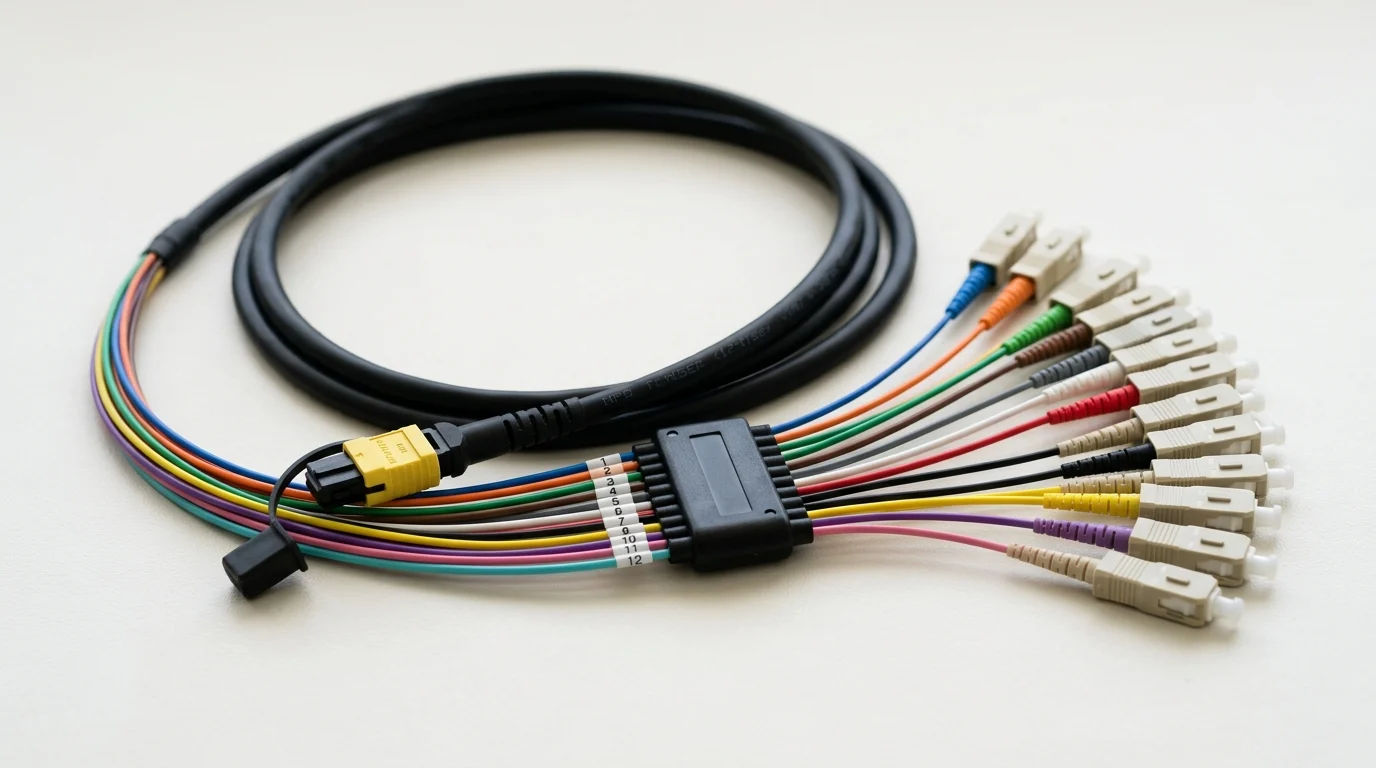
As bandwidth demands rise and deployments move into harsher, high-density environments, the cabling choice behind each link has a measurable effect on performance and cost. An industrial-grade MPO Breakout Harness Cable is designed to handle vibration, temperature swings, and frequent handling without the signal loss and premature failures common in standard options. This article explains where the return on investment comes from, how durability and signal integrity reduce downtime and maintenance, and why a higher upfront cable cost can translate into lower lifecycle expense as networks scale toward faster, more demanding architectures.
Why Upgrade to an Industrial-Grade MPO Breakout Harness Cable
Network upgrades often stall because teams underestimate the physical layer. In high-density environments—especially as architectures push toward 400G and 800G—standard commercial cables often fall short. Upgrading to an industrial-grade MPO Breakout Cable is more than a ruggedization strategy; it is a direct investment in uptime, signal integrity, and long-term ROI. Treating cabling as an afterthought inevitably leads to costly outages.
Downtime, maintenance, and replacement impact
In high-stakes facilities like edge data centers or automated manufacturing plants, a single cable failure can trigger a cascade of issues. Standard jackets crack under extreme temperature swings and offer almost zero defense against the continuous micro-vibrations generated by heavy machinery. This mechanical stress leads directly to microbends and severe signal attenuation.
With enterprise IT downtime averaging over $8,000 per minute, the cost of repeatedly dispatching specialized technicians to trace and replace faulty standard harnesses drastically dwarfs the initial premium of an industrial cable. Reviewing maintenance logs often reveals the true cost: replacing cables every 24 to 36 months due to physical degradation and environmental wear drains budgets through preventable truck rolls and labor hours.
Commercial drivers for industrial-grade adoption
The commercial math heavily favors industrial-grade solutions when looking past the initial CapEx. By adopting a ruggedized Data Center Connectivity Solution, you stretch the physical infrastructure lifecycle from a typical 3 to 5 years up to a robust 10 to 15 years. Industrial cables feature reinforced armoring, crush-resistant tubing, and IP67-rated connectors that actively resist dust, moisture ingress, and chemical exposure.
This drastically reduces Total Cost of Ownership (TCO) over a decade. These cables act as insurance against environmental variables that threaten service-level agreements (SLAs). Eliminating just one major environmental outage per year allows the premium paid for industrial-grade harnesses to yield an ROI of several hundred percent.
Key Technical Differences in MPO Breakout Harness Cables
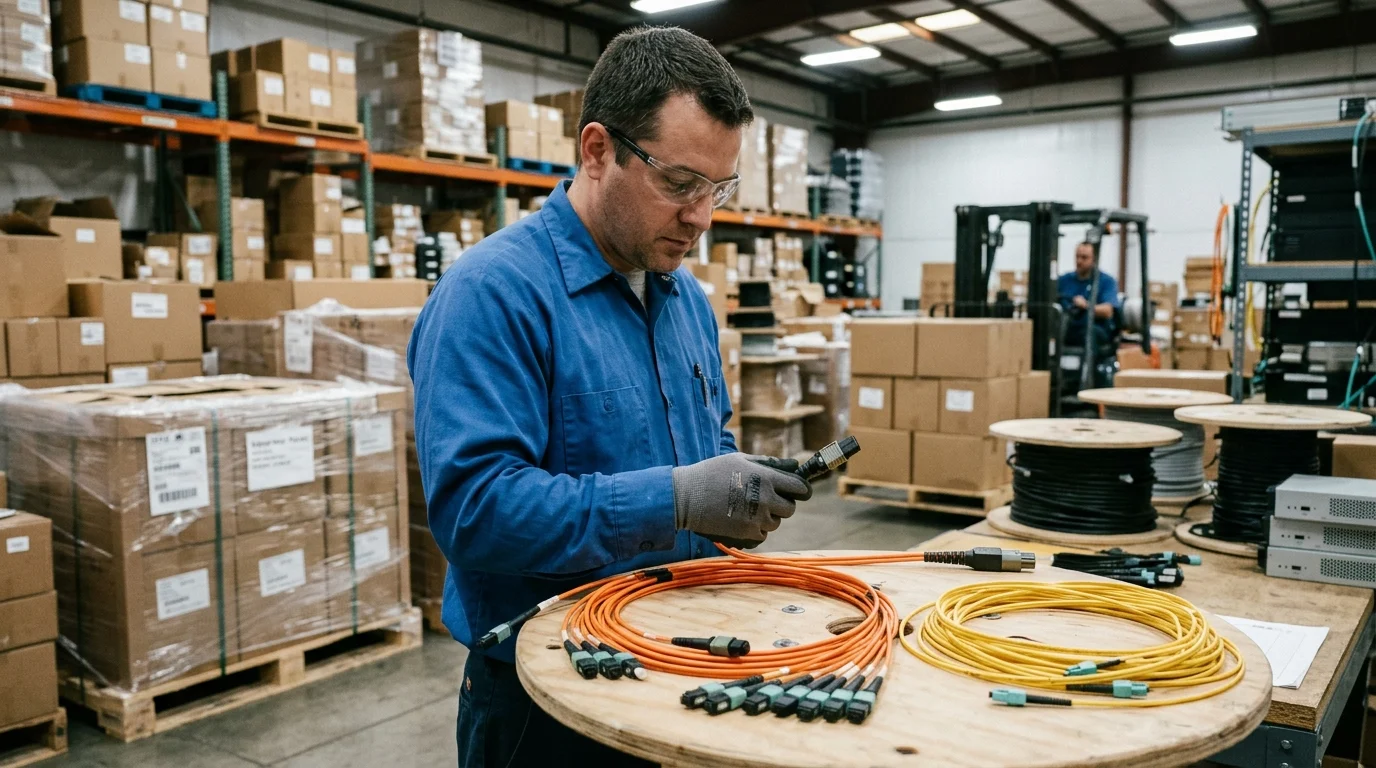
What exactly separates ruggedized cables from the everyday commercial cords found in standard enterprise racks? Evaluating an MPO to LC Harness Cable for a demanding deployment requires looking for specific material sciences and structural upgrades that guarantee optical performance under severe physical duress.
Specifications to compare
The first critical specification is the operating temperature range. Standard indoor cables usually tap out between 0°C and 70°C, which is adequate for a climate-controlled server room but insufficient for an unconditioned edge facility. Industrial variants push that envelope significantly, reliably operating from -40°C up to 85°C without the jacket becoming brittle or melting. Crush resistance is equally critical when routing cables through exposed trays.
A typical commercial cable might handle around 100 N/10cm of crush load before irreversible fiber damage occurs. An armored industrial cable utilizes specialized stainless steel micro-tubing that easily withstands 500 N/10cm to well over 1,000 N/10cm. Combined with increased tensile strength—jumping from 150 N to a robust 600 N—and polyurethane (PUR) or specialized TPU jackets that resist oil, solvents, and prolonged UV exposure, the durability difference is substantial. Additionally, bend-insensitive fiber (such as ITU-T G.657.A2) ensures macrobending does not compromise the link budget.
Standard vs industrial-grade comparison
To illustrate the performance gap, the table below breaks down the typical baseline differences. When specifying a High Density Fiber Cable for a harsh, unpredictable environment, these are the exact metrics to verify against the manufacturer’s datasheet.
| Specification | Standard Commercial Grade | Industrial Grade |
|---|---|---|
| Operating Temp | 0°C to +70°C | -40°C to +85°C |
| Crush Resistance | ~100 N/10cm | 500 N/10cm to 1,000+ N/10cm |
| Tensile Strength | 100 – 150 N | 400 – 600+ N |
| Jacket Material | PVC / Standard LSZH | PUR / TPU / Armored LSZH |
| IP Rating (Mating) | IP20 (Indoor) | IP67 / IP68 (Outdoor/Harsh) |
| Lifecycle Expectancy | 3 – 5 Years | 10 – 15+ Years |
These metrics highlight why the industrial option is the logical choice for areas prone to heavy impacts or extreme environmental conditions.
How to Select and Validate the Right MPO Breakout Harness

Knowing the specifications is only half the battle; getting the right product into the racks requires a strict validation and procurement process. Relying blindly on a datasheet is risky when the reliability of a core network backbone is on the line. Suppliers must be able to prove their claims.
Supplier qualification and test verification
When qualifying a new supplier for a Fanout Fiber Patch Cord, demand rigorous, batch-specific test reports. Request 3D interferometry data for the MPO end-faces to ensure proper geometry—radius of curvature, apex offset, and fiber height must be flawless to prevent mating issues.
For industrial applications, strict optical performance is non-negotiable. Look for a maximum Insertion Loss (IL) of 0.35 dB for ultra-low loss MPO connectors, and a Return Loss (RL) of >60 dB for APC polishes. Furthermore, ask vendors for third-party environmental test certificates, such as IEC 61300-2-22 for extreme temperature cycling and IEC 61300-2-4 for fiber retention. If a supplier hesitates to provide these test results or substitutes generic compliance statements for actual batch data, it is best to find another vendor.
Decision framework and rollout steps
Once a qualified supplier is selected, a phased rollout is highly recommended over a risky rip-and-replace approach to ensure seamless integration and minimal disruption.
Key Takeaways
- The most important conclusions and rationale for MPO Breakout Harness Cable
- Specs, compliance, and risk checks worth validating before you commit
- Practical next steps and caveats readers can apply immediately
Frequently Asked Questions
When should I choose an industrial-grade MPO breakout harness cable?
Choose it for edge data centers, factories, outdoor cabinets, or any site with vibration, dust, moisture, chemicals, or wide temperature swings.
What specs matter most when comparing MPO breakout harness cables?
Check operating temperature, crush and tensile strength, jacket material, IP rating, bend-insensitive fiber, and expected service life on the datasheet.
How does an industrial-grade MPO breakout harness improve ROI?
It reduces outages, technician callouts, and replacement cycles, often extending cable life from about 3–5 years to 10–15+ years.
Which connector and breakout type should I select?
Match trunk polarity, fiber count, and equipment ports. Common choices are MPO to LC harnesses for high-density switch or server connections.
Where can I source MPO breakout harness cable options from Newsunn?
Visit Newsunn’s product pages to review MPO breakout, MPO to LC harness, and high-density fiber connectivity solutions, then confirm specs with the supplier.