


Maintaining high-speed data integrity requires precision, and having the right fiber optic tools is non-negotiable for minimizing signal loss. This guide details ten essential instruments every field technician needs to ensure professional-grade fiber optic network performance and long-term reliability.
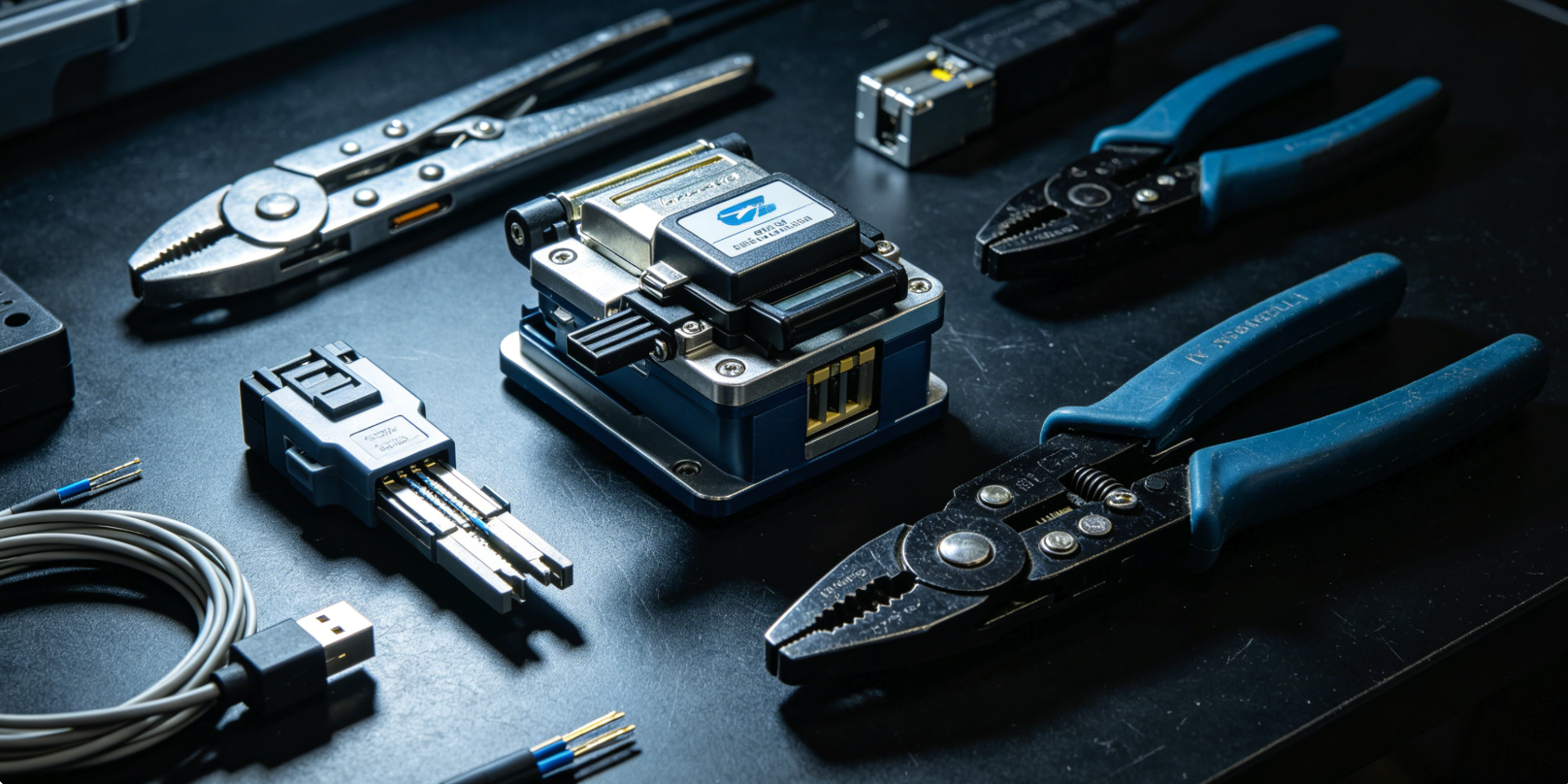
1. Optical Time Domain Reflectometer (OTDR)
An Optical Time Domain Reflectometer (OTDR) is the most powerful diagnostic tool in a technician’s kit for characterizing fiber spans. It injects high-powered laser pulses into the fiber and analyzes the backscattered light to detect splices, connectors, and macrobends. For modern data centers, choosing an OTDR with high dynamic range ensures accurate measurements over long distances. According to the Fiber Optic Association (FOA), OTDR traces are mandatory for certifying outside plant (OSP) installations.
2. Visual Fault Locator (VFL)
A Visual Fault Locator (VFL) uses a high-intensity red laser to identify breaks or sharp bends in fiber optic cables. This tool is indispensable for continuity testing and identifying specific fibers within a dense Fiber Optic Distribution Panel during installation. The visible light leaks through the cable jacket at fault points, providing a quick visual confirmation for field technicians.
3. Optical Power Meter (OPM) and Light Source
The combination of an Optical Power Meter (OPM) and a stabilized light source is required for measuring end-to-end insertion loss. Technicians must ensure that the decibel (dB) loss remains within the budgeted limits defined by the IEEE 802.3 standards. Regular calibration of the OPM is essential to maintain measurement accuracy during the certification of Fiber Patch Cords.
4. Fiber Optic Cleaver
Precision cleaving is the foundation of low-loss splicing, as a 90-degree flat end-face is required for optimal light transmission. High-precision cleavers reduce the risk of jagged edges that cause excessive reflection and signal attenuation. When working with a Fiber Optic Fast Connector, a reliable cleaver ensures the mechanical splice meets performance specifications.
Table 1: Comparison of Fiber Preparation Methods
| Method | Accuracy | Signal Loss (Typical) | Best Application |
|---|---|---|---|
| Manual Cleaving | Moderate | 0.5 – 1.0 dB | Emergency repairs |
| Precision Cleaver | High | < 0.1 dB | Fusion splicing & high-end connectors |
| Mechanical Splice | Moderate | 0.2 – 0.5 dB | FTTH drop cables |
5. Fusion Splicer
Fusion splicing is the industry standard for creating permanent, low-loss connections between two optical fibers. The device uses an electric arc to melt the fiber ends together, resulting in a connection that is physically stronger than the original glass. For high-density environments, using a ribbon fusion splicer can significantly speed up the deployment of MPO/MTP Solution architectures.
6. Fiber Inspection Microscope
Contamination is the leading cause of fiber optic network failure, making a digital inspection microscope a vital tool. Technicians use these scopes to examine connector end-faces for dust, oil, or scratches before mating them. Following the IEC 61300-3-35 standard for end-face quality ensures that every Fiber Optic Adapter connection remains clean and functional.
7. Fiber Optic Stripper
Removing the protective buffer coating without damaging the underlying glass cladding requires a specialized fiber optic stripper. Standard wire strippers are too imprecise and can cause microscopic fractures that lead to future cable failure. Professional strippers feature calibrated holes designed specifically for 250µm and 900µm coatings found on most Fiber Optic Cables.
8. Fiber Cleaning Tools
A comprehensive cleaning kit, including lint-free wipes, isopropyl alcohol, and “one-click” cleaners, is essential for every field mission. Dry cleaning is often preferred for light dust, while wet cleaning is necessary for stubborn oils. Utilizing a dedicated Fiber Cleaning Tool ensures that contaminants are not transferred between connectors or internal components.
Table 2: Essential Cleaning Supplies Checklist
| Tool Type | Purpose | Frequency of Use |
|---|---|---|
| One-Click Cleaner | Bulkhead and patch cord cleaning | Before every mating |
| Lint-Free Wipes | Manual end-face cleaning | For heavy contamination |
| IPA Solvent | Removing oils and residues | When dry cleaning fails |
9. Kevlar Shears
Kevlar is the high-strength aramid yarn used for strain relief in optical cables, and it is notoriously difficult to cut with standard scissors. Specialized Kevlar shears feature serrated blades designed to grip and slice through these tough fibers cleanly. This tool prevents fraying, which could otherwise interfere with the installation of a FTTH Terminal Box.
10. Mid-Span Access Tool
Accessing individual fibers within a buffer tube without cutting the entire cable requires a mid-span access tool. This device allows technicians to “shave” the buffer tube precisely, exposing the fibers for splicing or testing. It is a critical tool for backbone maintenance where existing traffic on other fibers must remain undisturbed.
Table 3: Tool Selection Based on Network Type
- FTTH/Residential: VFL, Fast Connectors, OPM.
- Data Center: MPO Scopes, One-click Cleaners, High-speed OTDR.
- Long-Haul/Backbone: Fusion Splicer, Mid-span Access Tool, Precision Cleaver.
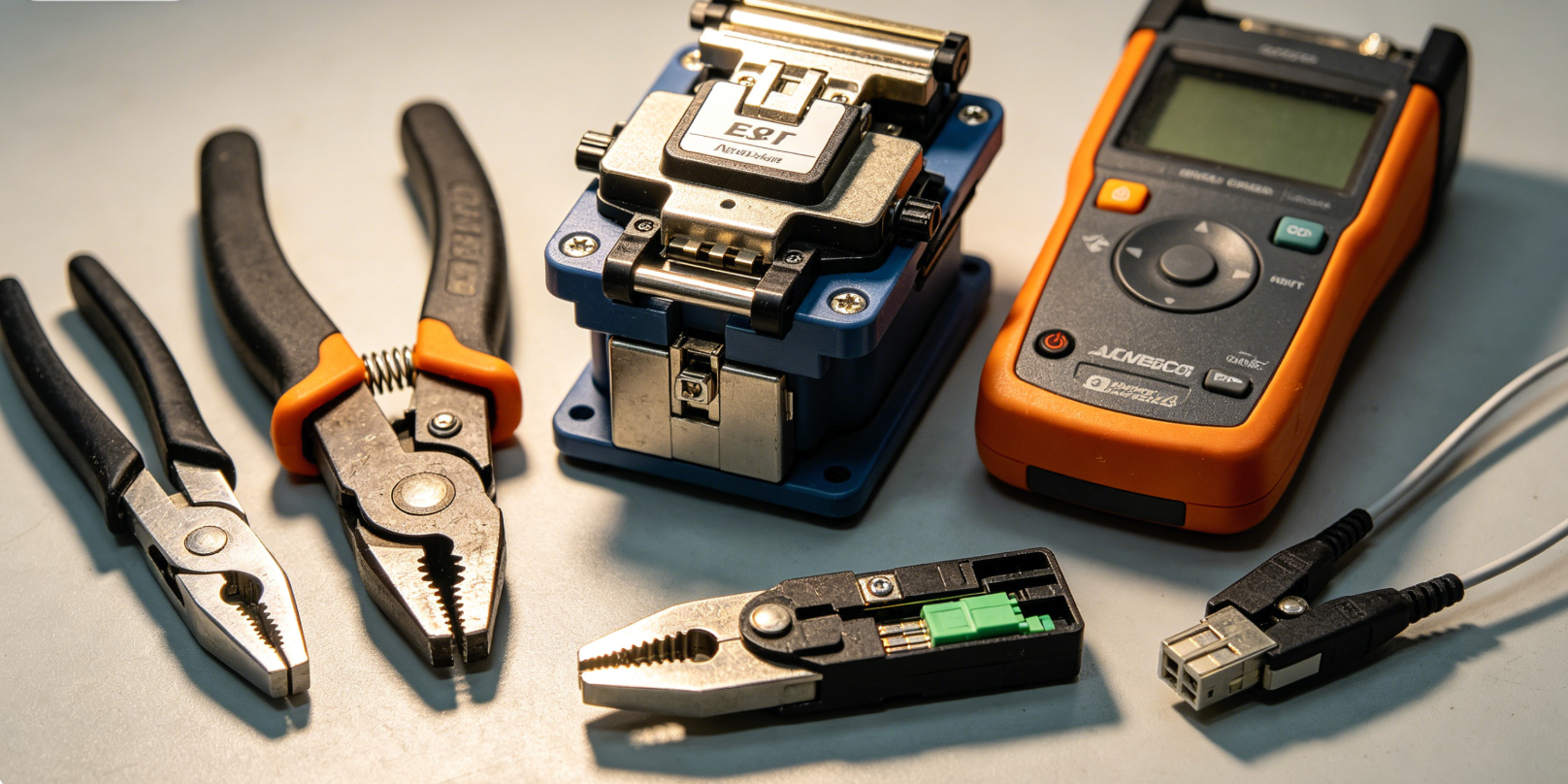
Conclusion
Investing in high-quality fiber optic tools directly impacts the longevity and performance of a network. By adhering to international testing standards and maintaining clean connections, field technicians can reduce troubleshooting time and ensure seamless data transmission. For enterprises looking to scale, sourcing reliable connectivity components from a specialized manufacturer is the final piece of the puzzle.
FAQ
What is the most common cause of fiber optic link failure?
Industry data suggests that over 80% of fiber optic network failures are caused by contaminated connector end-faces. Dust or skin oils can block light or cause permanent damage when connectors are mated. Using a fiber inspection microscope and a professional fiber cleaning tool before every connection is the best preventive measure.
Do I really need an OTDR for short-distance fiber testing?
While a Power Meter and Light Source (LSPM) are sufficient for basic pass/fail testing on short links, an OTDR is recommended for identifying the exact location of faults. In complex environments like a data center, an OTDR helps distinguish between a bad splice and a macrobend, which an OPM cannot do.
How often should optical power meters be calibrated?
Most manufacturers and industry standards, such as those from the FOA, recommend calibrating optical power meters annually. Regular calibration ensures that the sensors remain sensitive to specific wavelengths and provide accurate decibel (dB) readings, which are critical for certifying the performance of high-bandwidth fiber patch cords.
Can I use standard electrical strippers for fiber optic cables?
No, standard electrical strippers should never be used on optical glass. Fiber optic glass is extremely fragile, and electrical tools lack the precision required to remove the 250µm coating without nicking the cladding. Specialized fiber optic strippers are precision-engineered to prevent microscopic damage that causes long-term signal attenuation.
What is the difference between a dry and wet fiber cleaning?
Dry cleaning uses specialized lint-free tape or thread to pull dust away from the end-face and is the first line of defense. Wet cleaning involves a small amount of specialized solvent to dissolve oils and salts. For best results, technicians often use the “wet-to-dry” cleaning process to ensure no solvent residue remains.