


How Advanced MPU Design Reduces Power Costs in Remote IoT Devices
Why Advanced MPU Design Matters for Remote IoT Power Costs
If you have ever managed a large-scale remote IoT deployment, you already know that the initial hardware cost is just the tip of the iceberg. I often talk with procurement teams who focus intensely on shaving pennies off the bill of materials (BOM), only to watch their operating expenses explode a year later. The culprit is almost always power consumption. When devices are deployed in hard-to-reach locations—like agricultural fields, offshore rigs, or smart city infrastructure—the power architecture of your Microprocessor Unit (MPU) dictates the financial viability of the entire project.
An advanced MPU design fundamentally changes the economics of these deployments. Unlike older, power-hungry processors that run at full throttle regardless of the task, modern MPUs are designed with sophisticated power management capabilities. They can throttle down, shut off unused cores, and wake up in fractions of a second. This means the device draws minimal current from the battery while still providing the processing muscle needed for edge computing when an event occurs.
Understanding this shift is crucial for B2B buyers. We are no longer just buying a silicon chip; we are buying a specific power profile. Choosing the right Energy-Efficient MPU requires a deep dive into how that component’s architecture will behave in the field, how it affects your battery selection, and ultimately, how it impacts your bottom line over a five- or ten-year lifecycle.
How MPU power efficiency changes total operating cost
Total Cost of Ownership (TCO) in remote IoT is heavily weighted toward operational expenditures (OPEX). When an MPU is highly efficient, you can design the device with a smaller, less expensive battery, or alternatively, use a standard battery that lasts twice as long. This efficiency cascades through the entire operating budget, reducing the frequency of maintenance cycles, lowering the cost of replacement parts, and minimizing downtime for the end-user.
Impact on battery replacement cycles and truck rolls
In the managed services and IoT infrastructure world, a “truck roll”—sending a technician to a remote site to replace a battery—can cost anywhere from $150 to $500 per visit. If your deployment consists of 10,000 sensors, a poorly optimized MPU that drains batteries in two years instead of five will trigger millions of dollars in premature maintenance costs. Advanced MPUs stretch these replacement cycles to align with the natural lifecycle of the device itself, effectively eliminating unnecessary service dispatches.
Where procurement teams see margin gains
Procurement teams that prioritize advanced power design see margin gains in two distinct areas. First, on the CAPEX side, a highly efficient processor often allows for a smaller solar panel, a cheaper power management IC (PMIC), and a lower-capacity battery, which lowers the overall BOM. Second, on the OPEX side, the extended lifespan allows companies to offer more competitive multi-year service contracts, increasing gross margins by drastically reducing the warranty and field service reserves they have to hold.
What Advanced MPU Design Means for Remote IoT Devices
When I discuss “advanced” design with engineering and sourcing teams, I am not just talking about raw clock speed or smaller semiconductor nodes, though those play a part. Advanced design in the context of remote IoT refers to the silicon’s ability to ruthlessly manage its own energy consumption. It is about intelligence at the hardware level—giving the processor the ability to segment its operations so that it only consumes power exactly when and where it is needed.
This level of control is achieved through architectural innovations that treat power as a finite, precious resource. Designers implement complex matrices of power domains, allowing the chip to physically cut power to specific blocks of silicon (like a USB controller or a cryptographic engine) when they are not actively processing data. For B2B buyers, understanding these concepts is vital because it explains why two MPUs with the exact same clock speed can have drastically different real-world battery impacts.
Furthermore, evaluating an ARM-based MPU often reveals a multi-core strategy where a high-performance core handles heavy Linux workloads, while a low-power Cortex-M core handles simple sensor polling. This heterogeneous architecture is the hallmark of modern, advanced MPU design and is a primary driver of cost reduction in remote deployments.
Key design elements: architecture, power domains, sleep states, and clocks
The foundation of a low-power MPU lies in its power domains and sleep states. Advanced chips are divided into isolated zones; if the network interface is idle, that specific domain is powered down without affecting the core processor. Additionally, granular sleep states (e.g., standby, deep sleep, and stop modes) allow the MPU to drop its current draw from milliamps down to microamps, while sophisticated clock gating ensures that no energy is wasted toggling transistors that aren’t currently in use.
How advanced MPUs differ from basic low-cost controllers
Basic microcontrollers (MCUs) are inherently low power, but they lack the processing power, memory management units (MMUs), and OS support (like embedded Linux) needed for complex edge analytics or secure network routing. Advanced MPUs bridge this gap. They provide the heavy computational lifting of a traditional microprocessor but borrow the aggressive power-saving techniques of an MCU, allowing remote devices to perform complex AI or data filtering at the edge without requiring a continuous grid connection.
Specifications that affect power costs most
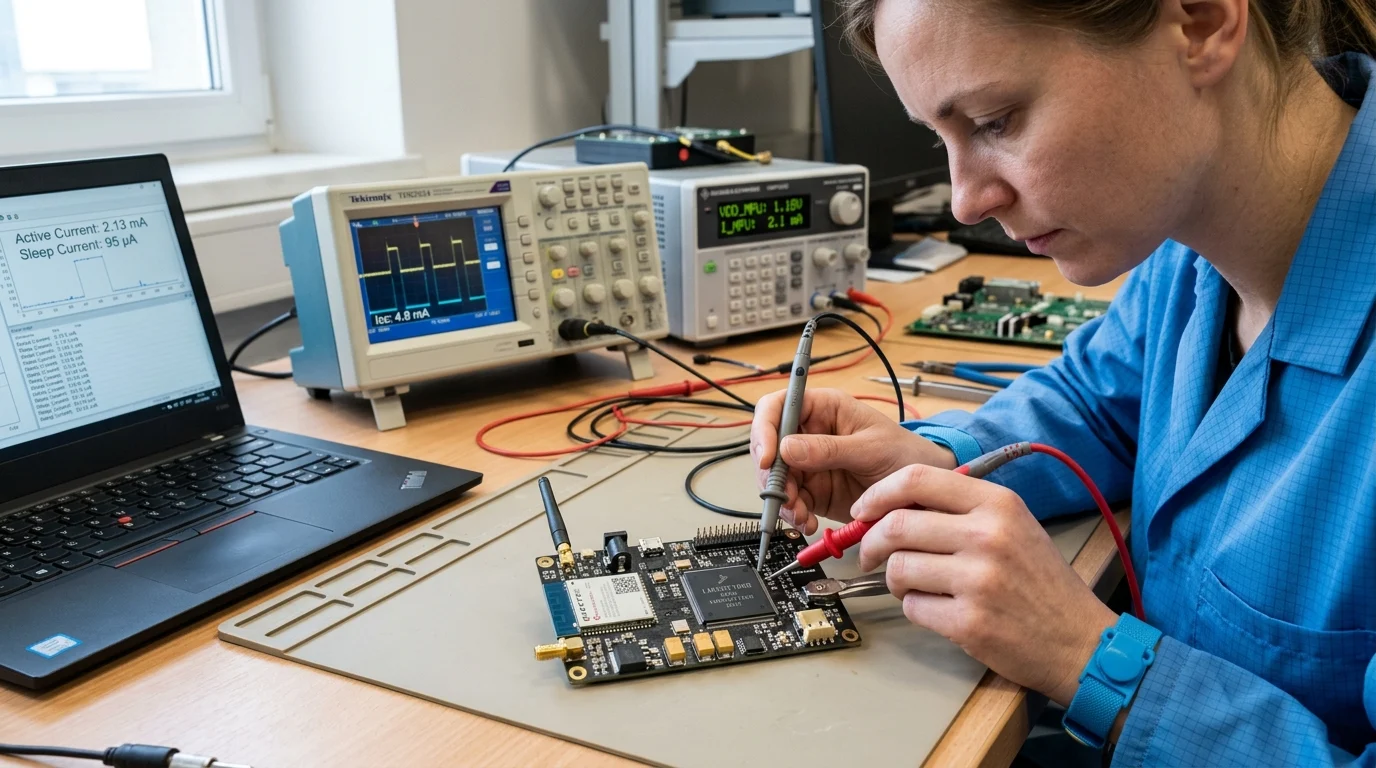
When reviewing datasheets, the specs that hit your wallet hardest are leakage current (the power drained simply by the chip being connected to a battery), wake-up time (how fast the chip transitions from deep sleep to active mode), and active power per megahertz (µA/MHz). A chip that takes too long to wake up wastes precious energy just booting up, which destroys the power budget in applications that require frequent, brief bursts of activity.
MPU Specifications That Reduce Power Consumption
Translating technical specifications into procurement strategies is where the magic happens. I always advise buyers to stop looking at the “maximum active power” spec in isolation. In remote IoT, a device might spend 99% of its life asleep and only 1% active. Therefore, the way an MPU handles its dormant states and transitions is far more critical to your battery budget than its peak power consumption.
To accurately forecast costs, you have to map the MPU’s specifications against your device’s specific duty cycle. A smart procurement strategy involves asking the engineering team for a power profile model. Once you have that, you can evaluate different MPU platforms based on how their hardware features—like dynamic voltage scaling and hardware accelerators—align with your specific use case.
This alignment prevents a common sourcing mistake: paying a premium for an ultra-low-power MPU that lacks the hardware accelerators needed for your specific workload, forcing the main core to stay awake longer to process data, which ironically results in higher overall power consumption. You need the right Low-Power MPU that balances sleep efficiency with processing speed.
Evaluating power profiles under real duty cycles
A duty cycle represents the ratio of active time to sleep time. If your remote sensor wakes up once an hour, transmits a small packet of data, and goes back to sleep, the deep-sleep current is your most critical spec. Conversely, if the device wakes up to perform a complex 30-second machine learning inference before transmitting, the active processing efficiency (performance per watt) becomes the dominant factor in your power profile.
Hardware features that matter: DVFS, low-power modes, and accelerators
Dynamic Voltage and Frequency Scaling (DVFS) allows the MPU to adjust its own voltage and clock speed on the fly based on the workload, saving massive amounts of energy. Furthermore, hardware accelerators (like dedicated cryptographic engines or DSPs) process specific tasks much faster and with less power than the main CPU core. Leveraging these features minimizes the time the device spends in its high-power active state.
Comparing active power, sleep power, battery impact, and BOM tradeoffs
To illustrate the tradeoffs, consider this comparison between a standard and an advanced MPU architecture:
| Feature/Metric | Standard MPU | Advanced Low-Power MPU | BOM Impact |
|---|---|---|---|
| Deep Sleep Current | 5.0 mA | 0.5 mA | Allows use of smaller, cheaper battery cells. |
| Wake-up Time | 50 ms | 5 ms | Reduces energy wasted during transition states. |
| PMIC Requirement | Complex, multi-rail | Integrated or simplified | Lowers component count and PCB complexity. |
| Est. Battery Life (10Ah) | 1.5 Years | 4.5 Years | Drastically reduces field maintenance OPEX. |
How firmware optimization improves power efficiency
Hardware features are only as good as the software controlling them. I frequently remind buyers to factor in software development costs. If an MPU supplier provides a mature Software Development Kit (SDK) with pre-optimized power management libraries, your engineering team can easily implement deep sleep modes and DVFS. Poor firmware can keep a highly advanced MPU awake unnecessarily, completely negating the hardware’s power-saving benefits.
Sourcing, MOQ, and Total Landed Cost Considerations
Finding the perfect low-power MPU on a datasheet is only half the battle; procuring it efficiently is the other. In my experience, B2B buyers must look well beyond the unit price to understand the Total Landed Cost. This involves navigating Minimum Order Quantities (MOQs), negotiating lead times, and factoring in the logistics of how the chips are packaged and shipped.
Furthermore, the semiconductor market is notoriously volatile. You are not just buying a batch of chips for today; you are marrying a supplier for the lifecycle of your IoT product. If the MPU you select goes end-of-life (EOL) in two years, the engineering costs to redesign the board and rewrite the firmware will wipe out any savings you achieved during the initial sourcing phase.
Therefore, a robust sourcing strategy requires deep engagement with the manufacturer or franchised distributor. You need to secure commitments on lifecycle longevity, understand their supply chain resilience, and map out pricing tiers that align with your product’s forecasted growth.
Assessing supplier stability and lifecycle support
Remote IoT devices typically have deployment lifecycles of 5 to 10 years. Before approving an MPU, procurement must verify the manufacturer’s longevity guarantee for that specific silicon family. I always ask for a formal Product Longevity Program (PLP) certificate, ensuring the supplier commits to manufacturing the chip for at least 10 years from its launch date, thereby protecting our NRE (Non-Recurring Engineering) investments.
Questions on MOQ, lead times, packaging, and traceability
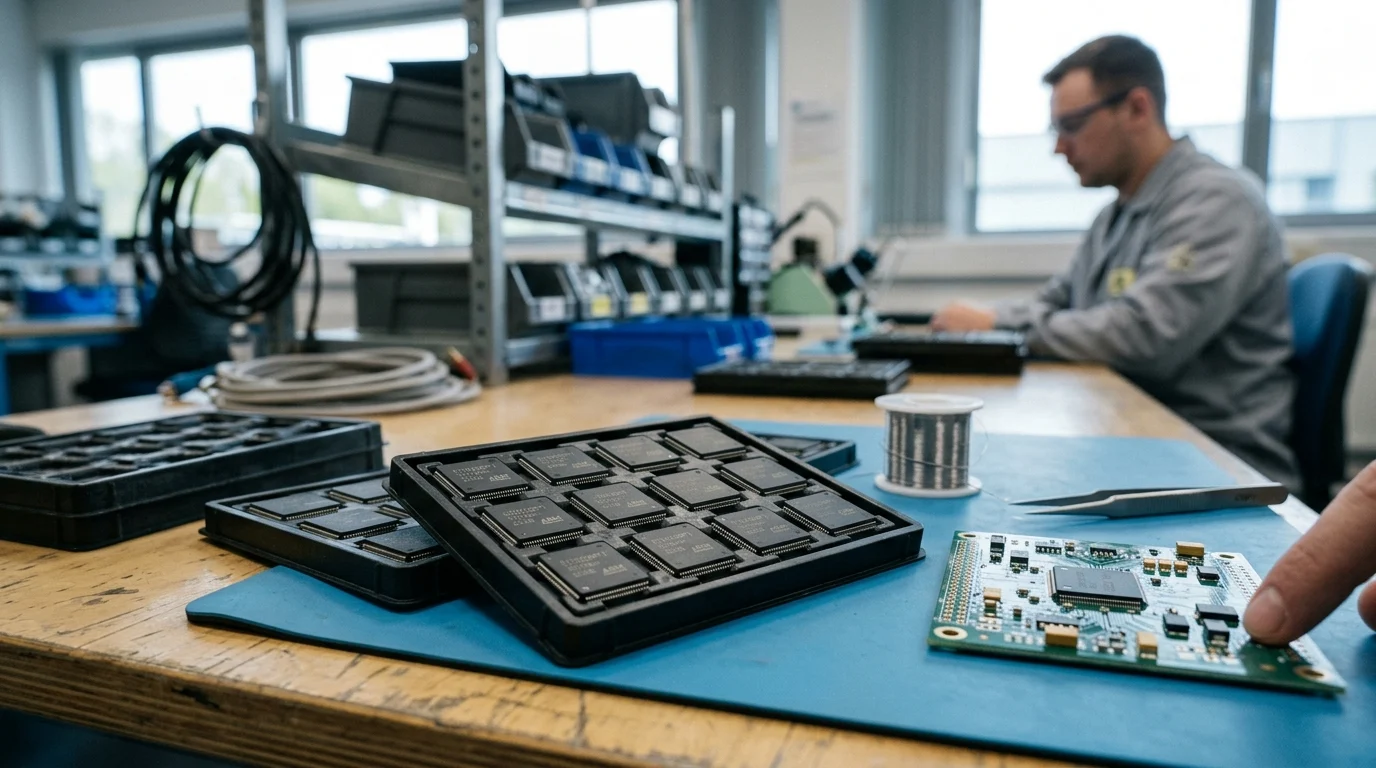
When negotiating, clarify the MOQ and the packaging formats (e.g., tape and reel vs. tray), as this impacts your contract manufacturer’s automated assembly lines. Additionally, ask about standard lead times and cancellation windows. In critical infrastructure deployments, full lot traceability is non-negotiable; ensure the supplier provides detailed documentation so you can trace any field failures back to a specific silicon batch.
How integration can reduce BOM and assembly complexity
Some advanced MPUs integrate external components, such as memory (SIP – System in Package) or power management units, directly into the chip. While the unit price of an integrated MPU might be higher, it eliminates several discrete components from your BOM, reduces the physical size of the PCB, and simplifies the SMT (Surface Mount Technology) assembly process, often resulting in a lower total landed cost.
Price breaks, forecasting, and channel margin planning
To optimize channel margins, build a procurement model that leverages volume price breaks. Work with your distributors to set up scheduled blanket orders based on a rolling 12-month forecast. This guarantees your supply in a constrained market while allowing you to lock in high-volume pricing, which improves the gross margins for your downstream channel partners and managed service providers.
Compliance, Reliability, and Deployment Factors
You cannot deploy a remote IoT device if it fails regional regulatory certifications or dies in harsh environmental conditions. Procurement teams must treat compliance and reliability as primary sourcing filters, not afterthoughts. If you select an MPU that generates excessive electromagnetic interference (EMI) or fails at extreme temperatures, your entire product launch will be delayed by costly board respins and re-certifications.
I always cross-reference the MPU’s environmental specifications with the physical realities of the deployment site. Remote IoT devices are routinely exposed to freezing winters, blistering summers, and high humidity. The silicon must be rated for industrial temperature ranges, and the manufacturer must provide robust reliability data, including Mean Time Between Failures (MTBF) and thermal resistance metrics.
Furthermore, as these devices connect to broader networks, their ability to interface reliably with existing infrastructure—such as fiber optic terminals and network accessories—is critical for seamless data transmission. Choosing a robust IoT Microprocessor ensures your edge device can maintain stable, high-speed communication links without dropping packets or requiring constant reboots.
Relevant certifications: RoHS, REACH, CE, FCC, and UL
Your MPU must strictly comply with material regulations like RoHS and REACH to be legally imported into regions like the European Union. Furthermore, the chip’s design heavily influences the device’s ability to pass CE, FCC (for electromagnetic emissions), and UL safety certifications. Sourcing components from reputable manufacturers ensures you have the necessary compliance declarations to satisfy customs and regulatory bodies.
Thermal behavior, EMC performance, and long-term reliability
Advanced MPUs typically run cooler because they consume less power, which improves long-term reliability. However, you must still verify the industrial temperature rating (commonly -40°C to +85°C or higher). Additionally, review the manufacturer’s Electromagnetic Compatibility (EMC) guidelines; a well-designed MPU will have features that minimize noise, making it easier and cheaper to pass emissions testing at the system level.
Why secure MPU design matters for connected edge devices
In remote deployments, physical security is impossible. Therefore, the MPU must provide a hardware root of trust. Look for features like secure boot, cryptographic accelerators, and tamper-detection pins. If a remote device is compromised, it can be used as a backdoor into the enterprise network. Procurement must view these security features as mandatory risk-mitigation tools, not optional upgrades.
Interoperability with network infrastructure and accessories
Remote IoT devices do not operate in a vacuum; they aggregate data and push it back through complex network topologies. The MPU must reliably support the necessary communication protocols (like Ethernet, CAN, or cellular modems) to interface smoothly with downstream infrastructure, including fiber optic network switches and connectivity accessories, ensuring fast, accurate, and maintenance-free data transfers.
How Procurement Teams Should Compare MPU Platforms
Running a sourcing event for an advanced MPU requires a structured, multi-disciplinary approach. You cannot simply pull five datasheets, look at the price, and issue a purchase order. I recommend creating a weighted decision matrix that incorporates inputs from hardware engineering, software development, and field service teams.
The goal is to evaluate the platform as a whole. Sometimes, a slightly more expensive MPU comes with an incredible software ecosystem that cuts your development time in half, saving hundreds of thousands of dollars in engineering payroll. Procurement’s role is to facilitate this holistic evaluation, ensuring that every hidden cost—from development tools to field maintenance—is accounted for in the comparison.
To do this effectively, you have to force suppliers to prove their claims. Do not rely solely on the marketing numbers on the first page of the datasheet. Require them to provide power consumption data based on your specific use case, and demand access to their support engineers during the evaluation phase to gauge how responsive they will be when your team runs into trouble.
Define workload, power budget, battery model, and field conditions
Start by explicitly documenting your requirements. Define the exact computational workload, the strict maximum power budget, the physical size and chemistry of the battery you intend to use, and the environmental extremes the device will face. Use this document as the baseline standard; any MPU that cannot meet these criteria under simulated conditions should be immediately disqualified.
Compare supplier support, SDK maturity, and firmware portability
An MPU is useless without good software. Evaluate the maturity of the supplier’s Software Development Kit (SDK) and the availability of open-source community support (like Yocto Linux or Zephyr RTOS integration). High-quality, well-documented SDKs reduce time-to-market. Additionally, assess firmware portability; choosing an architecture that allows you to port code easily protects you if you need to switch suppliers in the future.
Use sample orders, qualification runs, and pilot deployments
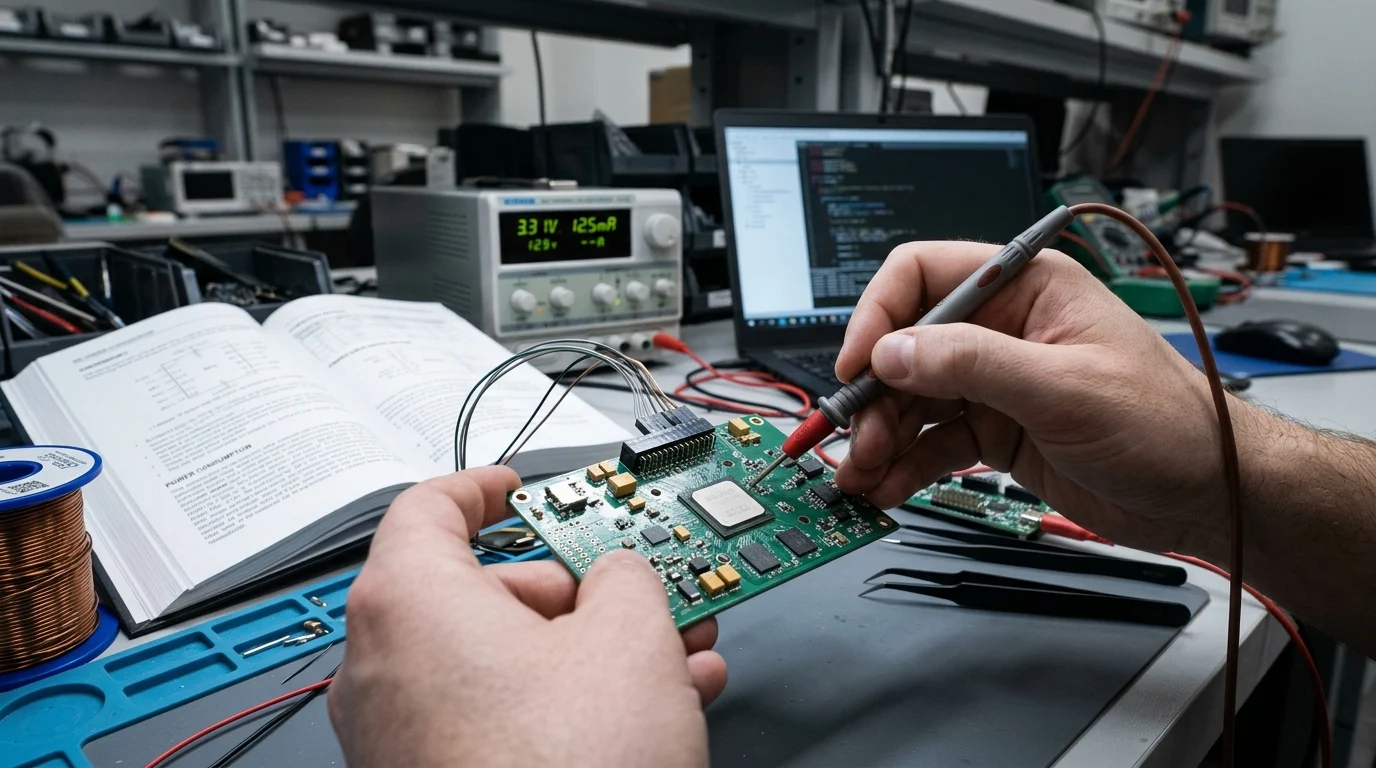
Never commit to mass production without rigorous real-world testing. Negotiate for engineering samples and evaluation boards early in the process. Run a small pilot deployment (e.g., 50 to 100 units) to monitor actual battery drain and thermal performance in the field. This qualification run is your last line of defense against unforeseen hardware bugs or power spikes before scaling up.
Common MPU Sourcing Questions from B2B Buyers
In my consulting work with B2B supply chains, procurement managers repeatedly ask the same set of questions when transitioning to advanced MPU architectures. The underlying theme is always risk management: how do we balance the upfront costs of new technology against the promised long-term savings?
Navigating these questions requires a solid understanding of both the semiconductor market and the specific mechanics of IoT deployments. Buyers are under immense pressure to reduce the BOM, but they must be educated on why squeezing the hardware budget too tightly can lead to catastrophic operational failures down the line.
Here are the most frequent questions I field, along with the strategic answers that help procurement teams justify their sourcing decisions to the executive board.
How much can advanced MPU design reduce power costs?
Depending on the baseline, the savings can be massive. By utilizing deep sleep modes and DVFS, an advanced MPU can reduce a device’s average power consumption by 50% to 80% compared to an older, always-on processor. In terms of OPEX, this can extend battery life from 18 months to over 5 years, completely eliminating two or three expensive field service replacement cycles per device.
Should buyers prioritize unit price or lifecycle cost?
Always prioritize lifecycle cost (Total Cost of Ownership). Saving $2 on the unit price of an MPU is a terrible trade-off if it requires a $10 larger battery or causes a $200 truck roll two years early. B2B buyers must build cost models that calculate the total expense of the device—including BOM, development, compliance, and field maintenance—over its entire deployed lifespan.
What MOQ, packaging, and logistics terms should be negotiated?
Negotiate MOQs that align with your realistic production ramp-up, asking for staggered delivery schedules to manage cash flow. Ensure packaging (tape and reel) matches your assembler’s requirements to avoid repacking fees. Crucially, negotiate strict terms regarding lead time guarantees and buffer stock agreements (e.g., vendor-managed inventory) to protect your production lines from sudden semiconductor shortages.
How should buyers qualify an MPU supplier?
Qualify suppliers by auditing their financial stability, manufacturing capacity, and supply chain redundancies (e.g., do they use multiple foundries?). Review their Product Longevity Programs to ensure long-term support. Additionally, assess their technical support infrastructure; a supplier must have accessible field application engineers (FAEs) in your region to assist your design team when integration issues arise.
Key Takeaways for Choosing a Low-Power MPU
Choosing the right silicon is a strategic decision that reverberates through your entire business model. The transition to advanced, low-power architectures is not just an engineering upgrade; it is a procurement strategy that directly impacts product viability, service margins, and customer satisfaction.
By stepping back and looking at the entire ecosystem—from the battery cell to the cloud network—you can make sourcing decisions that create genuine competitive advantages. Remember that the goal is not to buy the cheapest chip, but to buy the most efficient Battery-Operated MPU that perfectly matches your deployment realities.
Keep these final principles in mind as you structure your next sourcing event, and you will be well-positioned to deliver hardware that is both financially sound and technically robust.
Match MPU architecture to duty cycle, environment, and service model
Ensure the silicon’s strengths align directly with how the device will be used. Match deep-sleep efficiency to devices that rarely wake up, and match processing efficiency to devices that handle heavy edge analytics. Always factor in the harshness of the deployment environment and the realities of your field maintenance contracts.
Prioritize total cost of ownership over lowest purchase price
Shift the procurement conversation away from isolated component costs. Build comprehensive TCO models that prove to stakeholders how investing a little more in an advanced, power-efficient MPU significantly reduces battery costs, shrinks the PCB footprint, and drastically cuts long-term operational and maintenance expenses.
Build scalable sourcing programs for remote IoT deployments
Create resilient supply chains by partnering with stable suppliers who offer guaranteed lifecycles and robust technical support. Implement rolling forecasts, negotiate favorable logistics and packaging terms, and always validate performance through pilot deployments before committing to mass production. Scalability requires predictability in both pricing and performance.
Related reading: Low-Power MPU
Key Takeaways
- Wholesale sourcing and supply-chain implications for MPU
- Specifications, compliance, and commercial terms buyers should validate
- Actionable recommendations for distributors and procurement teams