

La tecnología MTP representa una iteración avanzada del conector MPO. Ofrece un rendimiento superior, particularmente beneficioso para aplicaciones críticas y de alta demanda. Mientras tanto, el Adaptador MPO mantiene su estatus como estándar industrial ampliamente adoptado. Muchas infraestructuras de red lo implementan con éxito para lograr una conectividad confiable. Esta comprensión fundamental ayuda a diferenciar sus funciones en los sistemas de fibra óptica modernos.
Key Takeaways
- Los adaptadores MTP son un tipo mejorado de MPO connector. Ofrecen un mejor rendimiento.
- Los adaptadores MPO son comunes y cuestan menos. Funcionan bien para muchas configuraciones de red estándar.
- Los adaptadores MTP tienen características especiales como una férula flotante. Esto ayuda a mantener fuertes las conexiones.
- Los adaptadores MTP son los mejores para redes muy rápidas. Son buenos para cosas importantes. centros de datos.
- Los conectores MPO y MTP se pueden conectar entre sí. Pero mezclarlos puede reducir el rendimiento.
- Elija un adaptador según las necesidades de velocidad de su red. Considere también el crecimiento futuro y su presupuesto.
- Los adaptadores MTP cuestan más al principio. Pueden ahorrar dinero más adelante con una mayor confiabilidad.
- Habla con expertos en fibra óptica. Pueden ayudarle a elegir el adaptador adecuado para su red.
Comprensión de los adaptadores MPO y MTP
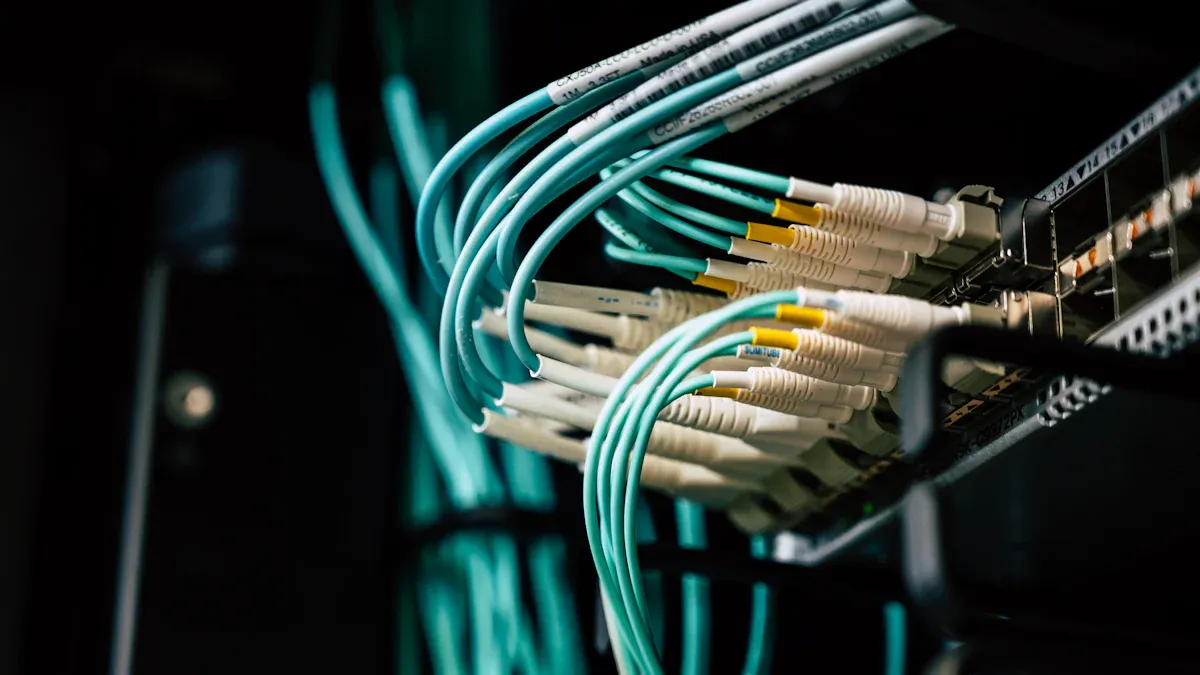
¿Qué es un adaptador MPO?
Definición del conector MPO
Un conector MPO, que significa Multi-fiber Push On, representa un tipo de conector de fibra óptica. Alberga múltiples fibras ópticas dentro de un solo casquillo. Este diseño permite la conexión simultánea de 4, 8, 12, 24 o incluso 48 fibras. El conector MPO cuenta con un mecanismo de cierre push-pull que garantiza una conexión segura y rápida.
Función principal del adaptador MPO
An El adaptador MPO proporciona lo crucial Interfaz para conectar dos conectores MPO. Alinea con precisión los casquillos de los conectores, asegurando una transmisión óptima de la señal óptica entre las múltiples fibras. Esta alineación minimiza la pérdida de señal y mantiene la integridad de los datos a través del enlace de fibra. El adaptador MPO facilita el cableado de fibra de alta densidad, simplificando la implementación de la red.
¿Qué es un adaptador MTP?
Definición del conector MTP
MTP significa Empuje de terminación multifibra. Es una marca para un tipo específico de conector MPO fabricado por US Conec. Aunque técnicamente es un conector MPO, el conector MTP incorpora varias mejoras de diseño. Estas mejoras conducen a un rendimiento mecánico y óptico superior en comparación con los conectores MPO genéricos. También admite varios recuentos de fibras, similar a MPO.
Función principal del adaptador MTP
Un adaptador MTP realiza la misma función fundamental que un adaptador MPO: conecta dos conectores MTP. Sin embargo, su diseño aprovecha las funciones avanzadas del conector MTP. Esto incluye tolerancias más estrictas y una construcción más robusta. El adaptador MTP garantiza una alineación de la fibra aún más precisa, lo que se traduce en una menor pérdida de inserción y mejores características de pérdida de retorno. Soporta las demandas de alto rendimiento de las redes de fibra avanzadas.
Papel compartido en la conectividad de fibra de alta densidad
Beneficios de las soluciones multifibra
Tanto los adaptadores MPO como MTP son parte integral de las soluciones multifibra. Estas soluciones ofrecen importantes ventajas para entornos de alta densidad. Permiten a los ingenieros de redes implementar muchos enlaces de fibra utilizando un solo conector. Este enfoque ahorra un espacio considerable y reduce el tiempo de instalación. Las soluciones multifibra también admiten óptica paralela, una tecnología crucial para la transmisión de datos de alta velocidad como Ethernet 40G y 100G.
Impacto en el diseño del centro de datos
La adopción de adaptadores MPO y MTP profundamente impacta el diseño del centro de datos. Permiten una infraestructura de cableado más compacta y organizada. Los centros de datos pueden lograr una mayor densidad de puertos dentro de sus racks y gabinetes. Esta eficiencia conduce a un mejor flujo de aire, un menor consumo de energía y una gestión más sencilla. Estos adaptadores facilitan la rápida implementación y reconfiguración de enlaces de red, lo cual es esencial para operaciones de centros de datos ágiles y escalables.
Diferencias clave entre los adaptadores MPO y MTP
Variaciones de diseño y construcción
Diseño y precisión de la férula
Los adaptadores MPO y MTP presentan claras diferencias en los diseños de sus casquillos, lo que afecta directamente la precisión. Los casquillos MPO suelen presentar un diseño fijo. Por el contrario, los conectores MTP incorporan un diseño de férula flotante exclusivo. Esto permite que la férula se mueva ligeramente a lo largo de su eje. Este movimiento ayuda a mantener el contacto físico entre las fibras incluso bajo estrés, lo que reduce la variación de la pérdida de inserción en 0,05–0,10 dB. Los conectores MTP también suelen utilizar casquillos de alto rendimiento fabricados con termoplástico de alta calidad, mientras que los casquillos MPO utilizan materiales compuestos estándar.
| Feature | Férula MPO | Férula MTP |
|---|---|---|
| Diseño | Fijado | Flotante |
| Material | Compuesto estándar | Termoplástico de alta calidad |
| Movimiento | None | Se mueve ligeramente a lo largo del eje. |
| Benefit | N/A | Mejor contacto físico bajo estrés, reduce la variación de la pérdida de inserción entre 0,05 y 0,10 dB |
Los conectores MTP cuentan con una mayor mecanismo de alineación precisa de la férula en comparación con los conectores MPO estándar. Esto se debe a un diseño exclusivo de férula flotante que ayuda a mantener el contacto físico entre las fibras incluso cuando las condiciones cambian, disminuyendo así las posibilidades de pérdida de señal óptica. Además, los conectores MTP suelen incorporar casquillos de alto rendimiento con pasadores guía elípticos y casquillos estrechamente alineados para reducir aún más la desalineación de la fibra y la pérdida de señal, mejorando la integridad de la señal.
Mecanismos de pasador guía
Los mecanismos del pasador guía también difieren significativamente entre los adaptadores MPO y MTP, lo que afecta la precisión de la alineación. Los conectores MPO suelen utilizar pasadores guía de extremos planos. Estos pasadores pueden experimentar más desgaste y acumulación de residuos con el tiempo. Los conectores MTP, sin embargo, utilizan pasadores guía elípticos. Este diseño reduce el desgaste y los residuos, lo que genera una alineación más consistente y precisa.
| Feature | Pasadores guía MPO | Pasadores guía MTP |
|---|---|---|
| Forma | Extremo plano | Elíptico |
| Desgaste/escombros | Más desgaste y escombros | Reduce el desgaste y los residuos. |
Los conectores MTP mejoran la precisión de la alineación a través de sus pasadores guía elípticos y casquillos estrechamente alineados. Este diseño reduce significativamente la desalineación de la fibra, lo que a su vez minimiza la pérdida de señal causada por la pérdida de inserción o retorno, mejorando en última instancia la integridad de las señales en cada punto final.
Calidad de la vivienda y los materiales
La calidad de la carcasa y del material también distingue a los adaptadores MPO y MTP. Los conectores MTP suelen presentar materiales y construcción de carcasa más robustos. Esto mejora su estabilidad mecánica y protege los componentes internos de forma más eficaz. Los materiales de mayor calidad utilizados en los adaptadores MTP contribuyen a su durabilidad general y consistencia de rendimiento, especialmente en entornos exigentes.
Comparación de métricas de rendimiento
Rendimiento de pérdida de inserción
La pérdida de inserción es una métrica de rendimiento crítica. Mide la cantidad de potencia de señal que se pierde cuando la luz pasa a través de una conexión. Los conectores MTP se reconocen como un versión mejorada de conectores MPO, diseñado específicamente para lograr una menor pérdida de inserción y ofrecer un rendimiento mejorado. Si bien ambos tipos de conectores pueden terminar múltiples fibras con un solo casquillo, los conectores MTP cumplen con especificaciones más estrictas y generalmente ofrecen una calidad superior en comparación con otros tipos de conectores MPO. Esto da como resultado que los adaptadores MTP generalmente muestren valores de pérdida de inserción más bajos, lo cual es crucial para transmisiones de alta velocidad y larga distancia.
Características de pérdida de retorno
La pérdida de retorno mide la cantidad de luz reflejada hacia la fuente. Los valores de pérdida de retorno más altos indican un mejor rendimiento. Los conectores MPO demuestran un rendimiento excelente para aplicaciones de datos de alta velocidad. Los conectores MPO estándar suelen presentar valores de pérdida de retorno superior a 20 dB, mientras que los conectores MPO de contacto físico en ángulo (APC) pueden alcanzar valores de pérdida de retorno superiores a 60 dB. Los adaptadores MTP generalmente ofrecen características superiores de pérdida de retorno debido a su diseño y precisión mejorados.
| Connector Type | Pérdida de retorno (RL) |
|---|---|
| MPO | ≥ 30dB |
| MTP® | ≥ 50dB |
Precisión de alineación óptica
La precisión de la alineación óptica es fundamental para minimizar la pérdida de señal. Los adaptadores MTP logran una precisión de alineación óptica superior debido a sus características de diseño avanzadas. La férula flotante y los pasadores guía elípticos de los conectores MTP garantizan una alineación de fibra más precisa. Esto reduce las posibilidades de desalineación, que puede causar una degradación significativa de la señal.
Factores de durabilidad y confiabilidad
Estabilidad mecánica y robustez
Los adaptadores MTP generalmente ofrecen estabilidad mecánica y robustez mejoradas en comparación con los adaptadores MPO estándar. Su diseño incorpora características que los hacen más resistentes al estrés físico y a la manipulación repetida. Esta mayor robustez contribuye a una vida útil más larga y un rendimiento más confiable en diversas condiciones operativas.
Longevidad del ciclo de apareamiento
el número de ciclos de apareamiento Un adaptador puede soportar antes de que la degradación del rendimiento sea un factor de confiabilidad importante. Los extremos MPO están especificados para resistir al menos 500 ciclos de apareamiento, con un cambio típico en la pérdida de inserción que no supera los 0,20 dB. Los conectores de extremo de rama (MTP) están diseñados para soportar al menos 1000 ciclos de apareamiento, también con un cambio típico en la pérdida de inserción de 0,20 dB o menos. Los conectores MTP® de alta calidad están diseñados para mantener el rendimiento durante más de 500 ciclos de apareamiento sin degradación significativa.
| Tipo de adaptador | Ciclos de apareamiento |
|---|---|
| MPO | Hasta 500 |
| MTP | Hasta 1.000 |
Resiliencia ambiental
La resiliencia ambiental se refiere a la capacidad de un adaptador para funcionar de manera confiable en condiciones ambientales variables. Los adaptadores MTP demuestran una tolerancia superior a las variaciones de temperatura en comparación con los adaptadores MPO estándar. Si bien los centros de datos con temperaturas estables (18-27°C) no sobrecargan térmicamente los conectores, los materiales termoplásticos de MTP son ventajosos en espacios no acondicionados que experimentan amplios rangos de temperatura (-20°C a +60°C). Estos materiales mantienen un diámetro de orificio guía constante, a diferencia de los compuestos termoestables en MPO estándar, que pueden absorber humedad y degradarse en tales condiciones. Esto hace que los adaptadores MTP sean más adecuados para implementaciones en entornos menos controlados.
Funciones y mejoras únicas
Los adaptadores MTP se distinguen por varias características y mejoras únicas. Estos elementos de diseño contribuyen a su rendimiento superior y mayor flexibilidad en comparación con los adaptadores MPO estándar. Estas innovaciones abordan desafíos comunes en las implementaciones de fibra óptica de alta densidad.
Tecnología de férula flotante
Los conectores MTP incorporan un virola flotante. Este diseño mejora significativamente el rendimiento mecánico. Permite que dos casquillos acoplados sostengan Contacto físico incluso bajo carga.. La férula MT del conector MPO es fija, lo que limita su flexibilidad bajo fuerza externa. Por el contrario, los conectores MTP cuentan con un ingenioso casquillo flotante. Este diseño mejora significativamente las propiedades mecánicas. Los casquillos flotantes permiten que el conector resista cargas sin perder el contacto físico. Esto garantiza una transmisión de datos estable. Este diseño también reduce la pérdida de inserción. Los conectores MTP son ventajosos cuando se conectan a transmisores o receptores activos debido a las posibles cargas aplicadas. La férula flotante también ayuda a prevenir la acumulación de polvo en la superficie del extremo.
Carcasa extraíble para reconfiguración
Los adaptadores MTP ofrecen una característica única de carcasa extraíble. Este diseño permite a los técnicos cambiar fácilmente el género o la polaridad del conector en el campo. Los usuarios pueden quitar la carcasa exterior. Esto proporciona acceso a los componentes internos. Esta flexibilidad simplifica la gestión de inventario. También reduce la necesidad de herramientas especializadas o cables preconfigurados. Los administradores de red pueden adaptar rápidamente su infraestructura de cableado a los requisitos de red en evolución. Esta característica ahorra tiempo y costos durante la implementación y el mantenimiento.
Flexibilidad de gestión de polaridad
Los adaptadores MTP proporcionan una flexibilidad superior en la gestión de la polaridad. La polaridad se refiere a la alineación correcta de las fibras de transmisión y recepción entre dos transceptores ópticos. Los conectores MTP admiten varios métodos de polaridad, incluidos el tipo A, el tipo B y el tipo C. La función de carcasa extraíble contribuye directamente a esta flexibilidad. Los técnicos pueden reconfigurar fácilmente la alineación de los pasadores o la orientación de las fibras. Esto permite una adaptación perfecta a diferentes arquitecturas de red. Esta adaptabilidad es crucial para entornos de centros de datos complejos. Garantiza un flujo de señal adecuado y simplifica la resolución de problemas. Esta característica otorga a los diseñadores de redes un mayor control sobre su infraestructura de fibra óptica.
Ventajas y aplicaciones de los adaptadores MPO
Puntos fuertes del adaptador MPO
Rentabilidad para implementaciones estándar
Los adaptadores MPO ofrecen una solución muy rentable para muchas implementaciones de red. Los transceptores MPO reducen significativamente los sistemas de cableado en general. También reducen los gastos de instalación al enviar múltiples flujos de datos a través de un único conector. Esta infraestructura simplificada reduce los costos de material. También facilita una gestión y una escalabilidad más sencillas. Su diseño de alta densidad que ahorra espacio permite más conexiones por pie cuadrado. Esto es crucial en entornos con espacio limitado. Los transceptores MPO también consumen menos energía por Gbps. Esto conduce a facturas de energía más bajas con el tiempo. Contribuye a un coste total de propiedad favorable. Conectores MPO son más rentables que los conjuntos de cables conectorizados individuales. El conector MPO 24f es especialmente rentable para sistemas ópticos dúplex y paralelos. proporciona 24 fibras en un solo conector. Esto ofrece una mayor densidad y ahorra tiempo de limpieza e inspección durante la instalación.
Adopción y disponibilidad generalizadas
Los adaptadores MPO gozan de una adopción generalizada en toda la industria de la fibra óptica. Esta amplia aceptación significa que están disponibles fácilmente a través de numerosos fabricantes y proveedores. Su estandarización garantiza la compatibilidad entre equipos de diferentes proveedores. Esto hace que la adquisición y la implementación sean sencillas para los administradores de red. La amplia presencia en el mercado también contribuye a precios competitivos y a un sólido ecosistema de soporte.
Simplicidad en diseño y uso
El diseño del adaptador MPO enfatiza la simplicidad. Su mecanismo de cierre push-pull permite conexiones rápidas y sencillas. Los técnicos pueden instalar y quitar cables MPO de manera eficiente. Este sencillo diseño reduce la complejidad de las instalaciones de fibra óptica. También minimiza la posibilidad de errores durante la implementación y el mantenimiento. Esta facilidad de uso hace que los adaptadores MPO sean una opción práctica para muchas tareas de red estándar.
Casos de uso ideales para adaptadores MPO
Infraestructura de centro de datos estándar
Los adaptadores MPO son ideales para la infraestructura de centro de datos estándar. Sobresalen en áreas de parcheo de alta densidad. También proporcionan conexiones eficientes en arquitecturas de columna de hoja. Los centros de datos los utilizan para conexiones entre servidores, conmutadores y enrutadores. Los adaptadores MPO son una opción común para centros de datos de hiperescala y en la nube. También son eficaces para actualizaciones y modernizaciones de centros de datos. Su capacidad para manejar múltiples fibras en un solo conector simplifica la administración de cables. Esto ayuda a mantener un entorno de centro de datos organizado y eficiente.
Backbones de redes empresariales
Las redes troncales de las empresas utilizan con frecuencia adaptadores MPO. Estos adaptadores proporcionan el ancho de banda y la densidad necesarios para conectar dispositivos de red central. Admiten la transmisión de datos de alta velocidad necesaria para las grandes organizaciones. Su confiabilidad garantiza una comunicación estable en toda la infraestructura de la red. Los adaptadores MPO ayudan a construir redes empresariales sólidas y escalables.
Integración con sistemas heredados
Los adaptadores MPO ofrecen una excelente compatibilidad para la integración con sistemas heredados. Muchas infraestructuras de fibra óptica más antiguas pueden beneficiarse de la tecnología MPO. Los adaptadores MPO permiten una transición fluida a cableado de mayor densidad. No requieren una revisión completa del equipo existente. Esto los convierte en una opción práctica para actualizaciones graduales. Extiende la vida y mejora el rendimiento de las redes heredadas.
Ventajas y aplicaciones de los adaptadores MTP
Puntos fuertes del adaptador MTP
Rendimiento óptico superior
Los adaptadores MTP ofrecen constantemente un rendimiento óptico superior. Logran una menor pérdida de inserción y una mayor pérdida de retorno en comparación con los conectores MPO estándar. Esta capacidad mejorada se debe a varias ventajas de diseño y fabricación. Característica de conectores MTP tolerancias de fabricación más estrictas. También utilizan materiales de calidad superior. Estos factores facilitan una mejor alineación y contacto de las fibras. Los mecanismos precisos de alineación de la férula contribuyen aún más a reducir la pérdida de inserción. Además, los conectores MTP incorporan diseños refinados. Estos diseños disminuyen la luz reflejada, mejorando así la capacidad de pérdida de retorno y manteniendo la integridad de la señal.
| Metric | Conectores MTP | Conectores MPO |
|---|---|---|
| Insertion Loss | Menor (debido a tolerancias más estrictas, materiales superiores y fabricación precisa) | Mayor (en comparación con MTP) |
| Return Loss | Más alto (debido a diseños refinados, menos luz reflejada) | Menor (en comparación con MTP) |
| Confiabilidad | Más alto | Menor (en comparación con MTP) |
Estabilidad mecánica mejorada
Los adaptadores MTP ofrecen una estabilidad mecánica significativamente mejorada. Su diseño incorpora características que aseguran conexiones robustas y confiables. Mayores tolerancias de fabricación e ingeniería más precisa contribuir a una mayor fiabilidad mecánica. Pasadores guía elípticos y los casquillos estrechamente alineados reducen la desalineación de las fibras y la pérdida de señal. El diseño de férula flotante ayuda a mantener el contacto físico con ligeras perturbaciones mecánicas. Esto garantiza un rendimiento constante. Los adaptadores MTP también cuentan con puntas de pasador de metal y un pestillo antienganche. Estos elementos aumentan la durabilidad y previenen daños durante la desconexión. Están diseñados para ser resistentes. Esto les permite soportar operaciones frecuentes de acoplamiento y desacoplamiento sin sufrir daños. Una construcción física robusta, que incluye mejores sistemas de resortes o soldaduras ultrasónicas, aumenta aún más la confiabilidad en condiciones difíciles.
Preparación para el futuro de redes en evolución
Los adaptadores MTP proporcionan excelentes capacidades preparadas para el futuro para redes en evolución. Sus métricas de rendimiento superiores respaldan las demandas actuales de alta velocidad. También se adaptan a los requisitos futuros de ancho de banda. Invertir en tecnología MTP garantiza que la infraestructura siga siendo relevante a medida que aumentan las velocidades de la red. Esta adaptabilidad minimiza la necesidad de costosas actualizaciones posteriores. Permite a las organizaciones escalar sus redes de manera eficiente.
Casos de uso ideales para adaptadores MTP
Centros de datos de hiperescala
Centros de datos de hiperescala Depende en gran medida de los adaptadores MTP. Estos entornos exigen densidad y rendimiento extremos. Los adaptadores MTP facilitan la rápida implementación y reconfiguración de miles de enlaces de fibra. Su confiabilidad y baja pérdida de señal son fundamentales para mantener redes extensas e interconectadas.
Aplicaciones de alto ancho de banda y baja latencia
Las aplicaciones que requieren un gran ancho de banda y baja latencia se benefician enormemente de los adaptadores MTP. Las plataformas de comercio financiero, la informática científica y el análisis en tiempo real dependen de una degradación mínima de la señal. El rendimiento óptico superior de MTP garantiza que los datos se transmitan de forma rápida y precisa.
Infraestructura de misión crítica
La infraestructura de misión crítica, como las redes gubernamentales o los servicios de emergencia, requiere el más alto nivel de confiabilidad. Los adaptadores MTP proporcionan las conexiones robustas y estables que estos sistemas exigen. Su estabilidad mecánica mejorada y su rendimiento constante reducen el riesgo de tiempo de inactividad de la red.
Redes 400G y superiores de próxima generación
Los adaptadores MTP son esenciales para redes de próxima generación operando a 400G y más. Estas redes de ultra alta velocidad requieren conectores que puedan manejar inmensos volúmenes de datos con una pérdida mínima. La tecnología MTP proporciona la precisión y el rendimiento necesarios para soportar estas velocidades avanzadas.
Compatibilidad e interoperabilidad de adaptadores MPO y MTP
¿Se pueden utilizar juntos los adaptadores MPO y MTP?
Consideraciones de compatibilidad física
Los conectores MTP son un tipo específico de conector MPO. Comparten el mismo factor de forma fundamental. Por tanto, los conectores MTP y MPO son físicamente compatibles. Pueden aparearse entre sí. Esto permite la conexión en un enlace de fibra óptica. Este compatibilidad fisica simplifica la implementación inicial. También ofrece flexibilidad en el diseño de la red.
Implicaciones de rendimiento del uso mixto
Si bien los conectores MTP y MPO se pueden conectar físicamente, sus características de rendimiento difieren. Cuando se usan juntos en un solo enlace, el rendimiento general será limitado. El enlace funcionará al nivel del componente de menor especificación, que es el MPO. Esto significa que el enlace mostrará Características de durabilidad y pérdida de inserción a nivel de MPO. Los conectores MTP son totalmente compatibles con conectores MPO genéricos. Sin embargo, el uso de una MPO en una infraestructura basada en MTP no dará como resultado un rendimiento óptimo.
| Aspecto de rendimiento | Conectores MTP (generalmente) | Conectores MPO genéricos (generalmente) |
|---|---|---|
| Insertion Loss | Menor (debido a tolerancias más estrictas, mejores materiales y alineación precisa) | Más alto (conduce a una mayor degradación de la señal) |
| Return Loss | Mayor (mejor integridad de la señal, menos luz reflejada) | Más bajo (más luz reflejada, posible interferencia) |
| Confiabilidad | Mayor (construcción robusta, mejores sistemas de resortes, soldaduras ultrasónicas) | Menor (más propenso a fallas de conexión, vida operativa más corta) |
| Precision | Mecanismo de alineación de férula más preciso | Mecanismo de alineación de férula menos preciso |
| Tolerancias | Tolerancias de fabricación más estrictas | Tolerancias de fabricación menos estrictas |
Mejores prácticas para entornos mixtos
Garantizar un rendimiento óptimo en configuraciones híbridas
Lograr un rendimiento óptimo en configuraciones híbridas requiere una consideración cuidadosa. Al mezclar conectores MTP y MPO en una red híbrida, son mecánicamente compatibles. Se conectarán. Sin embargo, el rendimiento general del enlace se limitará al del conector MPO de menor especificación. Esto significa que el enlace exhibirá características de pérdida de inserción y pérdida de retorno consistentes con los conectores MPO. Para rendimiento óptimo, manteniendo la consistencia Se recomienda dentro de todo el enlace. Evite mezclar tipos de conectores.
Mitigar posibles problemas de interoperabilidad
Las organizaciones pueden implementar varias estrategias para mitigar posibles problemas de interoperabilidad. Etiquetar claramente todos los cables y paneles de conexión. Esto identifica el tipo de conector utilizado. Mantener documentación detallada de la infraestructura de red. Esto incluye las especificaciones del conector. Implemente estratégicamente conectores MTP en segmentos críticos de alto rendimiento. Utilice conectores MPO en zonas menos exigentes. Este enfoque maximiza la eficiencia. También minimiza los cuellos de botella en el rendimiento. La inspección y limpieza periódicas de todos los conectores también son cruciales. Esto garantiza una integridad óptima de la señal.
Seleccionar el adaptador MPO o MTP adecuado para su infraestructura

Elegir el adaptador MPO o MTP correcto requiere una evaluación cuidadosa. Los administradores de redes deben considerar las necesidades actuales y las demandas futuras. Esta decisión afecta el rendimiento, la confiabilidad y la rentabilidad de la red.
Evaluación de los requisitos de red actuales y futuros
Necesidades actuales de ancho de banda y rendimiento
Las organizaciones primero deben evaluar sus requisitos inmediatos de ancho de banda y rendimiento. Las aplicaciones de alta velocidad, como la transmisión de vídeo, las grandes transferencias de datos y la computación en la nube, exigen una conectividad sólida. La elección entre adaptadores MPO y MTP depende de la intensidad de estas demandas. Los adaptadores MTP ofrecen un rendimiento superior para aplicaciones que requieren una pérdida mínima de señal. Los conectores MPO estándar suelen ser suficientes para entornos menos exigentes.
Planes futuros de escalabilidad y crecimiento
La infraestructura de red debe respaldar el crecimiento futuro. Las redes de centros de datos experimentarán cambios significativos en los próximos 5 a 10 años. Los expertos predicen soluciones modulares y edificios temporales. será crucial para implementaciones rápidas de centros de datos. La construcción actual no puede seguir el ritmo de la demanda. Más organizaciones utilizarán centros de datos modulares y estructuras temporales para utilizar rápidamente la energía disponible. Esto sucederá hasta que las instalaciones permanentes estén listas.
Para 2026, el foco pasará de construir los modelos de IA más grandes a lograr el rendimiento por vatio. La eficiencia se convertirá en el nuevo punto de referencia. Los centros de datos ya sobrecargan las redes. La búsqueda de modelos más grandes encontrará límites de energía física. Los centros de datos contribuirán activamente a la estabilización de la red y la mitigación de costos. Asegurarán inversiones estratégicas y promoverán la flexibilidad de carga. El gas natural servirá como un puente fundamental hacia soluciones de carga base sostenibles. Asegurar el poder se ha convertido en un desafío mayor que encontrar terrenos para centros de datos.
Las demandas térmicas y de energía de AI-HPC superarán los diseños actuales de los centros de datos. Esto hace que la refrigeración líquida sea algo común. Se necesita una reevaluación fundamental de la entrega de energía. La geografía del centro de datos se convertirá en una ventaja estratégica. Los operadores darán prioridad a ubicaciones que ofrezcan energía abundante y rentable y refrigeración confiable. La modularidad será esencial para ampliar la refrigeración líquida en los centros de datos de IA. Las unidades modulares sobre patines a partir de 2 MW se convertirán en estándar para la construcción de centros de datos de alta densidad a finales de 2026. Las cargas de trabajo de IA continúan aumentando las densidades de energía.
La industria cambiará en 2026. La atención se centrará en la inteligencia con la que se organiza y no en la cantidad de computación que se posee. Las empresas utilizarán la observabilidad prioritaria de la IA para maximizar el retorno de la inversión de cada vatio, carga de trabajo y chip. Esto transforma los centros de datos infrautilizados en ecosistemas que se optimizan automáticamente. Las empresas comenzarán a migrar cargas de trabajo selectas y datos confidenciales desde las nubes públicas a sus propios centros de datos en 2026. Las preocupaciones sobre los costos a largo plazo, las compensaciones de control y el riesgo de que los grandes modelos públicos de lenguaje absorban información patentada impulsan este cambio. Esto conduce a modelos híbridos más equilibrados.
El volumen total de datos producidos, registrados, transferidos y utilizados en todo el mundo alcanzará los 394 zettabytes en 2028. Esto representa un aumento significativo con respecto a los 149 zettabytes en 2024. La demanda global de capacidad de los centros de datos aumentará 3,5 veces. Pasará de 82 GW en 2025 (44 GW de carga de trabajo de IA, 38 GW sin IA) a 219 GW en 2030 (156 GW con IA, 64 GW sin IA). La capacidad incremental de IA agregada por año aumentará de 13 GW en 2025 a 31 GW en 2030. Esto suma un total de 124 GW durante este período.
Demandas de rendimiento para aplicaciones críticas
Las aplicaciones críticas, como transacciones financieras, imágenes médicas e investigaciones científicas, requieren un rendimiento impecable. Estas aplicaciones no pueden tolerar la degradación de la señal ni el tiempo de inactividad. Los adaptadores MTP, con su alineación óptica superior y su menor pérdida de inserción, brindan la confiabilidad que estos sistemas exigen. Las organizaciones deben priorizar el MTP para la infraestructura de misión crítica. Esto garantiza la integridad de los datos y el funcionamiento continuo.
Consideraciones presupuestarias para la selección del adaptador
Costos de inversión inicial de MPO frente a MTP
Los conectores MPO generalmente tienen un costo inicial menor en comparación con los conectores MTP. Esto los hace atractivos para proyectos con presupuestos ajustados. Sin embargo, este ahorro inicial debe sopesarse con el rendimiento y el mantenimiento a largo plazo. Los conectores MTP, aunque son más caros desde el principio, ofrecen características mejoradas que pueden generar un mayor valor general.
Gastos operativos a largo plazo
Los gastos operativos a largo plazo incluyen costos de mantenimiento, reemplazo y posibles tiempos de inactividad. Los conectores MTP ofrecen varias ventajas sobre conectores MPO genéricos. Estas ventajas contribuyen a reducir los gastos operativos a largo plazo debido a su rendimiento, confiabilidad y durabilidad superiores.
| Feature | Conectores MTP | Conectores MPO genéricos |
|---|---|---|
| Insertion Loss | Inferior (0,1 dB a 0,35 dB) | Mayor (0,3 dB a 0,75 dB) |
| Return Loss | Mayor (mejor integridad de la señal) | Más bajo (luz más reflejada) |
| Confiabilidad | Mayor (construcción robusta, mejores sistemas de resortes, soldaduras ultrasónicas) | Más bajo (propenso a fallas de conexión, vida operativa más corta) |
| Precision | Mecanismo de alineación de férula más preciso | Mecanismo de alineación de férula menos preciso |
| Tolerancias | Tolerancias de fabricación más estrictas | Tolerancias de fabricación menos estrictas |
| Durability | Robusto, soporta apareamientos frecuentes; pines menos propensos a romperse | Menos resistente; los pines pueden romperse fácilmente |
| Costos de mantenimiento | Bajar con el tiempo | Más alto con el tiempo |
Los conectores MTP minimizan la degradación de la señal. Esto reduce la necesidad de amplificación o retransmisión de la señal. Esto puede generar costos adicionales. Los conectores MTP tienen diseños más refinados. Estos diseños disminuyen el reflejo de la luz. Esto mantiene una mayor integridad de la señal. Esto contribuye a una red más estable. Requiere menos resolución de problemas y mantenimiento. La ingeniería avanzada en los conectores MTP los hace menos propensos a fallas en la conexión. Les da una vida operativa más larga. Esto se traduce en menos reemplazos y mantenimiento menos frecuente. Los conectores MTP cuentan con un mecanismo de alineación de férula más preciso. Un diseño único de férula flotante mantiene el contacto físico entre las fibras. Esto reduce la pérdida de señal óptica. También están diseñados para ser resistentes. Resisten frecuentes operaciones de acoplamiento y desacoplamiento sin sufrir daños. Esta durabilidad reduce la probabilidad de daños y los costos de reemplazo asociados.
Realización de un análisis integral de costos y beneficios
Las organizaciones deben realizar un análisis exhaustivo de costo-beneficio. Este análisis compara la inversión inicial de los adaptadores MPO versus MTP. También considera los ahorros operativos a largo plazo y los beneficios de rendimiento. Para aplicaciones críticas y redes preparadas para el futuro, el mayor costo inicial de MTP a menudo se justifica mediante un mantenimiento reducido y un rendimiento superior. Para implementaciones estándar, los conectores MPO pueden ofrecer un rendimiento suficiente a un costo menor.
Prepare su red para el futuro con el adaptador adecuado
Planificación de avances tecnológicos
Las redes de fibra óptica están inherentemente diseñadas para adaptarse a futuros avances tecnológicos.. Pueden escalar para satisfacer las crecientes demandas de datos. No requieren revisiones importantes de la infraestructura. Avances tecnológicos clave incluir:
- Redes de fibra hasta las instalaciones (FTTP): El trabajo continuo en arquitectura, operaciones, gestión, interoperabilidad y tecnologías de acceso respalda implementaciones a gran escala.
- DOCSIS Aprovisionamiento de EPON (DPoE): Esto permite implementaciones PON de 10 Gbps. Permite a los operadores utilizar los sistemas de aprovisionamiento DOCSIS existentes para equipos de las instalaciones del cliente basados en fibra.
- Especificación de cable OpenOMCI: Esto garantiza implementaciones FTTP consistentes e interoperables entre varios proveedores y operadores.
- Especificación PON coherente: CableLabs avanza en esta tecnología PON de próxima generación.
- Investigación de seguridad PON: El desarrollo de especificaciones complementarias mejora los mecanismos de seguridad PON existentes.
- Detección distribuida de fibra óptica (DFOS): La investigación explora el uso de fibra para aplicaciones de detección.
- Fuentes de longitud de onda avanzadas y tecnologías de conmutación de longitud de onda: Se producen innovaciones en la generación y el enrutamiento de señales ópticas.
- Fibra de núcleo hueco: Los investigadores investigan este nuevo tipo de fibra por sus posibles beneficios.
- Rendimiento de baja latencia en redes ópticas: La investigación se centra en reducir la latencia en las comunicaciones ópticas.
- Optimización de red impulsada por IA: La inteligencia artificial mejora el rendimiento de la red.
- Detección en tiempo real: Las redes detectan y responden a las condiciones en tiempo real.
- Redes de autocuración: La infraestructura detecta y resuelve problemas automáticamente.
Garantizar la longevidad de la inversión en infraestructura
Invertir en adaptadores MTP ayuda a garantizar la longevidad de las inversiones en infraestructura. Su rendimiento y durabilidad superiores significan que seguirán siendo relevantes a medida que crezcan las demandas de la red. Esto reduce la necesidad de actualizaciones frecuentes. Protege el desembolso de capital inicial. Los adaptadores MTP proporcionan una base sólida para las tecnologías de red en evolución.
Adaptabilidad a nuevos estándares y velocidades
Los adaptadores de red deben admitir velocidades y estándares industriales actuales y emergentes. Para estar preparados en el futuro, los adaptadores de red deben admitir 400G. Sigue siendo la solución principal y más rentable para implementaciones a gran escala. Esto incluye proveedores de nube e hiperescaladores. Ha reemplazado a 100G como la velocidad más implementada y madura con un ecosistema rico. 800G está emergiendo rápidamente como un nuevo estándar. Es particularmente importante para los centros de datos impulsados por IA. Es crucial para manejar cargas de trabajo de IA/HPC y tráfico extremo de este a oeste. La hoja de ruta de la industria también se extiende a Ethernet 1.6T.
| Generación | Concepto de carril típico | Conductor principal |
|---|---|---|
| 800G | 8 × 100G (típico) | Tejidos AI/HPC |
| 1.6T | 16 × 100G (temprano) → menos carriles a velocidades más altas por carril | Cambiar escalado ASIC + Energía por Bit |
Los adaptadores MTP ofrecen la precisión y confiabilidad necesarias para estas velocidades más altas. Garantizan que las redes puedan adaptarse a nuevos estándares sin cuellos de botella en el rendimiento.
Marco práctico para la toma de decisiones
Guía de selección paso a paso
- Evaluar las necesidades actuales: Determine los requisitos inmediatos de ancho de banda, rendimiento y aplicaciones.
- Proyecto de crecimiento futuro: Considere los aumentos previstos en el volumen de datos, nuevas aplicaciones y planes de escalabilidad.
- Evaluar las demandas de desempeño: Identifique aplicaciones críticas que requieren una pérdida mínima de señal y máxima confiabilidad.
- Analizar Presupuesto: Compare los costos de inversión inicial con los gastos operativos a largo plazo tanto para MPO como para MTP.
- Considere la posibilidad de prepararse para el futuro: Evalúe cómo cada tipo de adaptador admite avances tecnológicos y nuevos estándares de velocidad.
Consulta con expertos en fibra óptica
La colaboración con expertos en fibra óptica proporciona información valiosa. Estos profesionales ofrecen orientación sobre diseños de redes complejos. Ayudan a optimizar la selección de adaptadores para necesidades de infraestructura específicas. Su experiencia garantiza decisiones informadas.
Evaluación del soporte y el ecosistema de los proveedores
Las organizaciones deben evaluar el soporte de los proveedores y el ecosistema general. Un proveedor sólido ofrece productos confiables, asistencia técnica y garantías integrales. Un ecosistema sólido garantiza la compatibilidad con otros componentes de la red. Esto simplifica la implementación y el mantenimiento.
Marco práctico para la toma de decisiones
Los administradores de redes requieren un enfoque estructurado para seleccionar el adaptador MPO o MTP apropiado. Este marco los guía a través de consideraciones críticas. Garantiza que tomen decisiones informadas. Estas decisiones se alinean tanto con las necesidades operativas actuales como con los objetivos estratégicos a largo plazo. Una evaluación sistemática minimiza los riesgos y optimiza las inversiones en infraestructura.
Guía de selección paso a paso
Las organizaciones pueden seguir un proceso claro paso a paso para elegir el mejor adaptador. Este enfoque metódico les ayuda a navegar las complejidades de la tecnología de fibra óptica. Garantiza que seleccionen una solución que cumpla con sus requisitos específicos.
- Evaluar los requisitos de red actuales:
- Los administradores de redes primero identifican sus necesidades inmediatas de ancho de banda y rendimiento. Determinan las velocidades de datos que exigen actualmente sus aplicaciones. Esto incluye evaluar los patrones de tráfico y las cargas máximas. También consideran los tipos de aplicaciones que se ejecutan en la red. Las aplicaciones de gran ancho de banda, como videoconferencias o transferencias de grandes bases de datos, requieren una conectividad sólida. Los adaptadores MPO estándar suelen ser suficientes para entornos menos exigentes. Sin embargo, las aplicaciones críticas con requisitos de rendimiento estrictos pueden necesitar adaptadores MTP.
- Crecimiento futuro y escalabilidad del proyecto:
- Las organizaciones deben anticipar la futura expansión de la red. Consideran los aumentos proyectados en el volumen de datos y la adopción de nuevas tecnologías. Esto implica planificar usuarios, dispositivos y servicios adicionales. Una infraestructura escalable se adapta al crecimiento sin requerir revisiones costosas y frecuentes. Los adaptadores MTP ofrecen un margen de rendimiento superior. Soportan mayores velocidades y densidades. Esto los convierte en una opción estratégica para las redes que esperan un crecimiento significativo.
- Evalúe las demandas de rendimiento para aplicaciones críticas:
- Las aplicaciones críticas exigen un rendimiento impecable. Estas aplicaciones, como los sistemas de comercio financiero o las imágenes médicas, no pueden tolerar la degradación de la señal ni el tiempo de inactividad. Los administradores de redes dan prioridad a los adaptadores que ofrecen una pérdida de inserción mínima y una pérdida de retorno superior. Los adaptadores MTP brindan la precisión y confiabilidad que estos sistemas requieren. Garantizan la integridad de los datos y el funcionamiento continuo de la infraestructura de misión crítica.
- Analizar las restricciones presupuestarias:
- Las consideraciones presupuestarias implican tanto la inversión inicial como los gastos operativos a largo plazo. Los conectores MPO generalmente tienen un costo inicial más bajo. Esto los hace atractivos para proyectos con presupuestos limitados. Sin embargo, las organizaciones deben sopesar esto con los posibles costos de actualización futuros o limitaciones de rendimiento. Los conectores MTP, aunque son más caros inicialmente, a menudo reducen los gastos operativos a largo plazo. Ofrecen mayor confiabilidad y rendimiento superior. Un análisis integral de costo-beneficio ayuda a determinar la verdadera propuesta de valor de cada opción.
- Considere los avances tecnológicos y preparados para el futuro:
- La infraestructura de red debe seguir siendo relevante a medida que evoluciona la tecnología. Las organizaciones planifican los próximos estándares de la industria y velocidades de red más altas. Los adaptadores MTP ofrecen ventajas inherentes para el futuro. Sus características de rendimiento superiores admiten tecnologías emergentes como Ethernet 400G y 800G. Invertir en tecnología MTP garantiza que la infraestructura pueda adaptarse a las nuevas demandas. Esto minimiza la necesidad de actualizaciones costosas y prematuras.
Consulta con expertos en fibra óptica
La colaboración con expertos en fibra óptica proporciona información invaluable durante el proceso de toma de decisiones. Estos profesionales poseen un profundo conocimiento de las tecnologías de fibra óptica y las mejores prácticas de la industria. Ofrecen orientación especializada sobre diseños de redes complejos y estrategias de implementación.
- Conocimiento especializado: Los expertos comprenden los matices de las tecnologías MPO y MTP. Proporcionan explicaciones detalladas de las métricas de rendimiento y consideraciones de diseño. Este conocimiento ayuda a las organizaciones a tomar decisiones informadas.
- Estrategias de optimización: Los consultores ayudan a optimizar el rendimiento de la red. Identifican posibles obstáculos y sugieren soluciones. Sus recomendaciones garantizan que los adaptadores seleccionados se integren perfectamente en la infraestructura existente.
- Tecnologías emergentes: Los expertos se mantienen al tanto de los últimos avances en fibra óptica. Asesoran sobre cómo las nuevas tecnologías podrían afectar los requisitos futuros de la red. Esta previsión ayuda a las organizaciones a construir redes preparadas para el futuro.
- Mitigación de riesgos: Los profesionales identifican riesgos potenciales asociados con diferentes opciones de adaptadores. Proponen estrategias para mitigar estos riesgos. Esto reduce la probabilidad de errores costosos o problemas de rendimiento.
Tip: Colaborar con consultores experimentados en fibra óptica puede mejorar significativamente la eficacia de la selección del adaptador. Su experiencia garantiza un rendimiento óptimo y confiabilidad a largo plazo para la infraestructura de red.
Evaluación del soporte y el ecosistema de los proveedores
La elección del adaptador también depende en gran medida del proveedor y de su ecosistema de soporte. Un proveedor confiable ofrece más que un simple producto; Ofrecen soporte integral y un entorno de soluciones sólido. Las organizaciones deben evaluar minuciosamente estos aspectos.
- Calidad y confiabilidad del producto: Las organizaciones evalúan la calidad y confiabilidad de los productos del proveedor. Buscan certificaciones y cumplimiento de los estándares de la industria. Los adaptadores de alta calidad garantizan un rendimiento y una durabilidad constantes.
- Asistencia y soporte técnico: Un proveedor sólido ofrece un excelente soporte técnico. Esto incluye documentación fácilmente disponible, guías de solución de problemas y un servicio al cliente receptivo. El soporte eficaz minimiza el tiempo de inactividad y resuelve los problemas rápidamente.
- Políticas de garantía y devolución: Las organizaciones revisan los términos de garantía y las políticas de devolución del proveedor. Las políticas favorables protegen su inversión. Proporcionan recurso en caso de defectos del producto o problemas de rendimiento.
- Compatibilidad del ecosistema: El ecosistema del proveedor incluye transceptores, cables y otros componentes de red compatibles. Un ecosistema sólido garantiza una integración perfecta. Simplifica la adquisición y la implementación.
- Hoja de ruta de innovación y futuro: Las organizaciones consideran el compromiso del proveedor con la innovación. Evalúan la hoja de ruta del producto del proveedor. Esto indica su capacidad para soportar futuros avances tecnológicos. Un proveedor con visión de futuro ayuda a preparar la red para el futuro.
Los adaptadores MTP ofrecen rendimiento y confiabilidad mejorados. Esto los hace ideales para aplicaciones críticas de alta velocidad. Por el contrario, el adaptador MPO ofrece una solución rentable y ampliamente adoptada para centros de datos estándar y redes empresariales. La elección óptima depende de una evaluación cuidadosa de las necesidades específicas de rendimiento de la red, los objetivos de escalabilidad y las restricciones presupuestarias. Invertir en el adaptador correcto garantiza la eficiencia, la confiabilidad y la preparación futura de la red.
FAQ
¿Cuál es la principal distinción entre los adaptadores MPO y MTP?
MTP es una versión mejorada de MPO. Ofrece un rendimiento mecánico y óptico superior. MTP cuenta con una férula flotante y pasadores guía elípticos. Estos mejoran la alineación y la durabilidad. MPO es un estándar genérico. MTP es una marca de conector MPO de alto rendimiento.
¿Se pueden conectar entre sí los conectores MPO y MTP?
Sí, los conectores MPO y MTP son físicamente compatibles. Pueden aparearse juntos. Sin embargo, cuando se utiliza en el mismo enlace, el rendimiento general estará limitado por el componente MPO de menor especificación. Esto afecta la pérdida de inserción y la confiabilidad.
💡 Tip: Para obtener un rendimiento óptimo de la red, evite mezclar componentes MPO y MTP dentro de enlaces críticos.
¿Qué tipo de adaptador es más adecuado para redes 400G?
Los adaptadores MTP son más adecuados para redes de 400G y superiores. Su rendimiento óptico superior, menor pérdida de inserción y estabilidad mecánica mejorada satisfacen las estrictas demandas de la transmisión de datos a ultra alta velocidad. Garantizan una integridad óptima de la señal.
¿El mayor costo de los adaptadores MTP justifica su uso?
Para aplicaciones de misión crítica, centros de datos de hiperescala y redes preparadas para el futuro, el mayor costo inicial de los adaptadores MTP suele justificarse. Proporcionan rendimiento, confiabilidad y longevidad superiores. Esto reduce los gastos operativos a largo plazo y las necesidades de actualización.
¿Cómo se puede distinguir visualmente un conector MTP de un MPO genérico?
Los conectores MTP suelen tener un diseño de carcasa distinto. Pueden tener un clip de metal o una marca de marca específica (US Conec). Los conectores MPO genéricos suelen tener una carcasa más simple y uniforme. También ayuda examinar los pasadores guía (elípticos para MTP).
¿Qué beneficio ofrece la tecnología de férula flotante en los adaptadores MTP?
El casquillo flotante permite que el casquillo se mueva ligeramente dentro de la carcasa del conector. Esto mantiene el contacto físico entre las fibras acopladas incluso bajo tensión. Reduce significativamente la variación de la pérdida de inserción y mejora la estabilidad mecánica. Esto garantiza un rendimiento óptico constante.
¿Los adaptadores MPO/MTP afectan la latencia de la red?
Sí, los adaptadores MPO/MTP contribuyen a la latencia de la red. Una menor pérdida de inserción en los adaptadores MTP significa una menor degradación de la señal. Esto puede dar como resultado una latencia ligeramente menor en comparación con los adaptadores MPO. Sin embargo, la diferencia suele ser mínima para la mayoría de las aplicaciones.
 Spanish
  English
  Russian
  Portuguese
  Korean
  Japanese