


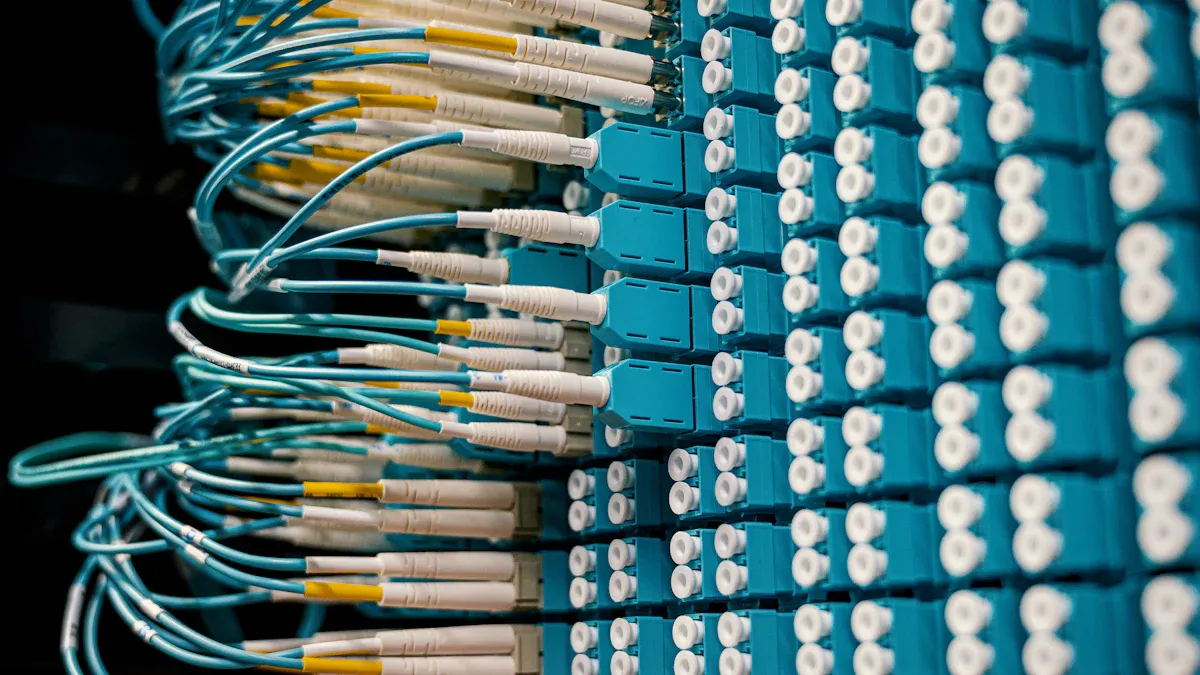
The fundamental difference between managed and unmanaged Fiber Ethernet Switches lies in their level of control and configurability. Unmanaged switches offer straightforward simplicity. They function as plug-and-play devices. Managed switches, conversely, provide extensive configuration options. They allow detailed network management. A network solutions benchmark report indicates over 70% of small-scale network deployments utilize unmanaged switches. This widespread adoption is primarily attributed to their low operational costs and ease of use. This statistic refers to unmanaged switches generally. It does not specifically differentiate between fiber and copper ethernet switches.
Key Takeaways
- Unmanaged switches are simple. They work right away. They are good for small networks.
- Managed switches give you control. You can set them up. They are good for big networks.
- Unmanaged switches cost less money. They need little care. They are easy to use.
- Managed switches cost more. They save money later. They stop network problems.
- Managed switches make networks safe. They keep data private. They follow rules.
- Choose a switch for your network size. Think about your needs. Plan for future growth.
- Smart switches are a middle choice. They offer some control. They cost less than managed switches.
Understanding Unmanaged Fiber Ethernet Switches
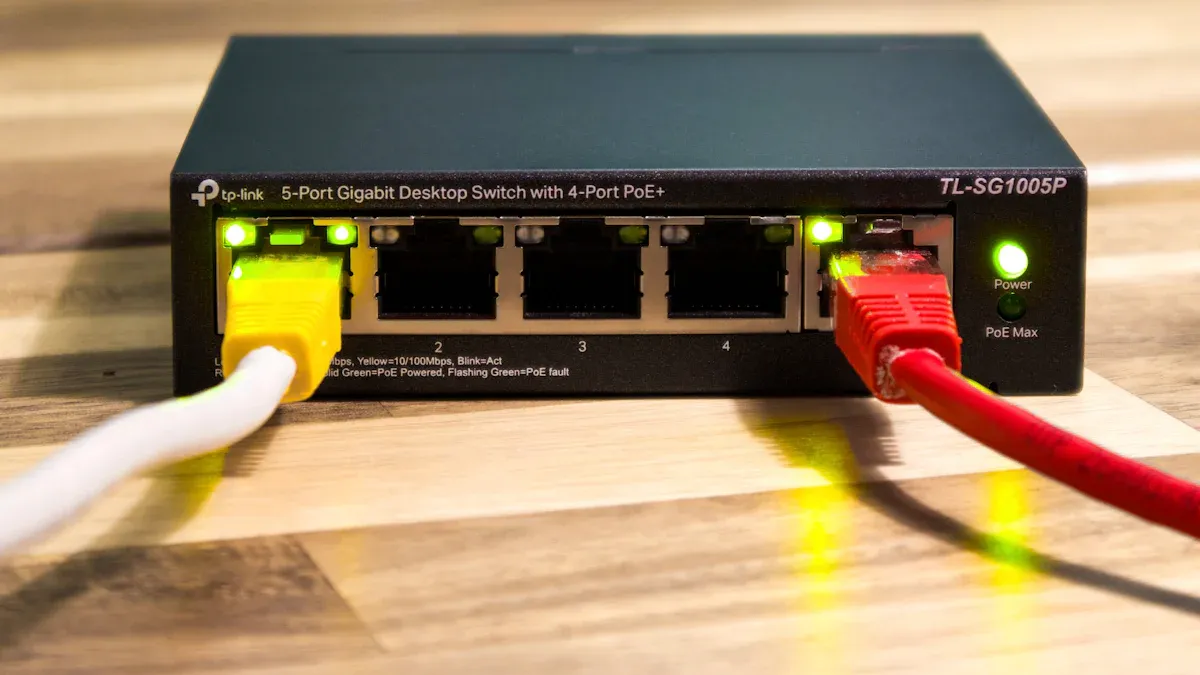
Unmanaged Fiber Ethernet Switches offer a straightforward approach to network connectivity. They operate without requiring any user configuration. These devices are ideal for basic network needs where simplicity and immediate functionality are priorities.
Core Characteristics of Unmanaged Fiber Ethernet Switches
Simplicidad plug-and-play
Unmanaged Fiber Ethernet Switches are incredibly easy to deploy. Users simply connect their devices, and the switch begins forwarding data. This plug-and-play functionality eliminates the need for complex setup procedures or specialized IT knowledge. The switch automatically detects connected devices and manages data flow.
Fixed Configuration
These switches come with a fixed set of factory settings. Users cannot modify these settings. The switch operates based on its pre-programmed parameters. This design ensures consistent performance for basic tasks but limits customization options.
Ideal Scenarios for Unmanaged Fiber Ethernet Switches
Small Office/Home Office (SOHO) Networks
Unmanaged fiber ethernet switches are highly effective in small networks. These environments prioritize simplicity, cost-effectiveness, and basic connectivity. They connect devices like computers, printers, or IP cameras in small offices or homes.
Extending Network Reach
Businesses often use unmanaged switches to extend their network. They can connect devices in areas far from the main network hub. This allows for simple expansion without complex network planning.
Edge Device Connectivity
Unmanaged switches are perfect for connecting edge devices. These include individual workstations, security cameras, or IoT sensors. They provide reliable connectivity at the network’s periphery.
Limitations of Unmanaged Fiber Ethernet Switches
Absence of Network Control
Unmanaged switches offer no control over network traffic. They simply forward data to its destination. Network administrators cannot prioritize certain types of traffic or manage bandwidth. This can lead to congestion in busy networks.
Restricted Troubleshooting Capabilities
Troubleshooting network issues becomes difficult with unmanaged switches. They do not provide diagnostic tools or logs. Administrators cannot monitor network performance or identify the source of problems. This makes resolving connectivity issues challenging.
Lack of Advanced Features
Unmanaged switches lack advanced security features. They do not support 802.1X authentication or Access Control Lists (ACLs). This makes them vulnerable to unauthorized access. They also cannot segment networks using VLANs. All connected devices reside on the same broadcast domain, which poses security risks and can cause network congestion. The absence of monitoring capabilities means these switches offer no defense against attacks or data exfiltration attempts.
Exploring Managed Fiber Ethernet Switches
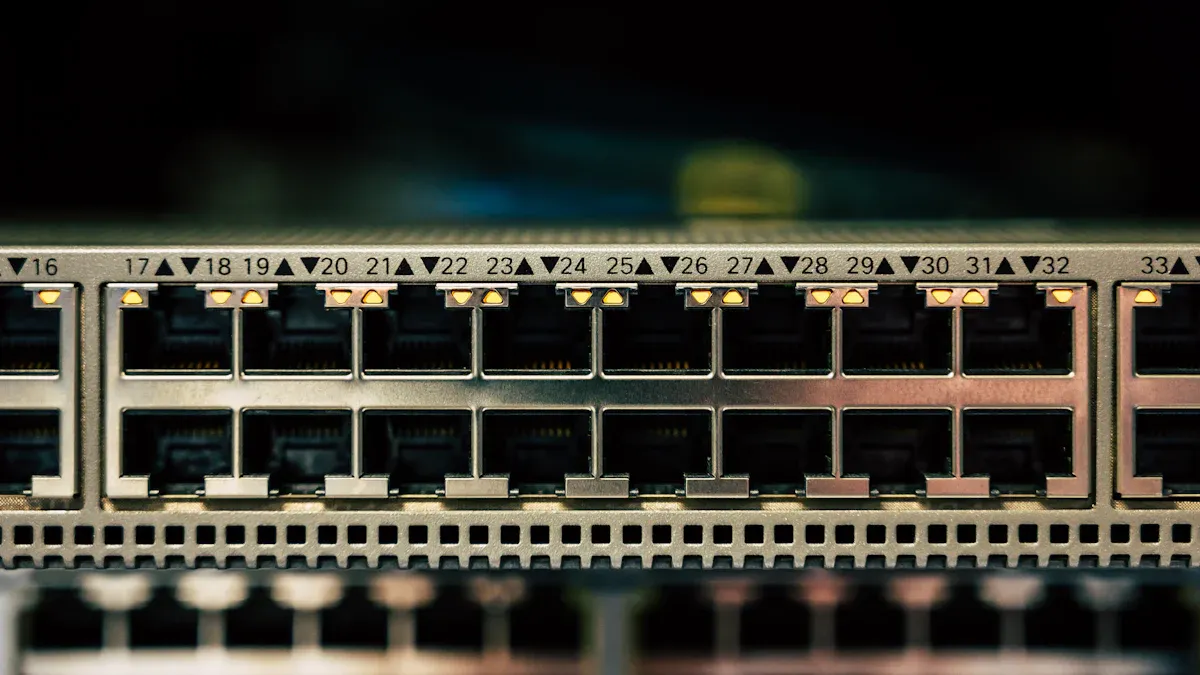
Managed Fiber Ethernet Switches provide extensive control and advanced features for complex network environments. They allow administrators to configure, monitor, and manage network traffic with precision. These switches are essential for organizations requiring high performance, robust security, and reliable network operations.
Advanced Control and Configuration Capabilities
Comprehensive Network Monitoring
Managed switches offer detailed insights into network performance. They include performance monitoring tools, such as Simple Network Management Protocol (SNMP). Network administrators utilize SNMP for performance monitoring and troubleshooting. Devices like SNMP enable remote checking of network performance and health metrics. Comprehensive monitoring is available through GUI and CLI interfaces, facilitating port control and traffic monitoring, along with sending alerts.
Granular Traffic Management
Administrators gain precise control over data flow with managed switches. They can prioritize specific types of traffic, ensuring critical applications receive the necessary bandwidth. This prevents network congestion and maintains optimal performance for essential services.
Enhanced Security Features
Managed switches provide robust security options. They allow administrators to implement access controls, authenticate users, and protect sensitive data. These features safeguard the network from unauthorized access and potential threats.
Key Features of Managed Fiber Ethernet Switches
Virtual Local Area Networks (VLANs)
VLANs segment a network into smaller, isolated broadcast domains. This enhances security and improves performance.
| Benefit | Reduction/Improvement |
|---|---|
| Lateral-movement attacks | 45% fewer |
| Internal breach spread | Reducción 50% |
| Incident containment | 38% faster |
| VLANs create digital boundaries to protect sensitive data. They isolate critical resources and contain cyber attacks by limiting their spread. They also enforce role-based access controls through ACLs and firewall rules. | |
 |
Quality of Service (QoS) Prioritization
QoS allows administrators to prioritize network traffic. This ensures critical applications, like voice and video, receive preferential treatment. QoS can eliminate issues like choppy video and dropped calls in real-time communication. It allows prioritizing critical business data, such as video calls with potential investors, over less time-sensitive activities like employee file downloads.
Link Aggregation Control Protocol (LACP)
LACP combines multiple physical links into a single logical link. This increases bandwidth and provides redundancy. If one link fails, traffic automatically reroutes through the remaining links.
Simple Network Management Protocol (SNMP)
SNMP enables network devices to share information with a central management system. This protocol facilitates remote monitoring and management of the switch and other network components.
Redundancy and High Availability Protocols
Managed switches support protocols like Spanning Tree Protocol (STP) and Rapid Spanning Tree Protocol (RSTP). These protocols prevent network loops and ensure continuous network operation by providing redundant paths.
Typical Applications for Managed Fiber Ethernet Switches
Enterprise-Level Networks
Large organizations rely on managed switches for their extensive control and scalability. These switches support complex network architectures and high traffic volumes.
Data Center Infrastructure
Data centers demand high performance, reliability, and advanced management capabilities. Managed Fiber Ethernet Switches meet these requirements, handling massive data transfers and critical applications.
Grandes redes de campus
Universities and corporate campuses use managed switches to connect numerous buildings and devices. They provide the necessary segmentation, security, and performance for diverse user groups.
Industrial Automation Environments
Industrial settings require robust and reliable network infrastructure. Managed switches ensure stable communication for control systems and sensors, even in harsh conditions.
Direct Comparison: Managed vs. Unmanaged Fiber Ethernet Switches
Organizations face a critical decision when selecting network infrastructure: managed or unmanaged Fiber Ethernet Switches. This choice significantly impacts network performance, security, and operational costs. A detailed comparison reveals the distinct advantages and disadvantages of each type.
Feature Set and Functionality
Configuration Options and Flexibility
Managed and unmanaged switches differ greatly in their configuration capabilities. Unmanaged switches offer a fixed, plug-and-play setup. They require no user configuration. Managed switches, however, provide extensive configuration options. They allow administrators to customize network settings.
A direct comparison highlights the stark differences in capabilities:
| Feature | Managed Switches | Unmanaged Switches |
|---|---|---|
| Configuration | Complex, including VLANs, QoS, SNMP, port security, remote management, traffic monitoring, scalability, port mirroring, STP, link aggregation, ACLs | Simple, fixed, plug-and-play, no configuration required |
| Flexibilidad | High, allows optimization, customization, and control over network traffic and devices | Limited, fixed settings, suitable for basic connectivity |
| Control | Extensive, allows administrators to set parameters, prioritize traffic, and manage remotely | None, automatic operation upon connection |
| Suitability | Complex, large-scale networks, requiring optimization and security | Basic, simple, low-maintenance, smaller networks, home environments |
| Gestión | Remote management via web-based dashboards, CLI, SSH, SNMP | No remote management or visibility |
| Seguridad | Advanced features like port security, ACLs, network segmentation | Cannot offer advanced security capabilities |
| Cost | Generally higher due to advanced features | Generally lower due to simplicity |
Managed switches offer high flexibility. They allow optimization, customization, and control over network traffic and devices. Unmanaged switches have limited flexibility. They operate with fixed settings. This makes them suitable only for basic connectivity.
Monitoring and Diagnostic Tools
Managed switches provide powerful tools for network monitoring and diagnosis. These tools are absent in unmanaged switches.
- SNMP (Simple Network Management Protocol): This monitoring tool aids in real-time network observation. It quickly identifies performance issues.
- Port Mirroring: This tool assists in real-time network observation. It helps identify performance issues quickly.
- Traffic Monitoring: Administrators observe and analyze network traffic. They identify and resolve issues as they emerge.
- Traffic and Error Diagnostics: Managed switches offer metrics and tools for monitoring traffic and identifying errors. Unmanaged switches lack these capabilities.
These diagnostic tools give administrators crucial insights. They help maintain network health and troubleshoot problems effectively.
Security Protocols and Access Control
Managed switches significantly enhance network security. They support various protocols for robust access control.
- Port Security: This feature limits network access to authorized devices.
- Authentication Protocols: These protocols verify the identity of devices attempting to connect.
- VLANs (Virtual Local Area Networks): VLANs segment the network. They isolate sensitive information and control broadcast domains.
- ACLs (Access Control Lists): ACLs provide support for special security options.
- Monitoring and Logging Capabilities: These capabilities help identify and respond to security threats promptly.
Managed switches enhance network security by supporting VLANs and port mirroring. VLANs enable network segmentation. This separates sensitive data from regular network traffic. It reduces the risk of unauthorized access.
Performance and Network Reliability
Traffic Optimization and Prioritization
Managed switches excel at optimizing network traffic. They prioritize critical data. This ensures smooth operation for essential applications. Organizations implementing Quality of Service (QoS) strategies can reduce latency in critical operations by hasta 30%. Businesses employing continuous monitoring can enhance their QoS management by 40%. Implementing traffic optimization features helps minimize downtime. It also increases overall network resilience. Unmanaged switches lack these optimization capabilities. They treat all traffic equally. This can lead to congestion and performance degradation in busy networks.
Uptime, Redundancy, and Failover
Managed switches are designed for environments where uptime and performance are critical. They offer advanced features to maximize network dependability.
- External Redundant Power Supply: This ensures continuous operation. It works even if one power source fails.
- Spanning Tree Protocols (STP, RSTP, MSTP): These protocols enhance network resilience. They prevent loops and provide redundant paths.
- Loopback Detection (LBD) and Broadcast Storm Control: These features prevent network disruptions. They stop loops and excessive broadcast traffic.
- G.8032 Ethernet Ring Protection Switching (ERPS): This minimizes recovery time. It can be as low as 50 ms in ring topologies.
- 802.3ad Link Aggregation Port Trunking: This provides load sharing and redundancy backup. It supports switch cascading and server attachments.
Managed switches offer extensive redundancy features. They ensure maximum uptime. Unmanaged switches are basic ‘plug and go’ devices. They have limited functionality. They lack advanced features like VLANs, QoS, and monitoring tools. This makes them unsuitable for medium to large networks. They are inherently less resilient to outages.
Cost Implications and Return on Investment
Initial Purchase Price Differences
Unmanaged switches generally have a lower initial purchase price. Their simplicity and lack of advanced features contribute to this. Managed switches cost more upfront. Their sophisticated hardware and software capabilities drive this higher price.
Operational Expenses and Maintenance
Unmanaged switches have lower operational expenses in terms of direct management. They require minimal setup or ongoing configuration. However, their lack of diagnostic tools can lead to higher troubleshooting costs and longer downtime when issues arise. Managed switches may require more initial setup time and specialized IT expertise. They offer significant long-term savings. Their advanced monitoring and management features reduce troubleshooting time. They also prevent costly outages.
Scalability and Future-Proofing Costs
Managed switches offer significant scalability advantages. They reduce future-proofing costs.
- Stacking Capability: This allows multiple switches to interconnect. They manage as a single unit. This simplifies management and improves scalability for network expansions.
- Enhanced Monitoring and Diagnostics: Through SNMP and other tools, IT teams gain insights into network performance. They detect potential issues. They make data-driven decisions for capacity planning. This enables seamless scaling.
- Advanced Traffic Management: Managed switches offer capabilities like VLANs and QoS. These are crucial for optimizing performance. They manage larger, more complex networks as they expand.
Fiber Ethernet switches are designed to accommodate network expansion. They eliminate the need for frequent hardware replacements. They offer the flexibility to expand infrastructure seamlessly. This includes adding more devices or increasing bandwidth. These switches support higher data rates. This is crucial for managing significant increases in data traffic. It ensures low latency and network responsiveness even during growth. Features like modular designs and stackable switches further enhance their scalability. Planning for future expansion with managed switches ensures the network can handle additional devices. It also supports growing power budgets.
Ease of Use and Management Requirements
The ease of use and management requirements significantly differentiate managed and unmanaged Fiber Ethernet Switches. These factors directly influence operational efficiency and the need for specialized IT personnel. Organizations must consider their internal capabilities and resources when making a selection.
Setup Complexity and Installation
Unmanaged Fiber Ethernet Switches offer unparalleled simplicity during setup and installation. Users simply connect power and network cables. The switch immediately begins forwarding data. This plug-and-play functionality requires no configuration. It makes unmanaged switches ideal for environments with limited technical expertise. Conversely, managed switches involve a more complex setup process. Administrators access a web-based graphical user interface (GUI) or a command-line interface (CLI) for initial configuration. They define settings for VLANs, QoS, security protocols, and other advanced features. This initial setup demands a deeper understanding of network architecture and specific switch functionalities.
Ongoing Maintenance and Administration
Unmanaged switches require minimal ongoing maintenance. They operate autonomously once installed. Users typically only need to ensure power and connectivity remain stable. Managed switches, however, demand continuous administration. Network administrators regularly monitor performance, apply firmware updates, and adjust configurations. They troubleshoot issues, manage security policies, and optimize traffic flow. This proactive management ensures the network operates efficiently and securely. It also adapts to changing business needs. The administrative overhead for managed switches is considerably higher due to their extensive feature set.
Required Technical Expertise
The level of technical expertise required varies significantly between the two switch types. Unmanaged switches need virtually no specialized IT knowledge. Anyone can install and operate them. This makes them suitable for small offices or home networks without dedicated IT staff. Managed switches necessitate a skilled network administrator. This individual possesses expertise in network protocols, security configurations, and performance optimization. They understand concepts like VLANs, QoS, SNMP, and routing. The complexity of managed switch features demands professional oversight to maximize their benefits and maintain network integrity. Choosing a managed Interruptor Ethernet de fibra implies a commitment to having or acquiring this specialized technical resource.
When to Choose Unmanaged Fiber Ethernet Switches
Organizations often select unmanaged Fiber Ethernet Switches when simplicity and budget are the primary considerations for their network infrastructure. These switches provide a straightforward solution without the complexities of advanced configurations.
Prioritizing Simplicity and Budget
Minimal Network Demands
Networks with minimal demands often find unmanaged switches perfectly adequate. These environments typically require basic connectivity for a small number of devices. They do not need advanced features like VLANs, Quality of Service (QoS), or extensive security protocols. For instance, a small retail store connecting a few point-of-sale systems and a printer benefits from this simplicity. A home office environment also fits this description. These switches efficiently handle basic data transfer without requiring any specialized management.
Limited IT Resources and Expertise
Unmanaged switches become a practical solution for environments with limited IT resources and expertise. They are significantly cheaper than managed switches, with standard models often costing between $20 and $100. This makes them ideal for budget-constrained environments. These devices require no professional installation or dedicated IT personnel for upkeep, drastically reducing overall operational spending. Their plug-and-play nature means they require little to no configuration. This makes them simple to deploy and manage, even for non-IT staff. Unmanaged switches are designed for basic connectivity needs where advanced features like traffic control, monitoring, and scaling are not required. Their less complex hardware also leads to reduced power requirements, further contributing to cost savings over time. Over 70% of small-scale deployments utilize unmanaged switches due to their low operational costs and simplicity.
Specific Use Cases for Unmanaged Fiber Ethernet Switches
Beyond budget and simplicity, specific scenarios clearly favor the deployment of unmanaged Fiber Ethernet Switches.
Basic Network Extension
Unmanaged switches excel at basic network extension. They provide a simple way to add more ports to an existing network. For example, a user can extend network access to a new room or a small cluster of devices without reconfiguring the entire network infrastructure. They act as simple hubs for expanding physical connectivity.
Connecting a Few Devices
When connecting only a few devices, an unmanaged switch offers the most efficient and cost-effective solution. Consider a small workgroup needing to share a printer and access a local server. An unmanaged switch provides immediate connectivity without the overhead of management. This avoids unnecessary complexity for simple tasks.
Temporary Network Setups
Unmanaged switches are highly suitable for temporary network setups. Event organizers, construction sites, or pop-up shops often need quick, reliable network access for a limited duration. These switches offer rapid deployment and require no teardown configuration. Their ease of use makes them perfect for short-term projects where network management is not a priority. Such a switch provides robust connectivity without demanding ongoing administration.
When to Opt for Managed Fiber Ethernet Switches
Managed Fiber Ethernet Switches become indispensable for complex and expanding network environments. They provide the necessary tools for efficient operation and strategic growth.
Addressing Network Complexity and Scale
Growing Network Needs and Expansion
Organizations with growing network needs benefit greatly from managed switches. These switches support significant expansion through technologies like stacking or daisy-chaining. They offer robust features such as 24 PoE and 10 GbE compatibility. This ensures the network meets organizational needs as they evolve. Managed switches provide a scalable and robust foundation for future growth, adapting to increasing demands seamlessly.
Multiple Departments or Business Units
Networks serving multiple departments or distinct business units require careful management and segmentation. Managed switches utilize VLANs (Virtual Local Area Networks) to effectively segregate traffic. This significantly improves both efficiency and security. VLANs optimize network performance by reducing broadcast traffic by as much as 50%. They also enhance segmentation to reduce congestion. This ensures each department’s data remains isolated, secure, and performs optimally.
Meeting Performance and Security Demands
Critical Data Traffic and Applications
Managed switches prioritize critical network traffic. Quality of Service (QoS) features ensure low-latency connections for essential applications like VoIP and video calling. Reports suggest up to 40% fewer service interruptions during peak hours for QoS-enabled networks. Organizations using fiber Ethernet solutions have experienced a significant 30% decrease in latency. This enables real-time data processing. Managed Fiber Ethernet Switches can handle bandwidth exceeding 100 Gbps. This capability is crucial for demanding applications like big data analytics and cloud computing.
Regulatory Compliance and Data Protection
Managed switches offer enhanced security features vital for regulatory compliance and data protection. These include port authentication (802.1X) and Access Control Lists (ACLs). ACLs create granular security policies based on IP/MAC addresses, protocols, and ports. These features prevent unauthorized access and protect sensitive data from breaches. Industry reports indicate over 60% of enterprise breaches could be avoided with adequate network segmentation and traffic control, capabilities inherently provided by managed switches.
Leveraging Advanced Network Control
Proactive Troubleshooting and Problem Resolution
Managed switches offer powerful remote monitoring and control tools. Simple Network Management Protocol (SNMP) allows for real-time network observation. This is crucial for expanding firms. It helps eliminate bottlenecks and outages before they impact operations. SNMP also enables faster problem-solving and significantly reduced operational downtime. Administrators can quickly identify and address network issues, maintaining continuous service.
Resource Optimization and Bandwidth Management
Managed switches optimize network resources and manage bandwidth effectively. They use features like Storm Control. This suppresses broadcast, multicast, or unicast storms that could cripple a network. Managed switches ensure network stability. Redundancy protocols like STP (Spanning Tree Protocol) and link aggregation prevent network loops. They ensure continuous operations during device or link failures. This significantly improves network uptime and overall resilience.
Future-Proofing Your Network Infrastructure
Organizations must consider future needs when building network infrastructure. Managed Fiber Ethernet Switches offer significant advantages for long-term network health. They provide the flexibility and control necessary for evolving business demands. This ensures the network remains robust and efficient for years to come.
Scalability and Adaptability to Change
Managed switches are crucial for network scalability. They allow businesses to expand their network without major overhauls. These switches support increased device counts and higher bandwidth requirements. Features like stacking enable administrators to manage multiple switches as a single unit. This simplifies network growth. Organizations can add new departments or more users seamlessly. Managed switches also adapt to new technologies. They often receive firmware updates. These updates introduce new features and improve compatibility. This ensures the network can support emerging applications and protocols. Businesses avoid costly equipment replacements. They maintain a modern and efficient network infrastructure.
Integration with Existing Network Systems
Managed switches integrate smoothly with existing network systems. They support standard protocols. This allows them to communicate effectively with routers, firewalls, and servers. Network administrators can configure managed switches to work within complex IT environments. They can align with existing security policies and management frameworks. Centralized management tools often support managed switches. These tools provide a unified view of the entire network. This simplifies monitoring and troubleshooting across different devices. Managed switches help create a cohesive and well-organized network. They ensure all components work together efficiently. This seamless integration reduces operational complexity. It also enhances overall network performance.
Hybrid Approaches and Smart Fiber Ethernet Switches
Organizations often seek a middle ground between the simplicity of unmanaged switches and the comprehensive control of fully managed solutions. This need gives rise to hybrid approaches, particularly through the use of smart Fiber Ethernet Switches. These devices offer a balance of features and cost, catering to specific network requirements.
Bridging the Gap Between Managed and Unmanaged
Smart Managed switches, also known as Easy Smart Managed Switches, provide a viable mid-point compromise. They offer a certain degree of control and management. Their price point is lower than fully managed switches. Small to mid-sized networks often require more control than unmanaged switches can offer. Smart switches fulfill this need effectively.
Limited Management Features
Smart switches incorporate essential management features. These features bridge the gap between basic connectivity and advanced network control. Key functionalities typically include:
- Virtual Local Area Networks (VLANs)
- Quality of Service (QoS)
- Traffic monitoring
- Power over Ethernet (PoE) support
- Basic security protocols
These features allow network administrators to segment traffic, prioritize critical data, and gain visibility into network performance. They do so without the full complexity of enterprise-grade managed switches.
Cost-Effective Control Options
Smart switches offer essential management features through user-friendly interfaces. This design makes them ideal for small to medium-sized enterprises (SMEs). These businesses look to optimize bandwidth for applications like VoIP or video. They achieve this optimization without the complexity and higher cost of full management solutions. Smart switches provide a cost-effective way to implement crucial network controls. They enhance performance and security without requiring extensive IT expertise or budget.
Ideal Scenarios for Smart Fiber Ethernet Switches
Smart switches fit perfectly into several network environments. They provide the right balance of features and ease of use.
Mid-Sized Businesses
Mid-sized businesses often have growing network demands. They may lack the dedicated IT staff or budget for fully managed solutions. Smart switches offer these businesses the ability to segment their network with VLANs. They can prioritize voice and video traffic using QoS. This improves overall network efficiency and user experience.
Branch Office Deployments
Branch offices require reliable network connectivity. They also need some level of local control. Smart switches are excellent for these deployments. They allow local IT personnel or even non-technical staff to manage basic network settings. This reduces the need for constant remote support from headquarters. They ensure consistent network performance across distributed locations.
Networks with Evolving Needs
Networks experiencing gradual growth or changing requirements benefit from smart switches. These switches offer more flexibility than unmanaged devices. They can adapt to new demands as they arise. Businesses can implement new services or add more users. Smart switches provide the necessary management capabilities to support these changes. They do so without a complete network overhaul.
Key Considerations for Selecting Your Fiber Ethernet Switch
Choosing the correct Fiber Ethernet Switch requires careful evaluation. Organizations must assess their current needs and anticipate future demands. This decision impacts network performance, security, and long-term operational costs. A strategic approach ensures the selected switch aligns with business objectives.
Assessing Your Current Network Environment
Understanding the existing network infrastructure is the first critical step. This assessment provides a baseline for making informed decisions about switch selection.
Network Size and Number of Devices
The physical size of a network and the number of connected devices directly influence switch requirements. Small networks or home settings with fewer connected devices often find 5-port switches most appropriate. These offer a straightforward and cost-effective solution. Mid-sized networks or those expecting future growth benefit from 8-port switches. These provide a good number of connectivity points without significant performance degradation. For larger commercial LANs, a 48-port PoE+ managed switch is recommended. It provides both power and connectivity for extensive enterprise networks. Corporate surveillance systems, which support many PoE-enabled devices without additional power supplies, often utilize a 52-port managed PoE switch. Matching the switch port count to current device density prevents both overspending and under-provisioning.
Existing Infrastructure and Compatibility
New network components must integrate seamlessly with existing infrastructure. Organizations should consider current cabling types, such as single-mode or multi-mode fiber. They must also evaluate existing network protocols and management systems. Compatibility ensures smooth deployment and avoids costly rework. A new switch should support the same data rates and connector types as the current setup. This prevents bottlenecks and maintains consistent network performance.
Evaluating Future Network Requirements
A forward-looking perspective is essential when selecting network hardware. Future needs often dictate the true value and longevity of an investment.
Anticipated Growth and Expansion
Networks rarely remain static. Organizations must project future growth in terms of users, devices, and data traffic. Future fixed traffic growth will depend less on significant technological advancements. It will rely more on user engagement with existing technologies and applications. New device categories and applications, such as the metaverse and virtual reality (VR), could lead to a modest increase in traffic growth rates around mid-decade. However, their impact depends on user adoption. The influence of AI/GenAI on access network traffic is less clear. It is projected to substantially increase traffic within and between data centers. Overall, the fiberization of the last mile is anticipated to provide sufficient capacity. This makes it unlikely that fixed network capacity will be overwhelmed in the foreseeable future. Selecting a scalable switch prevents the need for premature upgrades.
Emerging Technologies and Applications
The rapid evolution of technology introduces new demands on network infrastructure. The rise of IoT devices, AI-driven applications, and high-bandwidth streaming services requires robust network support. Organizations should choose switches capable of handling increased data throughput and diverse traffic types. Support for higher speeds, such as 10 Gigabit Ethernet or beyond, becomes crucial. Features like advanced QoS ensure critical new applications receive adequate bandwidth.
Budget Allocation for Fiber Ethernet Switches
Financial considerations play a significant role in the decision-making process. Organizations must balance initial costs with long-term value.
Initial Investment vs. Long-Term Costs
The initial purchase price of a switch represents only one part of the total cost of ownership. Unmanaged switches typically have lower upfront costs. Managed switches require a higher initial investment. However, managed switches often offer better long-term value. Their advanced features can reduce operational expenses and prevent costly downtime. Organizations should consider the lifespan of the device and potential upgrade cycles.
Operational Savings from Managed Features
Managed switches provide features that lead to significant operational savings. Network administrators can proactively monitor performance, identify issues, and optimize traffic. This reduces troubleshooting time and minimizes service interruptions. Features like VLANs enhance security, preventing data breaches that can incur substantial financial penalties. Energy-efficient managed switches also contribute to lower power consumption. These combined benefits often result in a lower total cost of ownership over the switch’s operational life.
Importance of Security and Compliance
Organizations must prioritize network security. They also need to meet compliance standards. The choice of a Fiber Ethernet Switch significantly impacts these areas.
Data Sensitivity and Protection Needs
Businesses handle sensitive data. This includes customer information, financial records, and intellectual property. Protecting this data is crucial. Managed switches offer robust security features. They provide access control lists (ACLs). These lists define who can access network resources. Managed switches also support port security. This feature limits access to specific devices. They can encrypt management traffic. This prevents unauthorized monitoring. Network segmentation through VLANs isolates sensitive data. This reduces the risk of breaches. A strong security posture protects valuable assets. It also maintains customer trust.
Industry Regulations and Standards
Many industries operate under strict regulations. These rules dictate how organizations must protect data. Managed switches help meet these compliance requirements. They offer features for auditing and reporting. This helps demonstrate adherence to standards.
| Regulation/Standard | Industry Governed |
|---|---|
| Health Insurance Portability and Accountability Act (HIPAA) | Insurance and Healthcare |
| Payment Card Industry Data Security Standard (PCI DSS) | Payment Card Industry |
HIPAA requires healthcare providers to protect patient health information. PCI DSS mandates strict security for credit card data. Managed switches provide the necessary controls. They ensure data privacy and integrity. This helps organizations avoid hefty fines and legal issues.
IT Staff Expertise and Resources
The capabilities of an organization’s IT staff influence switch selection. Network complexity directly correlates with the need for skilled personnel.
Availability of Network Administrators
Unmanaged switches require minimal IT oversight. They operate as plug-and-play devices. This makes them suitable for small businesses. These businesses may not have dedicated IT staff. Managed switches, however, demand skilled network administrators. These professionals configure and maintain the switches. They monitor network performance. They also troubleshoot complex issues. Organizations with large or critical networks need these experts. They ensure optimal network operation.
Training and Support Requirements
Managing advanced network infrastructure requires specific knowledge. IT staff need proper training. This ensures they can effectively utilize managed switch features.
| Training Course | Key Skills Covered |
|---|---|
| Fiber Optics Training | Design, installation, troubleshooting, and repair of fiber optic cabling; structured cabling standards; real-world practical techniques. |
| Calix E7 Maintenance and Troubleshooting | Detailed maintenance and troubleshooting of Calix E7 optical networks, including OLTs, ONTs, broadband systems (AE, GPON, VDSL, Ethernet-over-Fiber), and system management interfaces. |
| Ethernet Transport | Functionality of Ethernet, standards, equipment types, provisioning, network architectures, building, deploying, managing, and troubleshooting Ethernet networks from 10BaseT to 10GigE. |
| Designing Modern Optical Transport Networks | Basic understanding of fiber optics, fiber types, point-to-point link construction, splicing, impairments, basic link design, wavelength selection, WDM systems, and remote operation add/drop multiplexing applications. |
These courses equip staff with essential skills. They learn about fiber optic technology. They also understand Ethernet transport and network design. Ongoing support is also vital. This includes vendor support and community resources. It helps staff resolve issues and stay updated. Investing in training ensures the network runs efficiently. It also maximizes the return on investment in managed switches.
The optimal choice between a managed and unmanaged Fiber Ethernet Switch depends entirely on your specific network demands. Businesses must carefully evaluate their needs. Key decision factors include network size, its complexity, security requirements, and available budget. For organizations facing complex or critical network scenarios, consulting a network professional is highly recommended. This ensures an informed decision and robust infrastructure.
FAQ
What is the primary distinction between managed and unmanaged fiber switches?
Managed switches offer extensive configuration and control over network traffic. Unmanaged switches provide basic plug-and-play connectivity without user configuration. They operate with fixed factory settings.
When should a business select an unmanaged fiber switch?
Businesses choose unmanaged fiber switches for minimal network demands and limited IT resources. They are ideal for small offices, home networks, or basic network extensions. Simplicity and budget are key factors.
What are the main advantages of managed fiber switches?
Managed fiber switches provide comprehensive network monitoring, granular traffic management, and enhanced security features. They support advanced functionalities like VLANs, QoS, and redundancy protocols.
Do managed switches enhance network security?
Yes, managed switches significantly enhance network security. They offer features such as port security, authentication protocols, VLANs for segmentation, and Access Control Lists (ACLs). These protect sensitive data and prevent unauthorized access.
How do managed switches contribute to better network performance?
Managed switches optimize network performance through traffic prioritization (QoS) and bandwidth management. They ensure critical applications receive necessary resources. This reduces latency and prevents congestion.
What is a "smart" fiber Ethernet switch?
A "smart" fiber Ethernet switch bridges the gap between managed and unmanaged switches. It offers limited management features like VLANs and QoS at a lower cost than fully managed options.
Do unmanaged switches support VLANs?
No, unmanaged switches do not support VLANs. They operate with a fixed configuration. All connected devices reside on the same broadcast domain. This limits network segmentation and security capabilities.
How do the costs of managed and unmanaged switches compare?
Unmanaged switches have a lower initial purchase price. Managed switches cost more upfront due to advanced features. However, managed switches often offer better long-term value through operational savings and reduced downtime.
 Spanish
  English
  Russian
  Portuguese
  Korean
  Japanese