


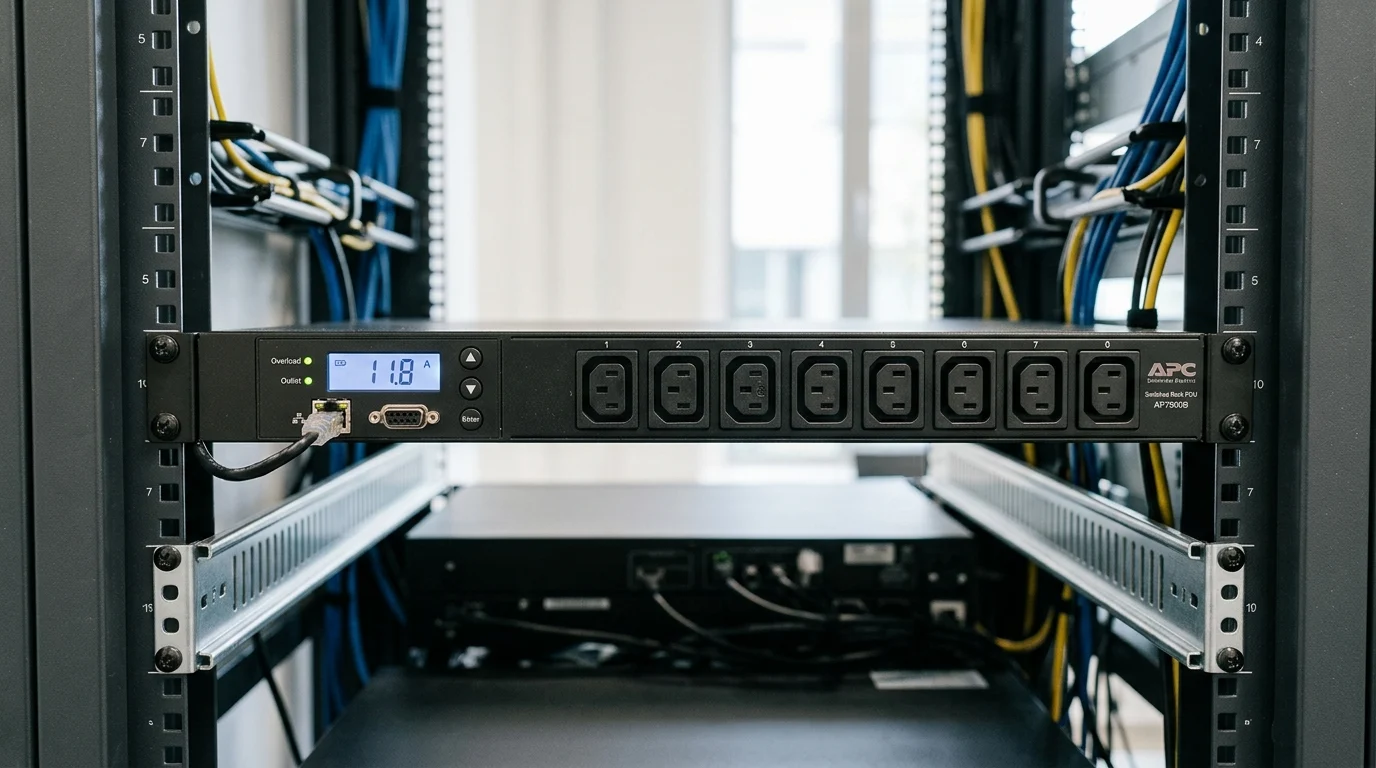
As rack densities rise and AI workloads push power demand beyond traditional design assumptions, the humble PDU has become a strategic infrastructure decision. A well-specified custom power distribution unit can improve space utilization, reduce stranded capacity, support remote monitoring, and help maintain uptime in demanding environments. This article examines how to plan tailored PDU configurations from the business case through electrical, mechanical, and operational requirements. It also explains when standard, semi-custom, or fully engineered solutions make sense, why stakeholder alignment matters, and how choices such as outlet mix, cord length, chassis form factor, and temperature rating can affect long-term scalability and total cost of ownership.
Strategic Planning for Custom PDU Configurations
Deploying optimized power infrastructure requires moving beyond off-the-shelf equipment, particularly as high-density computing environments push the limits of conventional facility design. Custom Power Distribution Unit (PDU) configurations allow data center architects to tailor electrical delivery, footprint, and intelligence to precise facility specifications. Strategic planning at this stage dictates not only the immediate operational efficacy of the deployment but also its long-term scalability and total cost of ownership. By engineering the power chain from the facility UPS down to the individual server receptacle, organizations can eliminate stranded capacity and reduce point-of-failure risks.
Define business and operational requirements
The foundation of any custom power distribution architecture begins with a rigorous audit of business and operational requirements. Facility managers must quantify current power draws while forecasting future density scaling. Modern enterprise racks frequently exceed baseline loads of 5kW, with AI and high-performance computing (HPC) clusters routinely demanding between 20kW and 40kW per rack. Defining these parameters dictates the core electrical topology required. Beyond pure load metrics, operational requirements must account for environmental conditions, such as operating temperatures that may reach up to 60°C in hot-aisle containment systems, and the necessity for granular remote telemetry to integrate with existing Data Center Infrastructure Management (DCIM) platforms.
Distinguish standard, semi-custom, and fully custom PDUs
Procurement teams must carefully navigate the distinctions between standard, semi-custom, and fully custom power distribution units, as each tier carries distinct financial and logistical implications. Standard units offer immediate availability but force engineers to adapt rack layouts to the hardware. Semi-custom solutions modify existing base models—altering cord lengths, plug types, or chassis colors—providing a middle ground for optimization. Fully custom configurations involve bespoke printed circuit board (PCB) layouts and specialized form factors designed from the ground up for proprietary server architectures.
| Configuration Tier | Customization Scope | Typical Lead Time | Minimum Order Quantity (MOQ) |
|---|---|---|---|
| Standard | None (Off-the-shelf) | 1–3 days | 1 unit |
| Semi-Custom | Cord length, outlet mix, chassis color | 4–6 weeks | 10–25 units |
| Fully Custom | Bespoke PCB, unique form factor, custom firmware | 12–16 weeks | 50–100+ units |
Align stakeholders on power, space, and uptime goals
Successful deployment of engineered power solutions requires strict alignment among IT, facilities, and procurement stakeholders. Facilities teams prioritize available upstream capacity and thermal management, IT operations focus on receptacle counts and uptime targets (often mandating 99.999% availability), and procurement must manage capital expenditure ceilings. Establishing a unified matrix of priorities prevents scope creep during the design phase. For instance, a stakeholder mandate to maximize 0U space utilization might necessitate a low-profile chassis design, which in turn impacts the maximum internal wiring gauge and thermal dissipation profile of the unit.
Electrical and Mechanical Specifications

Translating strategic goals into tangible hardware requires rigorous specification of electrical and mechanical parameters. The physical build of the distribution unit must safely handle continuous high-amperage loads while seamlessly integrating into the targeted rack architecture. Errors in this phase can lead to catastrophic phase imbalances, tripped breakers, or physical interference with server deployment.
Confirm voltage, phase, amperage, and load capacity
The primary electrical parameters—voltage, phase, and amperage—must align with the facility's upstream power delivery. High-density deployments increasingly utilize 400V/415V 3-phase Wye configurations to deliver up to 43kW per unit over a 60A circuit, significantly reducing copper costs and transmission losses compared to traditional 120V/208V systems. Engineers must specify whether the load capacity requires standard 20A or 30A branch circuits, or high-capacity 50A to 60A feeds. Furthermore, derating rules must be applied; for example, North American National Electrical Code (NEC) standards require continuous loads to not exceed 80% of the breaker rating, meaning a 30A circuit yields a maximum continuous draw of 24A.
Select receptacles, plugs, cord lengths, and form factor
Outlet selection directly impacts the types of IT equipment that can be supported. Standard enterprise hardware relies heavily on IEC C13 and C19 receptacles, while specialized networking gear might require NEMA 5-20R or specialized locking connectors. Advanced configurations increasingly utilize combination C39 outlets, which accept both C14 and C20 plugs, maximizing flexibility. Input plug selection (e.g., IEC 60309, NEMA L15-30P) and cord lengths must be specified to the exact centimeter to avoid slack cable accumulation under raised floors. While consumer applications might rely on top rated power strips, enterprise environments demand locking mechanisms on every receptacle to prevent accidental disconnects during maintenance operations.
Plan mounting orientation and rack compatibility
Mechanical dimensions and mounting hardware dictate how the unit physically occupies rack space. Vertical (0U) configurations are standard for full-height 42U to 52U cabinets, typically measuring between 68 and 72 inches in length. However, the width and depth—often hovering around 2.2 by 2.2 inches—must be scrutinized to ensure they do not block server exhaust fans or interfere with hot-swappable power supplies. Horizontal configurations (1U or 2U) are typically reserved for shorter telecommunications racks or top-of-rack networking distribution. Custom mounting brackets, such as toolless button mounts, must be engineered to match the specific extrusion profiles of the chosen server cabinets.
Intelligent PDU Features and Monitoring
The evolution of data center power from passive electrical delivery to active, intelligent infrastructure has transformed how facilities operate. Intelligent features enable remote capacity planning, environmental monitoring, and automated failover protocols. Selecting the appropriate level of embedded intelligence requires balancing the need for granular telemetry against the increased capital cost and network complexity.
Compare metered, monitored, and switched PDUs
Intelligent distribution units are categorized by their telemetry and control capabilities. Metered units provide local LED/LCD displays of phase and circuit loads, assisting technicians on the floor but offering no remote visibility. Monitored units connect to the management network, transmitting real-time voltage, current, and power factor data at either the aggregate unit level or the granular outlet level. Switched units add the capability to remotely cycle power to individual receptacles, enabling hard reboots of hung servers without dispatching remote hands.
| Intelligence Level | Telemetry Scope | Remote Switching | Estimated Cost Premium |
|---|---|---|---|
| Basic / Dumb | None | No | Baseline |
| Metered | Local display only | No | +5% to +10% |
| Monitored | Remote (Unit/Phase/Outlet) | No | +15% to +25% |
| Switched | Remote (Unit/Phase/Outlet) | Yes | +35% to +50% |
Evaluate sensors, firmware, and network connectivity
Modern smart units act as environmental hubs, supporting daisy-chained sensors for temperature, humidity, fluid leak detection, and cabinet door access. The firmware running on the unit's network management card must securely handle this data. When an intelligent unit transmits telemetry to a centralized DCIM system, it encapsulates the metrics into an SNMP protocol data unit for transmission over the network. Understanding the role of a pdu in computer network topologies is critical; these management interfaces should be isolated on dedicated management VLANs, utilizing SNMPv3, TLS 1.2/1.3, and RADIUS/TACACS+ authentication to prevent unauthorized access to critical power infrastructure.
Balance feature density, reliability, and cost
While maximizing feature density is appealing, architects must balance intelligence with hardware reliability and budget constraints. Every added micro-controller, relay, and network interface introduces a potential point of failure. Enterprise-grade intelligent units are engineered with hot-swappable network management cards, allowing administrators to replace a failed network module without interrupting power to the critical load. Manufacturers target a Mean Time Between Failures (MTBF) exceeding 100,000 hours for the core electrical path, even if the monitoring electronics have a shorter lifespan. The decision to specify outlet-level switching across thousands of racks must be justified by a clear return on investment in reduced downtime and maintenance dispatch costs.
Compliance, Sourcing, and Lead Times
Custom configurations introduce complexities into the procurement lifecycle that do not exist with off-the-shelf hardware. Navigating the regulatory landscape, assessing vendor engineering competence, and managing supply chain lead times are critical to ensuring the project stays on schedule. A failure in compliance or sourcing can halt facility construction or invalidate insurance policies.
Verify safety certifications and regional standards
Any modification to power distribution hardware requires strict adherence to regional safety standards. In North America, custom units must pass UL 62368-1 (which replaced UL 60950-1) certification, ensuring protections against electrical shock and thermal hazards. European deployments require CE marking and RoHS compliance. Furthermore, high-density environments necessitate rigorous Short-Circuit Current Rating (SCCR) testing; units must often be certified to safely interrupt fault currents of 10,000 Amps (10kAIC) without catastrophic chassis failure. Specifying custom outlet layouts or internal wiring gauges mandates that the manufacturer re-certify the specific configuration with testing laboratories, a process that must be factored into the project timeline.
Assess manufacturer engineering and support capabilities
Evaluating a manufacturer's capacity to deliver custom solutions requires analyzing their engineering support and production flexibility. True custom builds often incur Non-Recurring Engineering (NRE) charges, ranging from $2,000 to $10,000, to cover drafting, tooling, and prototype testing. Procurement teams must assess the vendor's Minimum Order Quantities (MOQs); while standard units can be bought individually, custom PCB layouts or extruded chassis runs typically require a commitment of 50 to 100 units. A capable manufacturer will provide detailed CAD models, thermal dissipation profiles, and electrical schematics for facility approval before any metal is bent.
Reduce procurement risk from shortages and delays
Supply chain volatility remains a significant risk in data center construction. To mitigate delays, organizations must clarify the exact pdu meaning within their procurement contracts to avoid confusion with other acronyms (such as protocol data units in networking equipment orders), ensuring that all electrical components, from internal relays to specialized IEC plugs, are accurately sourced. Standard lead times for semi-custom units generally span 4 to 6 weeks, but fully custom designs utilizing scarce intelligent switching components can extend procurement cycles to 12 or 16 weeks. Strategic stockpiling of critical sub-components and establishing buffer inventory agreements with the manufacturer can insulate the deployment schedule from unforeseen global shortages.
Validation and Lifecycle Roadmap
The final phase of integrating custom power solutions involves rigorous validation of the manufactured hardware and establishing a comprehensive lifecycle management plan. Because these units serve as the ultimate single point of failure before the IT load, they must undergo extensive stress testing prior to live deployment. Post-deployment, a structured maintenance roadmap ensures the infrastructure continues to meet operational demands safely over its intended lifespan.
Rank requirements by criticality and future growth
Before finalizing a custom design, engineering teams must rank all requirements by criticality, distinguishing between absolute necessities (e.g., 60A input capacity) and flexible preferences (e.g., chassis color). This ranking process must incorporate a future growth buffer, typically specifying 20% to 30% overhead capacity above the initial day-one load calculations. By anticipating the deployment of next-generation, power-hungry processors within the existing rack footprint, facilities can avoid the costly and disruptive process of replacing power infrastructure mid-way through a server cluster's lifecycle.
Test prototypes against acceptance criteria
Upon delivery of the first article prototypes, rigorous acceptance testing is mandatory. Mechanical fitment must be verified within the exact model of the target server cabinet to ensure zero interference with cable management arms or airflow containment panels. Electrically, manufacturers should provide documentation of 100% high-potential (hipot) testing, typically applying 1500V or more to verify dielectric strength and insulation integrity. Additionally, IT security teams must validate the pdu networking interfaces through penetration testing, ensuring the embedded firmware is resistant to common network exploits and that SNMP polling performs accurately under heavy network traffic loads.
Plan maintenance, upgrades, and replacement cycles
A custom power distribution unit typically operates on a 5-to-7-year lifecycle, often outlasting the specific generation of servers it initially supports. A proactive maintenance roadmap is essential for preserving reliability. This includes scheduling semi-annual firmware updates for the network management cards to patch security vulnerabilities and improve DCIM integration. Facilities teams must also implement visual inspection protocols to check for heat discoloration on high-draw receptacles and verify the calibration of internal current transformers. Establishing predefined replacement cycles prevents aging internal relays and degraded MOVs (Metal-Oxide Varistors) in surge-protected models from compromising the availability of the critical load.
Key Takeaways
- Start every custom PDU project with a load audit and density forecast, especially if future racks may move from 5kW enterprise loads to 20kW–40kW AI or HPC loads.
- Select the right customization tier early because standard PDUs may ship in 1–3 days, while fully custom designs can take 12–16 weeks and require higher minimum order quantities.
- Align IT, facilities, and procurement teams before design begins so uptime targets, upstream capacity, rack space, telemetry, and budget constraints are resolved together.
- Specify operating temperature, outlet mix, plug type, chassis profile, and monitoring requirements before procurement to avoid stranded capacity and unnecessary redesign.
- Use custom PDU design to reduce point-of-failure risks by engineering the power path from the facility UPS down to individual server receptacles.
Frequently Asked Questions
When should a data center choose a custom PDU instead of a standard unit?
Choose a custom PDU when rack density, outlet mix, plug type, chassis size, monitoring needs, or thermal conditions cannot be handled efficiently by off-the-shelf models.
What is the difference between semi-custom and fully custom PDUs?
Semi-custom PDUs typically adjust cord length, outlet layout, plug type, or color. Fully custom PDUs may require unique PCB layouts, form factors, firmware, and engineering validation.
How much power should planners expect per rack?
Many enterprise racks exceed 5kW, while AI and HPC racks may require 20kW to 40kW. Load forecasting should guide circuit capacity, outlet selection, and redundancy planning.
How long do custom PDU projects usually take?
Standard PDUs may ship in 1–3 days, semi-custom units often take 4–6 weeks, and fully custom designs can require 12–16 weeks depending on complexity and validation needs.
Why is stakeholder alignment important before specifying a PDU?
IT, facilities, and procurement must agree on uptime, available power, rack space, monitoring, and budget. Early alignment prevents redesigns, scope creep, and capacity mismatches.