


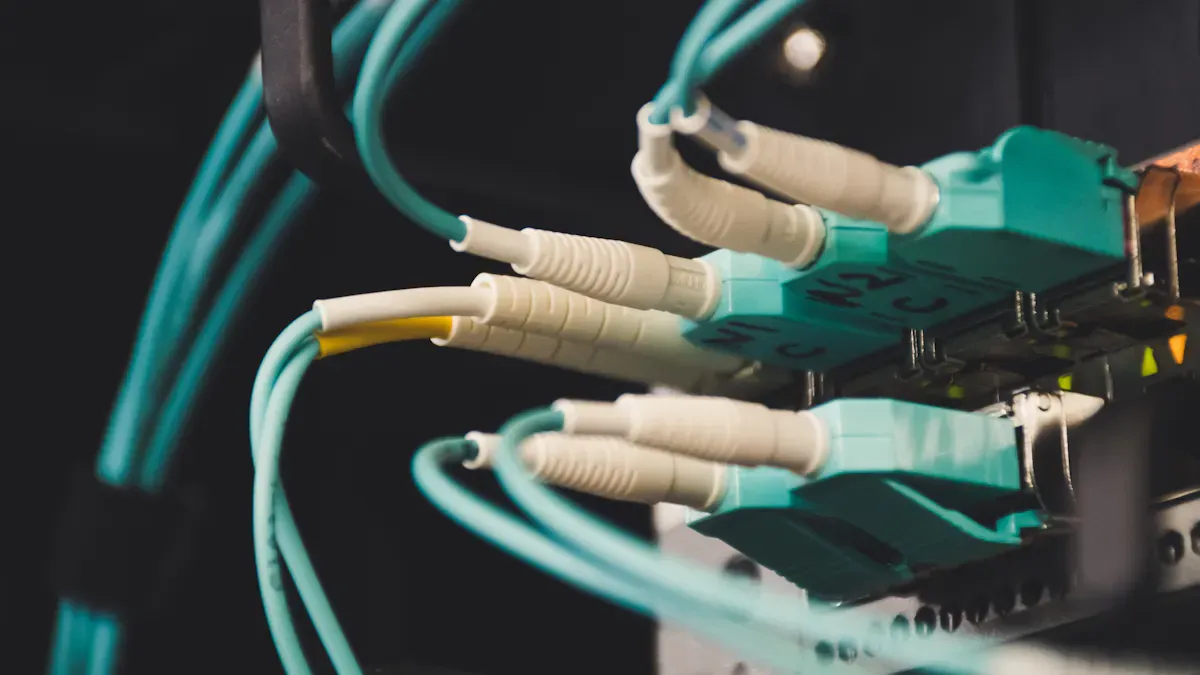
Choosing the right fiber optic adapter significantly influences data center cabling efficiency. A well-selected MPO adapter enhances overall performance metrics, such as latency and throughput. For instance, high density fiber solutions typically exhibit lower insertion loss, which is crucial for maintaining signal integrity. Additionally, they provide superior optical alignment, reducing signal degradation.
When considering future-proofing, data centers must assess compatibility with existing infrastructure and evolving bandwidth requirements. This foresight ensures that the chosen MPO connector meets both current and future demands.
Key Takeaways
- Selecting the right MPO adapter boosts data center performance by reducing latency and improving throughput.
- Standard MPO adapters simplify cabling by connecting multiple fibers, cutting down the number of cables needed.
- MPO-LC hybrid adapters increase port density, allowing more devices to connect without taking up extra space.
- MPO-MTP adapters offer better alignment and lower signal loss, making them ideal for high-speed applications.
- MPO to SC and ST adapters ensure compatibility with existing systems, allowing for easy upgrades without major changes.
- Regular testing and monitoring of MPO adapters help maintain signal integrity and prevent performance issues.
- Future-proofing your choice of MPO adapter ensures your data center can handle growing bandwidth demands.
- Consider environmental factors like temperature and humidity when selecting MPO adapters to enhance durability.
Types of MPO Adapters
Standard MPO Adapters
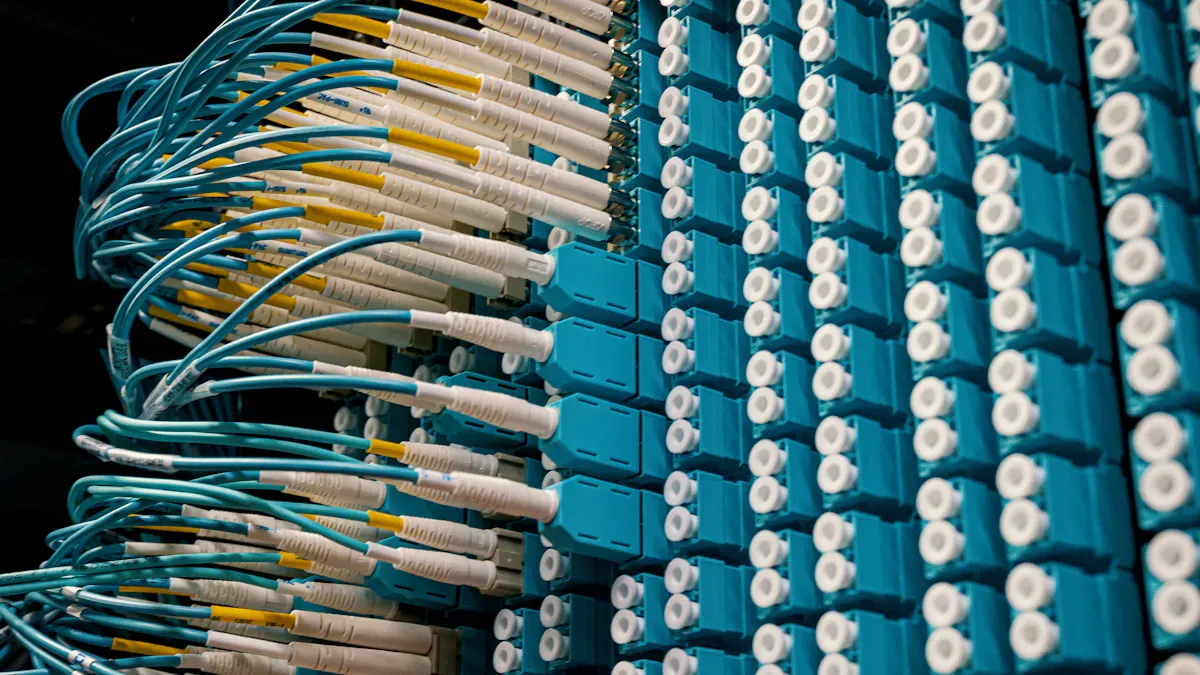
Standard MPO adapters serve as the backbone of high-density data center cabling. They facilitate the connection of multiple fibers through a single interface. This design significantly reduces the number of individual cables required, simplifying installation and management. For example, when connecting two 48-port patch panels with MPO-12 connectors, the number of cables needed decreases from 96 to just 8.
Here are some common use cases for standard MPO adapters in high-density environments:
| Use Case | Description |
|---|---|
| Consolidating backbone cabling | MPO trunk cables reduce the number of individual cables needed, simplifying installation and management. For instance, connecting two 48-port patch panels with MPO-12 connectors reduces the required cables from 96 to 8. |
| Supporting high-speed parallel optics | MPO connectors enable high-speed data transmission by utilizing multiple fibers, such as MPO-8 for 100G, 200G, and 400G applications, and MPO-16 for 800G applications. |
| Facilitating breakout configurations | MPOs allow a single high-speed switch port to connect to multiple lower-speed devices, enhancing flexibility in data center configurations. For example, one 800G switch port can connect to two 400G servers or four 200G servers. |
MPO-LC Hybrid Adapters
MPO-LC hybrid adapters combine the benefits of MPO technology with LC connectors. This combination optimizes space by consolidating multiple fibers into a single connector. Data centers benefit from increased port density, allowing them to connect more devices without extensive physical expansion.
Additionally, MPO-LC hybrid adapters enhance signal integrity. By minimizing connection points, they result in clearer data transmission. This feature is crucial for maintaining high performance in data centers that require reliable connectivity.
MPO-MTP Adapters
MPO-MTP adapters are a specialized type of MPO adapter designed for high-performance applications. MTP connectors offer improved performance characteristics compared to standard MPO connectors. They feature better alignment and lower insertion loss, which is essential for high-speed data transmission.
MPO-MTP adapters are particularly useful in environments where bandwidth demands are high. They support various applications, including data center interconnects and high-speed networking. By utilizing these adapters, data centers can ensure they meet current and future bandwidth requirements.
MPO to SC Adapters
MPO to SC adapters provide a seamless connection between MPO connectors and SC connectors. This type of adapter is essential for data centers that require compatibility with existing SC-based equipment. By using MPO to SC adapters, data centers can leverage high-density cabling while maintaining connections to legacy systems.
These adapters offer several advantages:
- Space Efficiency: MPO to SC adapters allow multiple fibers to connect through a single MPO interface. This design minimizes the physical footprint of cabling in high-density environments.
- Enhanced Performance: They maintain low insertion loss and high return loss, ensuring reliable signal integrity. This performance is crucial for applications that demand high-speed data transmission.
- Flexibility: Data centers can easily integrate these adapters into their existing infrastructure, facilitating upgrades without extensive rewiring.
MPO to ST Adapters
MPO to ST adapters serve as another vital component in high-density cabling systems. These adapters connect MPO connectors to ST connectors, which are commonly used in various networking applications. The versatility of MPO to ST adapters makes them suitable for both new installations and retrofitting existing systems.
The advantages of using MPO to ST adapters include:
| Feature | Details |
|---|---|
| Better Optical Performance | Low insertion loss and high return loss ensure reliable signal integrity. |
| Increased Precision and Alignment | Accurate fiber alignment through MT ferrules is vital for high-density systems. |
| Scalability | Configurable to accommodate between 8 to 72 strands, facilitating easy network upgrades. |
| Long Life Span | Robust design protects against breakage during mating and demating. |
| Easy To Install | Features push-pull latching mechanisms for convenient connectivity. |
| Customizable Outlook | Available in various shapes and polarities to meet diverse networking needs. |
MPO to ST adapters enhance the adaptability of data center cabling. They allow for easy integration with existing ST-based devices, ensuring that data centers can expand their networks without significant disruptions.
Applications of MPO Adapters in Data Centers
High-Density Cabling Solutions
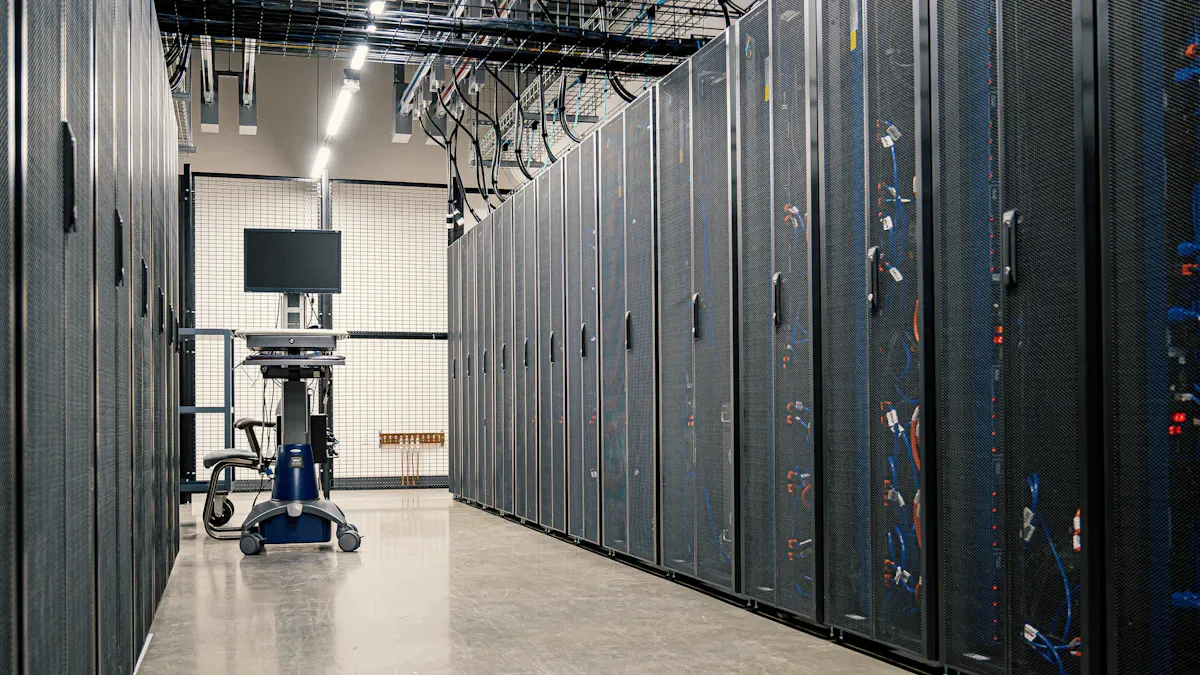
MPO adapters play a crucial role in high-density cabling solutions. They consolidate multiple fiber strands into a single connector, optimizing space and simplifying cable management. This design significantly reduces clutter, making installation and maintenance easier. In fact, MTP systems can save over 50% of cable routing space, which greatly minimizes the volume of cables needed.
The benefits of using MPO adapters in high-density environments include:
- Space Optimization: By reducing the number of individual cables, data centers can maximize available space.
- Simplified Management: Fewer cables lead to easier organization and maintenance, allowing for quicker troubleshooting and upgrades.
- Enhanced Performance: Lower insertion loss and improved signal integrity contribute to better overall network performance.
Interconnectivity in Modular Data Centers
MPO adapters are essential for the interconnectivity of modular data centers. They provide a dependable interface for connecting MPO connectors in multi-fiber systems. This capability guarantees accurate fiber alignment and reduces insertion loss, which is vital for maintaining consistent performance across all fiber channels in high-speed networks. As modular data centers continue to grow in popularity, the role of MPO adapters becomes increasingly important in ensuring seamless connectivity and efficient data transmission.
Fiber Optic Patch Panels
Integrating MPO adapters into fiber optic patch panels optimizes network performance in several ways:
- Improved Organization: Centralizing cables reduces clutter and mistakes during upgrades.
- Simplified Maintenance: Easy access for troubleshooting minimizes downtime.
- Scalability: Facilitates easy addition and reconfiguration of connections without major interruptions.
- Enhanced Signal Integrity: Proper cable management preserves signal performance and reduces degradation.
- Reduced Footprint: Compatibility with MPO cassettes or LGX modules optimizes space in data centers.
- Cost Efficiency: Lowers operational costs by reducing repairs and prolonging cable life.
- Compliance and Standardization: Eases compliance audits with a uniform structure.
By leveraging MPO adapters in fiber optic patch panels, data centers can enhance their operational efficiency and ensure reliable connectivity across their networks.
Network Expansion and Scalability
MPO adapters play a pivotal role in network expansion and scalability within data centers. Their design allows for efficient connections between high-density fiber cables and network equipment. This capability is essential for managing increased data traffic, especially as cloud services continue to expand.
The compact nature of MPO adapters enables data centers to optimize space utilization. This feature is crucial in modern operations where real estate is often limited. By consolidating multiple fibers into a single connector, MPO adapters facilitate significant reductions in rack space. For instance, a single MTP/MPO connector can replace 12 to 24 LC/SC connectors, leading to a reduction in rack space by up to 75%. This efficiency allows data centers to maximize their infrastructure without extensive physical expansion.
Moreover, MPO adapters support advanced technologies such as artificial intelligence (AI) and cloud computing. These technologies demand high bandwidth and low latency, making the performance of MPO adapters critical. As data centers evolve, they must ensure that their infrastructure can handle increased traffic without compromising performance levels.
Key benefits of using MPO adapters for network expansion and scalability include:
- High-Density Fiber Solutions: MPO adapters enable the management of increased data traffic effectively. Their design supports high-speed standards like 400G and 800G Ethernet, simplifying upgrades without extensive rewiring.
- Rapid Installation: Pre-terminated MTP/MPO trunk cables allow for quick deployment, significantly speeding up installation times. This feature is particularly beneficial during network expansions when time is of the essence.
- Efficient Space Utilization: The compact design of MPO adapters allows data centers to utilize available space more effectively. This optimization is vital for accommodating future growth without the need for major renovations.
Key Selection Criteria for MPO Adapters
Compatibility with Existing Infrastructure
Selecting an MPO adapter that integrates seamlessly with existing infrastructure is vital for maintaining network efficiency. Compatibility issues often arise when integrating MPO adapters with legacy fiber optic systems. These older systems may not support newer components, complicating the upgrade process. To ensure compatibility, consider the following criteria:
- Core Count: This determines bandwidth capacity. Higher core counts are essential for high-density applications.
- Type of Fiber: Choose between single-mode for long distances and multimode for shorter distances.
- Connector Configuration: Ensure that the adapter matches the existing equipment.
- Performance Standards: Look for metrics like Insertion Loss and Return Loss to gauge performance.
- Environmental Factors: Consider sheathing and protective features suitable for installation conditions.
- Length and Routing: Opt for configurations that minimize clutter and prevent signal degradation.
By addressing these factors, data centers can avoid potential pitfalls and ensure a smooth transition to high-density cabling solutions.
Network Requirements and Bandwidth Needs
Network requirements and bandwidth needs significantly influence the choice of MPO adapters. Different fiber counts in MPO connectors cater to varying data rates and density requirements. Higher fiber counts enable greater data transmission capabilities, which is essential for meeting increasing bandwidth demands. When selecting MPO connectors, consider the following:
- Align your choice with target speeds and future growth. For high-density racks, opt for 24-fiber MPO connectors, while 12-fiber MPO connectors are suitable for flexible setups.
- Assess current and anticipated data traffic. This assessment helps in determining the necessary fiber count to support future expansions.
Choosing the right MPO adapter based on these criteria ensures that data centers can handle current demands while preparing for future growth.
Environmental Considerations
Environmental factors play a crucial role in the selection of MPO adapters. Data centers often operate in diverse conditions that can affect the performance and longevity of fiber optic components. Key considerations include:
- Temperature and Humidity: Ensure that the selected MPO adapter can withstand the specific temperature and humidity levels of the data center environment.
- Cable Sheathing: Choose adapters with appropriate sheathing materials that protect against physical damage and environmental stressors.
- Installation Conditions: Consider the routing and installation environment. Adapters should be robust enough to handle potential wear and tear.
By taking these environmental factors into account, data centers can enhance the reliability and durability of their cabling systems.
Future-Proofing and Scalability
Future-proofing and scalability are critical factors when selecting MPO adapters for data centers. As technology evolves, data centers must adapt to increasing demands for bandwidth and connectivity. Choosing the right MPO adapter ensures that facilities can accommodate future growth without significant overhauls.
Data centers face constant pressure to upgrade their infrastructure. The right MPO adapter can simplify this process. Here are some key features that contribute to future-proofing and scalability:
| Feature | Description |
|---|---|
| Compatibility with legacy systems | MPO adapters can integrate with existing setups, allowing for seamless transitions to new technologies. |
| Support for high-density connections | They accommodate increasing data demands, essential for evolving data center needs. |
| Scalability for network upgrades | MPO adapters are versatile, fitting into various environments whether expanding or reorganizing. |
MPO adapters provide flexibility in design and installation. They allow data centers to expand their networks without extensive rewiring. This adaptability is crucial as organizations seek to optimize their operations while managing costs.
Moreover, the ability to support high-density connections is vital. As data traffic increases, data centers require solutions that can handle multiple connections efficiently. MPO adapters excel in this area, enabling facilities to maximize their fiber capacity. This capability not only enhances performance but also reduces the physical footprint of cabling.
In addition, future-proofing involves selecting adapters that can evolve with technological advancements. Data centers should consider MPO adapters that support the latest standards and protocols. This foresight ensures that facilities remain competitive and capable of meeting future demands.
Ultimately, investing in the right MPO adapter today can lead to significant long-term benefits. Data centers can achieve greater efficiency, reduced operational costs, and improved performance. By prioritizing future-proofing and scalability, organizations position themselves for success in an ever-changing technological landscape.
Evaluating Performance Metrics
Insertion Loss and Return Loss
Insertion loss and return loss are critical performance metrics for MPO adapters. Insertion loss measures the amount of signal loss as light passes through the connector. Lower insertion loss indicates better performance. For example, MTP connectors typically exhibit insertion loss values ranging from 0.1 dB to 0.35 dB, while universal MPO connectors show higher values, between 0.3 dB and 0.75 dB.
Return loss, on the other hand, quantifies the amount of light reflected back toward the source. Higher return loss values signify better signal integrity. MTP connectors generally provide higher return loss, ensuring minimal reflected light, which is essential for maintaining data integrity.
| Metric | MTP Connectors | Universal MPO Connectors |
|---|---|---|
| Insertion Loss | Lower (0.1 dB to 0.35 dB) | Higher (0.3 dB to 0.75 dB) |
| Return Loss | Higher signal integrity | Lower (more reflected light) |
Durability and Reliability
Durability and reliability are paramount when selecting MPO adapters. Manufacturers test these aspects rigorously to ensure long-term performance. Common testing methods include:
| Testing Method | Description |
|---|---|
| Connector Inspection | Utilizes a fiber inspection scope to analyze the connector end-face for defects and cleanliness. |
| Cleaning | Ensures connectors are free from contaminants that can affect performance. |
| Polarity Validation | Confirms that the connectors are correctly oriented to prevent signal loss. |
| Continuity Testing | Checks that the signal passes through the connector without interruption. |
| Compliance with Standards | Adheres to industry standards to ensure reliability and performance of MPO adapters. |
These tests validate that MPO adapters can withstand the rigors of data center environments, ensuring consistent performance over time.
Testing and Certification Standards
Adhering to testing and certification standards is crucial for ensuring the quality of MPO adapters. Recognized organizations set these standards to maintain performance and reliability. Key standards include:
| Standard Organization | Description |
|---|---|
| IEC | International standards for fiber geometry, attenuation, macrobending loss, and dispersion. |
| TIA/EIA | Develops national standards for fiber optic test networks and equipment, including installation certification requirements for fiber length, polarity, and link loss. |
Additionally, every MPO link requires Tier 1 certification before production use. This certification includes optical loss measurements across all fiber pairs, as well as polarity verification and documentation for manufacturer warranty compliance.
By evaluating these performance metrics, data centers can select the right MPO adapters that meet their operational needs and ensure reliable connectivity.
Best Practices for Installation and Maintenance
Proper Handling and Storage
Proper handling and storage of MPO adapters are essential to prevent contamination and damage. Data centers should follow these guidelines:
- Maintain a stable temperature between 10°C and 35°C (50°F and 95°F) to protect plastic components.
- Keep humidity levels between 30% and 70% to avoid corrosion and static electricity issues.
- Ensure the storage area is clean and dust-free to protect fiber end-faces from contamination.
- Handle connectors gently, avoiding contact with the fiber end-face to prevent scratches and fingerprints.
- Store accessories in a way that prevents crushing or bending, avoiding tight coils of fiber cables.
- Regularly inspect stored accessories for any signs of damage, such as cracks or discoloration.
By adhering to these practices, data centers can significantly reduce the risk of damage and maintain the integrity of their fiber optic systems.
Regular Testing and Monitoring
Regular testing and monitoring of MPO adapters are crucial for ensuring long-term reliability. Data centers should implement a routine inspection schedule to identify potential issues before they escalate. Key practices include:
- Inspecting connector end-faces for cleanliness and damage. Contaminated connectors can lead to increased insertion loss.
- Conducting continuity tests to ensure signal integrity across all connections.
- Monitoring performance metrics such as insertion loss and return loss to detect any degradation over time.
Challenges often arise during installation and maintenance due to high-density configurations. Limited access can complicate inspections and cleaning. Therefore, data centers should prioritize accessibility during the design phase to facilitate easier maintenance.
Upgrading and Replacing Adapters
Upgrading and replacing MPO adapters is a necessary part of maintaining a high-density data center. As technology evolves, older adapters may not meet current performance standards. Consider the following when upgrading:
- Choose components from reputable sources. Quality components help ensure lower insertion loss and better performance.
- Be aware of connector mismatches due to polarity confusion. Two main types of MPO adapters (Type A and Type B) can lead to fiber position mismatches if not correctly identified.
- Implement floating ferrule designs and elliptical guide pins. These features minimize wear during insertions and maintain physical contact under mechanical stress.
| Feature | Benefit |
|---|---|
| Metal pin clamps | Reduce pin breakage during repeated mating |
| Floating ferrule designs | Maintain physical contact under mechanical stress |
| Elliptical guide pins | Minimize wear during insertions |
By following these best practices, data centers can enhance the performance and longevity of their MPO adapters, ensuring reliable connectivity in high-density environments.
Selecting the right MPO adapter is crucial for optimizing high-density data center cabling. Data centers must assess their specific needs, including bandwidth requirements and existing infrastructure compatibility. Key considerations include:
- Multi-fiber MPO or MTP connectors for high density.
- Structured cabling to facilitate scaling and patching.
- Support for operational scalability through proper training and tools.
As technology evolves, data centers will increasingly rely on efficient and adaptable solutions. The landscape of data center technology will continue to change, emphasizing the importance of future-proofing and sustainability in fiber optic systems.
FAQ
What is an MPO adapter?
An MPO adapter connects multiple fiber optic cables through a single interface. It simplifies high-density cabling by reducing the number of individual cables needed, enhancing organization and performance in data centers.
How do I choose the right MPO adapter?
Select an MPO adapter based on compatibility with existing infrastructure, network requirements, and future scalability. Consider factors like fiber count, connector type, and performance metrics to ensure optimal performance.
What are the benefits of using MPO-LC hybrid adapters?
MPO-LC hybrid adapters combine MPO and LC connectors, optimizing space and increasing port density. They enhance signal integrity by minimizing connection points, making them ideal for high-performance data center applications.
How often should I test MPO adapters?
Regular testing of MPO adapters is essential. Data centers should conduct inspections every six months or after significant changes to the network. This practice helps identify potential issues and maintain optimal performance.
What is insertion loss?
Insertion loss measures the signal loss that occurs when light passes through an MPO adapter. Lower insertion loss values indicate better performance, ensuring efficient data transmission and maintaining signal integrity.
Can MPO adapters support future technology upgrades?
Yes, MPO adapters are designed for scalability. They accommodate higher fiber counts and support advanced technologies, making them suitable for evolving data center needs and future bandwidth demands.
What environmental factors should I consider?
Consider temperature, humidity, and cable sheathing when selecting MPO adapters. Ensure that the chosen adapters can withstand the specific conditions of the data center environment to maintain performance and longevity.
How do I maintain MPO adapters?
To maintain MPO adapters, handle them carefully, keep them clean, and store them properly. Regularly inspect for damage and perform continuity tests to ensure reliable connectivity and performance.
 English
  Russian
  Spanish
  Portuguese
  Korean
  Japanese