
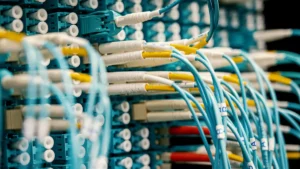

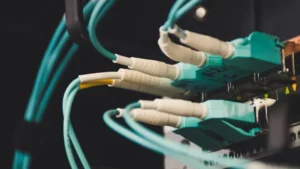

MPO adapters play a crucial role in high-speed fiber links, especially in modern data centers where up to 40% utilize this technology. These adapters, including both multimode MPO and singlemode MPO options, help achieve efficient data transmission while optimizing space. However, without proper fiber testing, we risk compromising network performance and reliability.
In fact, 80% of network problems stem from dirty connectors, which can lead to significant issues. To maintain signal integrity, I recommend a few key practices:
- Regularly inspect connectors.
- Clean them using the right tools.
- Validate polarity for accurate signal transmission.
By following these practices, we can ensure optimal MPO adapter performance and a reliable network.
Key Takeaways
- Inspect MPO adapters regularly to catch potential issues early and maintain network reliability.
- Clean connectors using proper tools to prevent contamination, which can lead to performance degradation.
- Validate polarity to ensure correct signal transmission and avoid costly troubleshooting later.
- Perform continuity testing to confirm that optical links are unbroken and functioning correctly.
- Conduct Tier-1 testing to measure insertion loss and ensure installations meet industry standards.
- Keep a logbook of inspections and cleaning dates to stay organized and proactive in maintenance.
- Utilize professional services for installation and testing to save time and reduce operational costs.
- Prioritize cleanliness and proper alignment to enhance network performance and user satisfaction.
Inspection of MPO Adapters
Inspecting MPO adapters is a vital step in ensuring the reliability of high-speed fiber links. I always start with a thorough visual inspection, as it can reveal many potential issues before they escalate into bigger problems.
Visual Inspection Techniques
When I inspect MPO adapters, I rely on several effective visual inspection techniques. Here’s a quick overview of some methods I find particularly useful:
| Technique Type | Description |
|---|---|
| Wide Field Microscopes | These are great for inspecting dirty MPO connectors. I often use video microscopes for factory terminations. |
| Portable Optical Microscopes | I prefer these for fiber optics, as they offer higher magnification (100X to 400X) for detailed inspection. |
| Video Microscopes | They provide display options and automatic inspection for cleanliness, giving me pass/fail results. |
| Wet/Dry Cleaning Method | This method loosens dirt and removes contamination, which I confirm through visual inspection. |
Using these techniques helps me catch defects early, which is crucial since cleanliness-related issues account for over 50% of the problems I encounter in fiber optic networks.
Tools for Inspection
Having the right tools makes a significant difference in the inspection process. Here are some tools I recommend based on industry standards:
| Tool/Procedure | Description |
|---|---|
| 10X Loupe | I find this handy for inspecting guide pins and holes in the field due to its appropriate magnification. |
| Automated Systems | These are used in assembly factories and can magnify optics up to 200 or 400X for thorough inspection. |
| Interferometry-based Systems | I use these for detailed inspection of MPO connectors, especially for guide pins and holes. |
These tools enhance my ability to detect defects accurately and efficiently.
Common Defects to Look For
During my inspections, I often encounter several common defects. MPO connectors, due to their 12-fiber array design, have a contamination risk that is twelve times higher than simplex connectors. Even a single dust particle on any fiber path can degrade performance. Here are some frequent defects I look for:
- Dirt and Contamination: This is the most significant issue, leading to performance degradation.
- Misalignment: If the fibers are not aligned correctly, it can cause signal loss.
- Damaged Guide Pins: These can prevent proper mating of connectors.
Failing to detect these defects can lead to increased capital expenditures due to unnecessary replacements, a heavier workload for technicians from undiagnosed issues, and difficulties in identifying polarity problems after installation.
By implementing these inspection practices, I can significantly reduce the likelihood of defects and ensure that my MPO adapters function optimally.
Cleaning Procedures for MPO Adapters
Keeping MPO adapters clean is essential for maintaining optimal performance in high-speed fiber links. Contamination can lead to increased insertion loss and signal degradation. Even microscopic particles can significantly impact performance due to the high fiber density of MPO connectors. I’ve learned that contaminants can transfer between fibers within the same MPO array, complicating cleaning efforts. Therefore, I prioritize cleanliness in my maintenance routine.
Importance of Cleanliness
I can’t stress enough how crucial it is to keep MPO adapters clean. Dirty connectors can lead to several issues, including:
- Increased insertion loss, which affects signal strength.
- Decreased return loss, impacting overall network performance.
- Inconsistent data transmission, raising the risk of attenuation.
Over time, these problems can result in expensive maintenance cycles or even permanent damage to connector surfaces. I recommend performing a visual inspection and cleaning of critical interconnect points every 6 to 12 months. Additionally, I clean connectors anytime a connection is broken. Keeping a logbook of all test results and cleaning dates helps me stay organized.
Recommended Cleaning Tools
Using the right tools makes a world of difference when it comes to cleaning MPO adapters. Here are some of my go-to tools:
- One-Click Cleaners: These are portable and efficient for cleaning both male and female connectors.
- Fiber Optic Cleaning Pens: I find these precision tools handy for hard-to-reach areas. They’re reusable and versatile for various connectors.
- Fiber Optic Cleaning Kits: These comprehensive solutions include swabs, wipes, and fluids for thorough cleaning.
- Fiber Optic Cleaning Sticks and Swabs: Ideal for detailed cleaning tasks in tight spaces, available in various sizes.
- Automated Fiber End-Face Cleaners: These advanced tools provide consistent cleaning, perfect for high-volume environments.
MPO connectors, which utilize MT ferrules made from polymer materials, can be particularly challenging to clean due to their large surface area that attracts dust. The alignment pins and holes can also become contaminated, necessitating specialized cleaning materials like gel pads and brushes.
Step-by-Step Cleaning Process
To ensure I clean MPO adapters effectively, I follow a systematic approach. Here’s my step-by-step cleaning process:
- Always clean the endfaces of fiber connectors before making connections.
- Use a mechanical cleaner, such as the Fluke Networks QuickClean MPO Cleaner, to clean connectors.
- For a bulkhead connector, I remove the guide cap from the cleaner. For a fiber cable connector, I only remove the tip of the cap.
- I push the cleaner into the connector until I hear a loud click, then remove the cleaner.
- Finally, I inspect the connector using a fiber microscope, like the FI-1000 FiberInspector Microscope with an MPO probe tip. If necessary, I repeat the cleaning and inspection process.
By following these steps, I can maintain the cleanliness of MPO adapters and ensure they function optimally.
Testing Polarity of MPO Adapters
Understanding polarity in MPO connections is crucial for ensuring high-speed data transmission. I’ve learned that correct MPO polarity guarantees the transmitter (TX) on one side connects properly to the receiver (RX) on the other side. If the connectors misalign or mate incorrectly, signals can end up in the wrong direction. This misalignment can seriously impede data transmission and degrade the performance of high-speed links.
Understanding Polarity in MPO Connections
Polarity in MPO connections ensures that the transmit (Tx) and receive (Rx) paths align correctly across the fiber link. Here are some key points I keep in mind:
- The transmitter on one end must connect to the receiver on the other. If this alignment fails, the link will not work, even if the physical installation appears correct.
- Proper polarity management is essential for maintaining signal integrity and avoiding transmission failures.
- Selecting the right polarity method depends on the deployment architecture, which helps prevent costly troubleshooting and delays.
Methods for Testing Polarity
When it comes to testing polarity, I’ve found several reliable methods that work well in different scenarios. Here’s a breakdown of the most effective approaches:
- Straight-Through Method: This traditional approach uses straight MPO trunk cables. It’s effective but requires careful management of patch cords.
- Key-Up to Key-Up Method: I prefer this method for 400G/800G deployments. It maintains consistent polarity and simplifies multi-lane signal alignment.
- Reversed Fiber Pairs: While this method is mostly legacy and not common in modern high-speed environments, I still encounter it occasionally.
For high-speed deployments, I recommend the Key-Up to Key-Up method, often combined with automated polarity verification. This combination reduces the risk of misconfiguration and ensures a smooth operation.
Common Polarity Issues
Despite my best efforts, I still encounter common polarity issues that can affect network performance. Here are some frequent problems I’ve noticed:
- Mismatches in Polarity Types: Using different types (Type A, Type B, Type C) can lead to communication failures.
- Physical Damage and Contamination: These factors can exacerbate polarity issues, making it essential to keep connectors clean and intact.
- Improper Labeling: This can contribute to confusion and misalignment, affecting overall network performance.
These issues can lead to increased insertion loss and reflection, degrading signal quality. In large-scale deployments, incorrect installation can result in non-functional links, which may be mistaken for transceiver failures. Therefore, I always emphasize the importance of proper polarity management.
By understanding and implementing these practices, I can ensure that my MPO adapters function optimally and maintain high-speed data transmission.
Continuity Testing for MPO Adapters
Continuity testing is a crucial step in ensuring that MPO adapters function correctly. I always emphasize its importance during the installation phase. The primary purpose of continuity testing is to verify that the optical link is unbroken and that light can successfully travel through to the end of the connection. This testing helps me identify potential problems early, which enhances network reliability and reduces the risk of service disruptions.
Purpose of Continuity Testing
When I conduct continuity testing, I confirm that all connections are secure and operational. This quick validation test saves me from troubleshooting headaches later on. By ensuring that light travels properly all the way to the end of the link, I can confidently move forward with the installation.
Tools for Continuity Testing
Having the right tools makes continuity testing efficient and effective. Here are some industry-standard tools I rely on:
- MPO Test Sets: These are essential for quick testing and polarity verification of MPO cable assemblies. They help certify various aspects of MPO assemblies, including continuity verification.
- Visual Fault Locators: I use these to test fiber continuity in MTP/MPO cables. They ensure the integrity of the link and help identify faults.
- MTP/MPO Fiber Continuity Testers: These confirm the integrity of the link and ensure smooth optical signal transmission.
Using these tools, I can quickly assess the status of my MPO adapters and ensure everything is functioning as it should.
Interpreting Continuity Test Results
Interpreting the results of continuity tests is straightforward but critical. Confirming the continuity of a link ensures that there is no break and that light travels properly all the way to the end of the link. It’s a quick validation test that, when done during installation, can save a lot of potential troubleshooting later.
However, I also keep in mind that continuity failures can occur. Common causes include:
- Polarity Mismatch: This can lead to non-working links.
- Incorrect Branch Length Selection: This contributes to continuity failures.
- Poor Labeling Discipline: This complicates maintenance and tracing.
- Ignoring Routing and Maintenance Behavior: This can result in hidden costs.
By being aware of these potential pitfalls, I can take proactive steps to prevent continuity issues and ensure my MPO adapters perform optimally.
Performing Tier-1 Testing on MPO Adapters
When it comes to ensuring the reliability of MPO adapters, performing Tier-1 testing is essential. This testing provides a baseline for the quality of fiber optic installations. I always start by familiarizing myself with the Tier-1 testing standards, which help me maintain consistency and reliability in my work.
Overview of Tier-1 Testing Standards
Tier-1 testing focuses on verifying the performance of the optical link. It primarily involves measuring insertion loss and ensuring that the connections meet industry standards. I find that adhering to these standards helps me avoid potential issues down the line. The key aspects of Tier-1 testing include:
- Insertion Loss Testing: This is the primary method for Tier-1 certification of MPO adapters.
- Testing Wavelengths: I typically use 850nm for multimode fibers and 1310nm and 1550nm for singlemode fibers.
By following these guidelines, I can ensure that my installations are up to par with industry expectations.
Testing Methods and Equipment
To conduct effective Tier-1 testing, I rely on specific methods and equipment. Here’s what I typically use:
- Optical Power Meters: These measure the power of the optical signal.
- Light Sources: I use these to send a signal through the fiber.
- Optical Loss Test Sets (OLTS): These combine both power meters and light sources for comprehensive testing.
Using these tools, I can accurately assess the performance of MPO adapters. The process involves sending a signal through the fiber and measuring the received signal. The difference in optical power, expressed in decibels (dB), indicates the total insertion loss. I always compare this loss against industry standards to determine if the installation passes or fails.
Analyzing Tier-1 Test Results
Analyzing the results from Tier-1 testing is crucial for determining the quality of MPO adapter installations. I focus on measuring the total insertion loss using an Optical Loss Test Set. This involves using an Optical Light Source to send a signal through the fiber and an Optical Power Meter to measure the received signal. The difference in optical power gives me the total insertion loss, which I then compare against industry standards or user-defined limits.
To ensure long-term network reliability, I also consider various test types and their correlation to performance. For instance, connector inspections verify the quality of connectors, while insertion loss tests confirm that signal strength meets design requirements. Here’s a quick overview of how these tests relate to network reliability:
| Test Type | Purpose/Reason for Test | Correlation to Long-Term Network Reliability |
|---|---|---|
| Connector Inspection | Verify quality and condition of connectors | Ensures physical integrity and reduces connection-related failures |
| Insertion Loss | Compare cable plant loss to loss budget and network power budget | Confirms signal strength meets design, preventing degradation over time |
| Reflectance/ORL | Identify locations of reflectance problems | Detects potential points of signal reflection that can cause errors |
By conducting thorough Tier-1 testing and analyzing the results, I can confidently ensure that my MPO adapters are ready for high-speed data transmission.
Testing MPO adapters is vital for maintaining high-speed fiber links. I’ve seen firsthand how 80% of network issues arise from dirty connectors. This highlights the need for thorough inspection and cleaning. Here are some best practices I recommend:
- Regularly inspect and clean connectors.
- Perform comprehensive performance testing after installation.
- Maintain cleanliness to avoid costly downtime.
Implementing these practices can significantly enhance network reliability. Plus, using professional services for installation and testing can save time and reduce operational expenses. After all, a well-tested network leads to better performance and happier users! 🌟
FAQ
What’s the best way to inspect MPO adapters before installation?
I always start with a visual inspection using a fiber microscope or a 10X loupe. This helps me spot dirt, scratches, or misalignment early, saving time and avoiding network issues later.
How often should I clean MPO adapters?
I clean MPO adapters every 6 to 12 months or anytime I disconnect them. Keeping connectors clean prevents signal loss and costly downtime.
Can I test MPO polarity without special equipment?
You can do basic polarity checks with simple tools, but I recommend using automated polarity testers for accuracy, especially in complex or high-speed setups.
What causes most MPO adapter failures?
Dirty connectors top the list. Contamination, misalignment, and damaged guide pins also cause failures. Regular inspection and cleaning help me avoid these problems.
How do I know if my continuity test passed?
If light passes through the entire fiber link without interruption, the test passes. Any breaks or mismatches mean you need to troubleshoot the connection.
Why is Tier-1 testing important for MPO adapters?
Tier-1 testing confirms your link meets industry standards for insertion loss. It gives me confidence that the network will perform reliably over time.
What should I do if I find a polarity mismatch?
I double-check cable types and connector orientation. Then, I correct the polarity by swapping fibers or using the right patch cords to ensure proper Tx-Rx alignment.
Are professional services worth it for MPO testing?
Absolutely! Professionals bring experience and the right tools, saving you time and preventing costly mistakes. I always recommend expert help for critical installations. 🚀
 English
  Russian
  Spanish
  Portuguese
  Korean
  Japanese