


Introduction
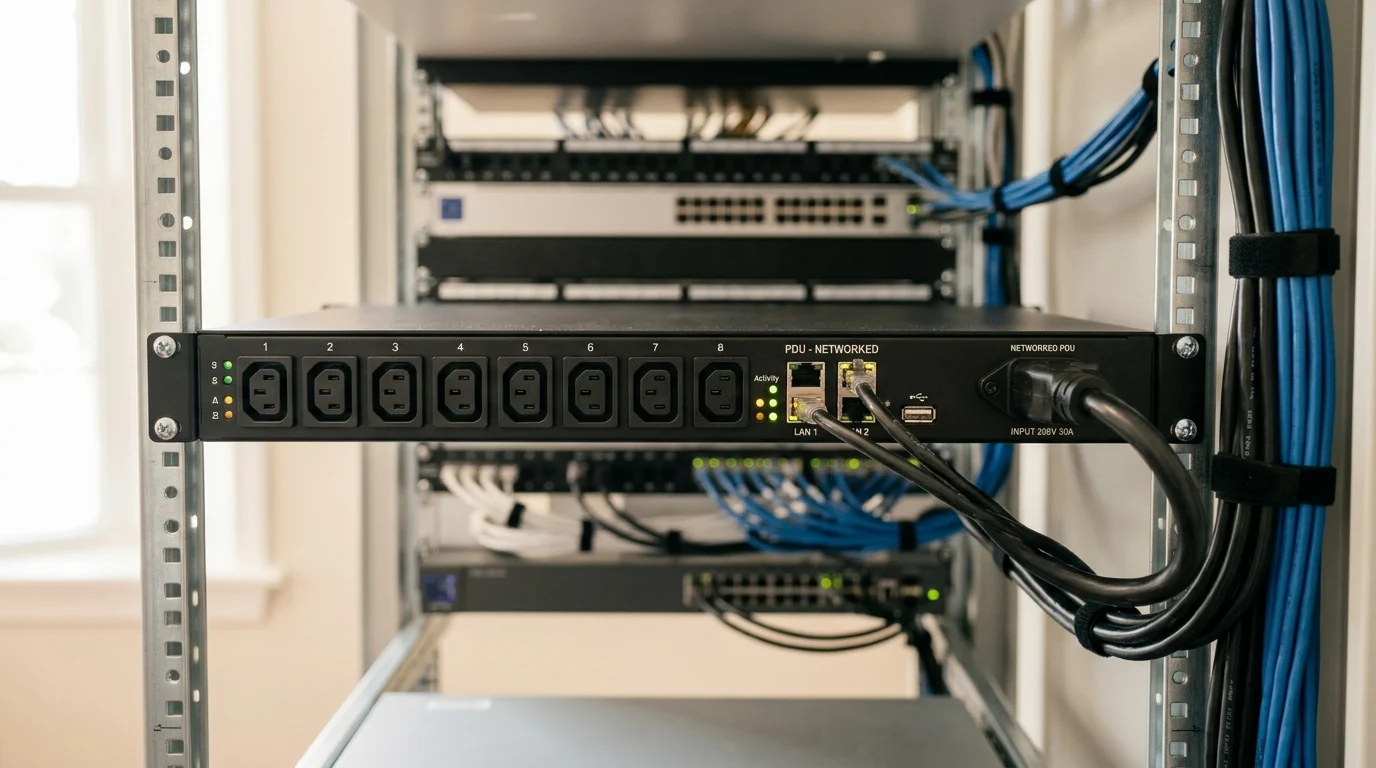
Modern IT racks rarely share the same power profile, outlet layout, or management stack, which makes standardized PDUs a poor fit for many deployments. In pdu networking, custom configurations let operators align power distribution with actual rack density, electrical load, phase requirements, and remote monitoring needs instead of forcing infrastructure to adapt to generic hardware. This article explains how tailored PDUs improve compatibility, uptime, and operational visibility in environments ranging from mixed enterprise cabinets to high-density AI and HPC installations. It also sets up the key design factors to evaluate, including electrical capacity, physical form factor, outlet selection, and network integration.
Why custom PDU configurations are reshaping PDU networking
The architecture of data center power delivery has fundamentally shifted from commoditized power strips to highly engineered, rack-level power solutions. As enterprise compute environments become increasingly specialized, off-the-shelf equipment frequently fails to align with exact spatial, electrical, and network integration requirements. Custom configurations are now a critical component of advanced pdu networking, enabling operators to optimize power distribution precisely to the demands of their unique IT infrastructure.
Historically, data center operators adapted their rack layouts to accommodate standardized power strips. Today, the paradigm is reversed: power distribution units are purpose-built to match specific rack densities, thermal profiles, and management protocols. This customization encompasses everything from chassis dimensions and outlet counts to complex phase balancing and embedded network controllers, fundamentally reshaping how facilities approach power provisioning.
How density, uptime, and mixed loads change power needs
The proliferation of artificial intelligence, machine learning, and high-performance computing (HPC) has exponentially increased rack power densities. Traditional data center racks averaging 5 kW to 10 kW are rapidly being replaced by dense deployments requiring 30 kW, 50 kW, or even up to 100 kW per cabinet. At these extremes, standard 208V single-phase power delivery is insufficient, necessitating custom 400V or 415V three-phase configurations to minimize cable bulk and reduce transmission losses.
Furthermore, modern racks rarely host a homogeneous set of servers. A single cabinet may contain a mix of high-draw GPU clusters requiring C19 or C39 outlets, alongside standard switching equipment requiring C13 connections. Customizing the outlet mix ensures that the pdu unit precisely matches the hardware load without wasting premium rack space on unused receptacles. Uptime requirements also dictate custom cord lengths and locking mechanisms to eliminate the risk of accidental disconnection during routine maintenance.
Why standard PDUs fall short in edge and colocation
Edge computing environments and multi-tenant colocation facilities present unique operational constraints that standard hardware cannot easily solve. Edge deployments often utilize shallow-depth cabinets—sometimes less than 800mm deep—or non-standard enclosures where traditional vertical (0U) PDUs physically impede equipment mounting. Custom form factors, including ultra-low-profile chassis or angled input feeds, are mandatory to maximize usable space in these constrained environments.
In colocation facilities, power is a monetized resource. Facility operators require highly accurate, billing-grade metering to charge tenants for exact power consumption. Standard units may offer rudimentary current monitoring, but custom configurations can integrate revenue-grade metering with ±1% accuracy across all phases and individual outlets. This level of precision, combined with secure, multi-tenant network access protocols, allows colocation providers to offer transparent billing and robust service level agreements (SLAs) that standard off-the-shelf units simply cannot support.
Which custom PDU configurations matter most
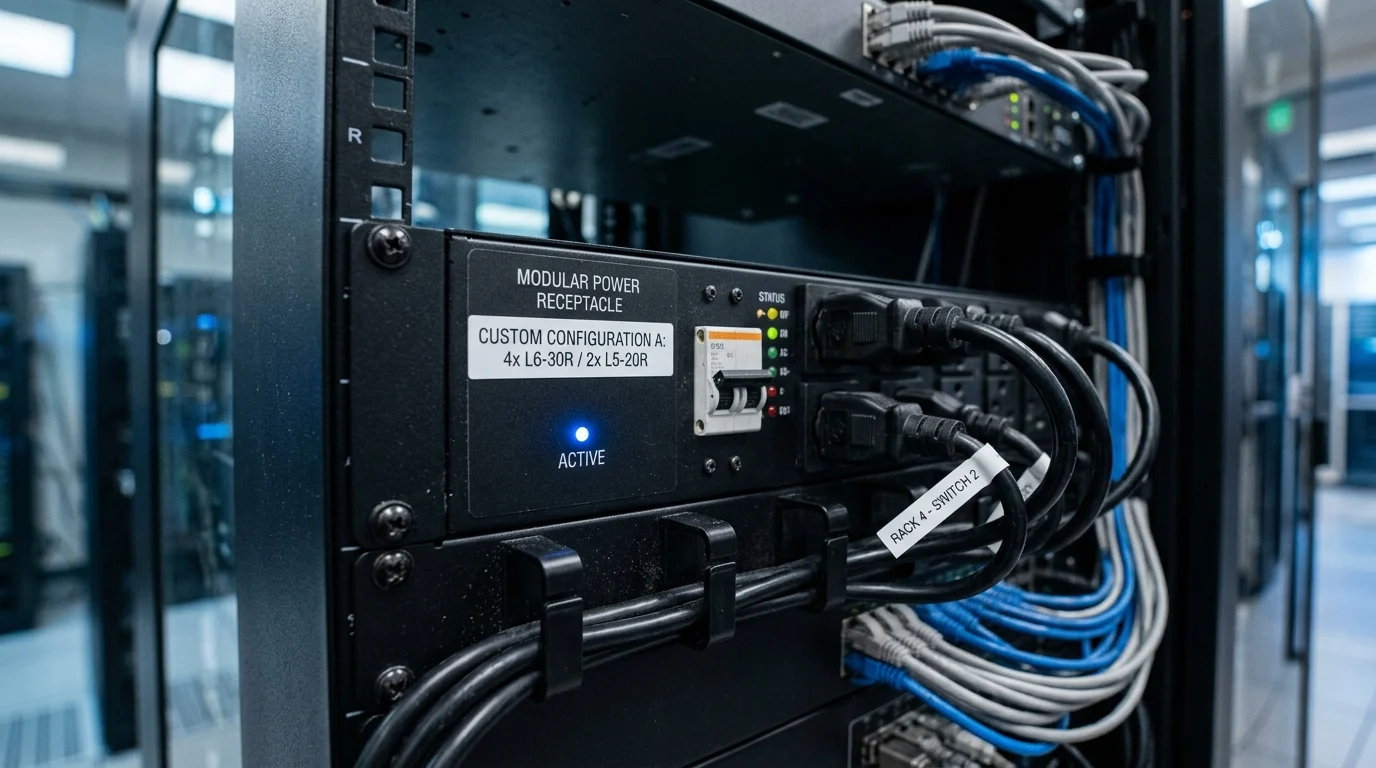
Specifying a custom power distribution unit involves navigating dozens of interconnected variables. The most impactful configurations directly address electrical capacity, physical layout, and remote management capabilities. Selecting the right combination of these features ensures that the power infrastructure will support current workloads while providing the flexibility needed for future hardware refresh cycles.
How input power, outlet mix, phase balancing, and metering affect performance
The foundation of any custom design begins with the input power specifications. Facilities must select specific input cord lengths, plug types (such as IEC 60309 or NEMA L15-30P), and amperage ratings—often ranging from 16A up to 60A or more. Customizing the input cord length eliminates excess slack, reducing under-floor or overhead cable congestion, which in turn improves cooling efficiency by enabling unobstructed airflow.
Beyond the input, the internal distribution of power is critical. Custom units can feature alternating phase outlets, which distribute L1, L2, and L3 sequentially down the length of the chassis. This configuration drastically simplifies load balancing for technicians, as servers can be plugged into adjacent outlets while naturally distributing the draw across all three phases. Additionally, selecting high-retention or locking outlets tailored to the exact hardware mix prevents the need for bulky aftermarket locking cables.
How basic, metered, and switched PDUs compare
The level of embedded intelligence is a major differentiator in custom designs. Organizations must choose between a Basic PDU for simple, reliable power delivery, or more advanced metered and switched variants for comprehensive remote management.
| PDU Category | Core Functionality | Typical Use Case | Cost Profile |
|---|---|---|---|
| Basic | Unmanaged power distribution | Small closets, highly secure air-gapped sites | Lowest |
| Metered (Input) | Phase/circuit level monitoring | Standard enterprise racks, capacity planning | Moderate |
| Metered (Outlet) | Individual receptacle monitoring | Colocation billing, granular PUE tracking | High |
| Switched | Remote power cycling per outlet | Edge sites, lights-out data centers | Highest |
An Intelligent PDU provides the telemetry required for modern Data Center Infrastructure Management (DCIM) software. Switched custom units are particularly valuable in remote edge locations, allowing administrators to reboot locked servers without dispatching a technician, thereby reducing mean time to recovery (MTTR) and operational expenditures.
How environmental sensing and network visibility improve operations
Modern power distribution units serve as environmental monitoring hubs within the rack. Custom configurations frequently incorporate sensor ports that support daisy-chained temperature, humidity, airflow, and water leak detectors. By positioning these sensors at the top, middle, and bottom of the rack, operators gain a granular, real-time view of the thermal microclimate, allowing for precise adjustments to computer room air conditioning (CRAC) units.
Network visibility is equally critical. Custom designs often feature advanced network controllers that support IP cascading. This allows up to 16 individual PDUs to share a single network connection and IP address, drastically reducing the number of switch ports required for management infrastructure. Furthermore, custom firmware can support dual network ports, enabling redundant management paths or allowing colocation providers and tenants to monitor the same unit on separate, isolated subnets.
How to evaluate engineering, compliance, and sourcing
Procuring custom hardware introduces complexities not found when purchasing off-the-shelf catalog items. Organizations must rigorously evaluate the engineering trade-offs, regulatory compliance, and the manufacturing capabilities of their supply chain partners. A successful procurement strategy balances the desire for highly specific features with cost, lead times, and global deployment requirements.
Which electrical, mechanical, and firmware trade-offs affect cost
Every customization carries mechanical and electrical implications that affect the final per-unit cost. For instance, designing an ultra-low-profile chassis to fit behind zero-clearance server rails requires specialized internal busbars rather than standard wiring, which increases engineering costs. Similarly, specifying high-temperature ratings—such as ensuring the unit operates reliably in 60°C (140°F) ambient hot-aisle containment zones—necessitates premium internal components and specialized circuit breakers that resist thermal tripping.
Firmware customizations also play a role in cost and lead time. Requesting custom SNMP MIBs, specific API integrations for proprietary management software, or custom default IP configurations requires software engineering hours. Organizations must weigh whether these upfront engineering costs are offset by the downstream savings in deployment speed and operational efficiency.
What compliance, certification, and regional standards to check
Global deployments of a custom pdu power distribution unit demand strict adherence to regional safety and environmental regulations. A unit designed for a North American data center cannot simply be shipped to a European facility without proper certification, even if the voltage requirements align.
| Region | Key Electrical Safety Standard | Environmental/Material Compliance |
|---|---|---|
| North America | UL 62368-1 / CSA C22.2 | Proposition 65 (California) |
| Europe | CE (EN IEC 62368-1) | RoHS, REACH |
| United Kingdom | UKCA | RoHS |
| Asia Pacific (Select) | PSE (Japan), CCC (China) | China RoHS |
Failing to account for these certifications during the custom design phase can result in equipment being impounded at customs or rejected by facility safety inspectors. Buyers must ensure that the manufacturer has the capability to certify custom designs through recognized testing laboratories (NRTLs) without adding months to the delivery timeline.
How supplier capabilities, testing, and change control reduce risk
The reliability of a custom unit is entirely dependent on the manufacturer's quality control and supply chain agility. When evaluating suppliers, buyers should mandate strict testing protocols, such as a 100% load burn-in test for a minimum of 4 hours on every custom unit before shipment. This rigorous testing identifies early-life component failures and ensures stability under maximum thermal stress.
Additionally, organizations must evaluate Minimum Order Quantities (MOQs) and change control processes. While traditional manufacturers might require an MOQ of 500 units for a custom design, agile suppliers can often produce custom runs with an MOQ as low as 50 units. Strict change control is also vital; the manufacturer must guarantee that no internal components—such as microcontrollers or relays—are substituted in future batches without advanced notification, as undocumented changes can break API integrations or alter thermal performance.
How to implement custom PDU configurations successfully
Transitioning from the specification phase to physical deployment requires meticulous planning. Implementing custom power solutions is not a plug-and-play exercise; it involves mapping precise power profiles, aligning with facility redundancy architectures, and executing controlled rollouts to mitigate operational risks.
How to assess rack power profiles and redundancy targets
Before finalizing a custom order, engineers must conduct a thorough assessment of the rack's power profile. This involves calculating the maximum potential draw of all IT assets under heavy computational load. According to National Electrical Code (NEC) standards in North America, continuous loads must be derated to 80% of the circuit's maximum capacity. Therefore, a rack demanding 24 amps of continuous power requires a custom PDU rated for at least 30 amps.
Redundancy targets further dictate the implementation strategy. In a standard 2N architecture (A and B feeds), the custom configuration must ensure that if the 'A' feed fails, the 'B' unit can handle 100% of the rack's load without tripping its breakers. This often means specifying custom units with higher-rated internal wiring and breakers than the nominal split-load draw would suggest, ensuring seamless failover during utility outages or upstream UPS maintenance.
How to manage specification, pilot validation, installation, and rollout
Successful implementation relies on a phased approach, starting with a rigorous pilot validation. Purchasing a small batch of prototype units allows the IT and facilities teams to physically test the custom chassis within the actual server cabinets. This pilot phase validates cable routing clearances, confirms that custom locking outlets mate correctly with server power supplies, and verifies that the embedded firmware communicates seamlessly with the organization's DCIM platforms.
Once the pilot is validated, the mass rollout must be carefully managed. Custom units are often delivered with pre-assigned IP addresses, custom labeling, and pre-installed toolless mounting buttons tailored to the specific rack vendor. Coordinating the delivery of these pre-configured units alongside the IT hardware deployment schedule minimizes staging time on the data center floor. Installers can simply snap the units into place, connect the network uplinks, and immediately begin powering up servers, drastically accelerating the overall facility commissioning timeline.
How to make the right long-term investment
Investing in customized power distribution is a strategic decision that extends far beyond the initial capital expenditure. When designed correctly, these units optimize operational workflows, extend the viable lifespan of the rack infrastructure, and deliver a measurable return on investment over their deployment lifecycle.
Which criteria align customization with TCO and scalability
Total Cost of Ownership (TCO) is the primary metric for evaluating the success of a custom power strategy. While the upfront cost of a bespoke unit may be 15% to 30% higher than a standard model, the operational savings quickly offset the premium. For example, custom cord lengths and pre-installed mounting brackets can reduce physical installation time by up to 30%. Over a deployment of 1,000 racks, the reduction in specialized labor hours represents a significant financial saving.
Scalability must also be factored into the TCO. The typical lifecycle of a power distribution unit is 5 to 7 years, often outlasting two or three generations of server hardware. To ensure long-term viability, organizations should specify custom units with modular intelligence. Swappable network controllers allow operators to upgrade the management interface or replace a failed network card without disconnecting power to the critical load, ensuring the infrastructure remains secure and functional as management protocols evolve.
How IT, facilities, procurement, and partners should coordinate
The most successful custom deployments are born from cross-departmental collaboration. Historically, facilities teams managed power and cooling, while IT teams managed servers and network gear. The modern, intelligent power unit sits precisely at the intersection of these domains. Facilities relies on the unit's environmental sensors to optimize CRAC setpoints and track Power Usage Effectiveness (PUE), while IT relies on the unit's switching capabilities to manage server uptime.
Procurement teams and external integration partners must facilitate this alignment during the design phase. By bringing IT, facilities, and the manufacturer to the same table, organizations can define a unified specification that satisfies the mechanical constraints of the building, the data telemetry requirements of the network operations center, and the budgetary constraints of the business. This holistic approach ensures that the resulting custom power architecture is resilient, efficient, and perfectly tailored to the long-term strategic goals of the enterprise.
Key Takeaways
- The most important conclusions and rationale for pdu networking
- Specs, compliance, and risk checks worth validating before you commit
- Practical next steps and caveats readers can apply immediately
Frequently Asked Questions
When should I choose a custom PDU instead of a standard model?
Choose custom when your rack has high density, mixed C13/C19 loads, unusual cabinet depth, or specific plug, cord, and monitoring needs that standard PDUs cannot match cleanly.
What outlet mix works best for mixed IT racks?
Use a custom mix sized to your actual devices, such as combining C13 for switches and C19 or C39 for GPU or high-draw servers, to avoid adapters and wasted space.
Why is three-phase configuration important in PDU networking?
Three-phase custom PDUs help balance loads across L1, L2, and L3, reduce cable bulk at higher power levels, and support dense racks more efficiently than single-phase setups.
How do custom PDUs help in edge or shallow-depth cabinets?
They can use low-profile housings, angled input feeds, and tailored cord lengths so the PDU fits tight spaces without blocking equipment installation or airflow.
What monitoring features are most useful for colocation or remote sites?
Look for outlet-level metering, ±1% billing-grade accuracy, secure network access, and switched control so operators can track usage precisely and manage devices remotely.