



MPO trunk cables form the high-density backbone of modern network infrastructures. They offer pre-terminated multi-fiber connections, efficiently linking switches and distribution panels. The MPO trunk cable market demonstrates substantial growth.
| Report Attribute | Details |
|---|---|
| Forecast Period | 2024 – 2030 |
| Market Size Value in 2024 | USD 2.1 Billion |
| Revenue Forecast in 2030 | USD 3.2 Billion |
| Overall Growth Rate | CAGR of 6.5% (2024 – 2030) |
| Base Year for Estimation | 2024 |
| Unit | USD Million, CAGR (2024 – 2030) |
MPO breakout cables, conversely, convert high-density MPO ports into individual connector types like LC or SC. They connect network devices directly. Professionals encounter a common challenge when selecting between these two cable types. They must align the choice with specific network architecture, scalability goals, and budgetary constraints.
- More than 70% of hyperscale data centers globally integrate MPO connectors for parallel optics transmission.
- Over 65% of total MPO demand stems from data center upgrades.
- In North America, 68% of new data centers have incorporated MPO connectors into core switching fabrics.
- Hyperscale data center builds in Singapore and Southeast Asia specify MPO solutions in 55% of new facilities.
- 70% of enterprise network upgrades in Japan and South Korea utilize high-density MPO cabling.
Key Takeaways
- MPO trunk cables are the backbone of high-density networks. They connect major network parts.
- MPO breakout cables connect high-density ports to individual devices. They convert one MPO link into many smaller links.
- Choose MPO trunk cables for long distances and high-speed backbone links. They support 40G, 100G, and faster speeds.
- Use MPO breakout cables for shorter connections. They link servers to switches and maximize port use.
- Properly manage cable polarity. This ensures signals go to the right place and prevents errors.
- Clean MPO connectors often. Dirt causes signal loss and network problems.
- MPO cables help future-proof networks. They support new, faster technologies like 400G and 800G Ethernet.
Understanding MPO Trunk Cables: The Backbone of High-Density Networks
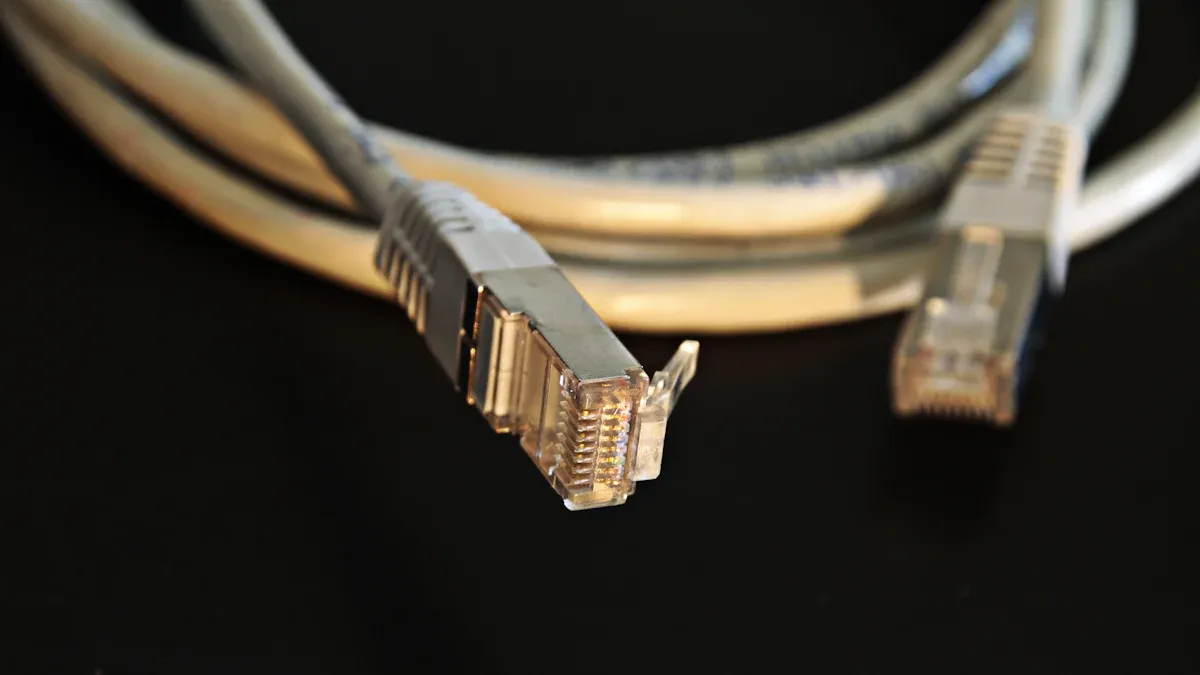
What Defines MPO Trunk Cables?
Multi-Fiber Design and Construction
MPO trunk cables are essential for high-density fiber optic systems. They feature a multi-fiber design. These cables contain many optical fibers within a single jacket. MPO (Multi-Fiber Push-On) connectors allow quick connection and disconnection of multiple fibers. These connectors support various fiber counts.
| Fiber Count | Arrangement |
|---|---|
| 8-Fiber | 1×8 (Single Row) |
| 12-Fiber | 1×12 (Single Row) |
| 16-Fiber | 1×16 (Single Row) |
| 24-Fiber | 2×12 (Dual Row) |
Common MPO connectors come with 8, 12, 16, or 24 fibers for typical data center uses. Higher counts, like 32 or 48 fibers, serve specialized high-density arrays. MPO connectors are available in male (with pins) and female (without pins) versions. This ensures proper mating. Equipment ports are usually male. Therefore, MPO trunk cables connecting to them require female connectors.
Pre-terminated Assemblies for Efficiency
MPO trunk cables arrive pre-terminated from the factory. This means the connectors are already attached and tested. This design greatly improves installation efficiency. It also ensures high performance.
Polarity Management in MPO Trunk Systems
Polarity management is crucial for MPO trunk systems. It ensures the correct fiber connection from one end to the other. This prevents signal crossover or loss. Industry standards define different polarity methods.
Key Advantages of MPO Trunk Cables
Rapid Deployment and Installation
Pre-terminated MPO trunk cables offer significant time savings during installation. Many projects report installation times that are 30–50% faster with these links. A task that once took days can now be completed in hours. Installing a 144-fiber patch panel with traditional methods might take 60-70 hours. With MPO systems, it takes only 10-15 hours. This represents a 75-80% reduction in labor.
Reduced Cable Congestion and Improved Airflow
The compact design of MPO trunk cables reduces cable bulk. This leads to less congestion in racks and cabinets. Improved airflow helps keep equipment cool. This enhances network reliability.
Scalability for Future Network Growth
MPO trunk cables provide excellent scalability. They support future network growth. Network administrators can easily upgrade to higher speeds. They can also add more connections without replacing the entire cabling infrastructure.
Where are MPO Trunk Cables Best Utilized?
Data Center Backbone Infrastructure
MPO trunk cables form the backbone of modern data centers. They connect core switches and distribution areas. OM4 multimode fiber supports 40/100 Gigabit Ethernet over distances up to 550 meters. This highlights its high bandwidth for data centers. 8, 12, or 24-fiber MPO trunk cables are typically used for 40G/100G transmission. 16-fiber cables are specifically designed for 400G short-reach cabling in hyperscale data centers.
Inter-Rack and Inter-Cabinet Connectivity
These cables are ideal for connecting equipment between different racks and cabinets. Their high fiber count simplifies complex connections.
High-Speed Storage Area Networks (SANs)
MPO trunk cables also serve high-speed Storage Area Networks (SANs). They provide the necessary bandwidth and reliability for critical data transfer.
Exploring MPO Breakout Cables: Connecting the Network Edge
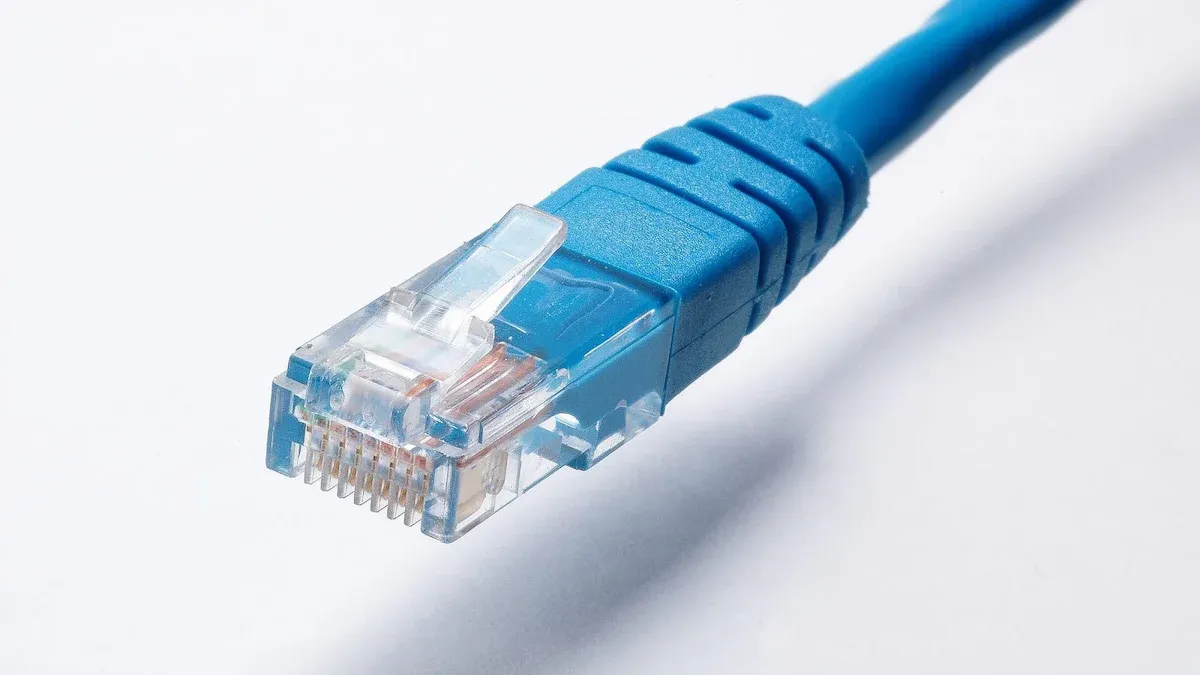
What Characterizes MPO Breakout Cables?
MPO to Individual Connector Fan-out
MPO breakout cables serve a crucial role at the network edge. They convert a single multi-fiber MPO connector into multiple individual fiber connectors. This "fan-out" capability allows high-density MPO ports on switches or patch panels to connect to devices with standard, lower-density fiber interfaces. MPO cable assemblies offer multiple breakout options to individual single fiber connectors, including:
- LC connectors
- SC connectors
- ST connectors
- FC connectors
Common Connector Types (LC, SC, ST)
The most common individual connector types found on MPO breakout cables are LC (Lucent Connector) and SC (Standard Connector). LC connectors are small form-factor connectors, popular for their high density and performance in data centers. SC connectors are larger, often used in older installations or for specific equipment. ST (Straight Tip) connectors also appear, though less frequently in modern data center environments.
Custom Configurations for Specific Needs
Network professionals often require custom configurations for MPO breakout cables. These customizations include specific fiber counts, varying lengths for the individual breakout legs, and different connector types on the fan-out end. Customization ensures a perfect fit for unique hardware requirements and cable management strategies.
Benefits of Using MPO Breakout Cables
Maximizing Port Utilization on Devices
MPO breakout cables significantly maximize port utilization on network devices. A single 40G or 100G MPO port can break out into four 10G or 25G connections. This allows a high-speed switch port to serve multiple lower-speed server or storage ports.
Flexibility in Device-Level Connectivity
These cables offer great flexibility in device-level connectivity. They bridge the gap between high-density MPO infrastructure and devices using traditional fiber optic ports. This adaptability simplifies network design and upgrades.
Cost-Effectiveness for Shorter Connections
MPO breakout cables provide a cost-effective solution for shorter connections. They eliminate the need for expensive transceivers or complex patching solutions when connecting high-speed MPO ports to multiple standard fiber ports over short distances.
Ideal Applications for MPO Breakout Cables
Server to Top-of-Rack Switch Connections
MPO breakout cables are ideal for connecting servers to top-of-rack (ToR) switches. A single MPO port on the ToR switch can connect to multiple servers, each with its own LC or SC port. This simplifies cabling and reduces congestion.
SAN Device Interfacing
Storage Area Network (SAN) device interfacing also benefits from MPO breakout cables. They connect high-speed SAN switches to storage arrays or host bus adapters (HBAs) that use individual fiber connections. This ensures efficient data transfer within the SAN.
High-Density Patch Panel Integration
High-density patch panel integration is another key application. MPO breakout cables connect MPO ports on backbone patch panels to individual fiber ports on equipment or other patch panels. This provides a flexible and manageable patching solution.
MPO Trunk vs. Breakout: A Direct Comparison
Network professionals often face a critical decision between MPO trunk and MPO breakout cables. Each cable type offers distinct characteristics and serves specific purposes within a network infrastructure. Understanding these differences is crucial for optimal network design and performance.
Design and Structural Differences
Fiber Count and Termination Methods
MPO trunk and breakout cables exhibit fundamental differences in their fiber counts and termination methods. These distinctions directly influence their application.
| Cable Type | Typical Fiber Counts | Termination Methods |
|---|---|---|
| MPO Trunk Cables | 8-, 12-, 16-, 24-, or 32-fiber | Same type of MTP/MPO connectors on both ends |
| MPO Breakout Cables | Not specified (implied by application) | MTP/MPO connectors on one end, duplex connectors (e.g., LC, SN, MDC) on the other end |
MPO trunk cables typically feature higher fiber counts, ranging from 8 to 32 fibers. They terminate with MTP/MPO connectors on both ends. This design facilitates high-density, multi-fiber connections between network components. Conversely, MPO breakout cables have an MTP/MPO connector on one end. The other end fans out into multiple individual fiber connectors, such as LC, SN, or MDC. This allows connection to devices with standard, lower-density ports.
Connector Types and Their Roles
The connector types define the role of each cable. MPO trunk cables use MTP/MPO connectors at both ends. These connectors enable parallel optical transmission, supporting high-speed data rates over multiple fibers simultaneously. MPO breakout cables feature an MTP/MPO connector on one side. This connects to a high-density port on a switch or patch panel. The other side uses individual connectors like LC or SC. These individual connectors interface with standard ports on servers, storage devices, or other network equipment.
Cable Jacket and Bend Radius Considerations
Cable jacket and bend radius are important for installation and long-term reliability. MPO trunk cables often have a robust jacket. This protects the numerous fibers inside. Their design typically allows for a larger bend radius compared to individual fiber cables. This protects the fibers from damage during installation. MPO breakout cables, with their fanned-out individual fibers, require careful management of the breakout legs. Each leg has its own bend radius requirement, similar to standard patch cords. Proper cable management prevents signal degradation due to excessive bending.
Application Scenarios and Use Cases
Core Network vs. Edge Device Connectivity
MPO trunk and breakout cables serve distinct roles in network architecture. MPO trunk cables form the backbone of core networks. They provide high-speed, high-density connections. MPO breakout cables connect devices at the network edge.
| Feature | MPO Trunk Cables (Core Network) | MPO Breakout Cables (Network Edge) |
|---|---|---|
| Typical Applications | 40G, 100G, 400G, 800G backbone direct connections between data centers, distribution frames, and cabinets. | 4x10G, 4x25G, 4x50G, 4x100G, 8x100G device breakout connectivity, connecting switches to servers, patch panels to active equipment, Top-of-Rack architectures, and integrating legacy equipment. |
| Main Purpose | Direct trunk connections between equipment or distribution frames, facilitating high-speed parallel transmission and optimizing space. | High-density port breakout, splitting high-speed ports into multiple lower-speed ports to enhance port utilization and facilitate speed transitions (e.g., 400G to 100G). |
| Network Layer Focus | Core and distribution layers, establishing permanent backbone connections in spine-leaf topologies. | Access or edge layers, facilitating speed transitions between different equipment generations and enabling oversubscription ratios. |
MPO trunk cables are essential for increasing fiber network density. They consolidate multiple fiber linkages. They build rapid backbone infrastructure. They also provide scalability for growing bandwidth requirements in hyperscale data centers. They also handle inter-rack connectivity solutions.
MPO breakout cables connect switches to servers. They allow a single high-speed parallel optic switch port (e.g., 40G QSFP+) to support multiple lower-speed server ports (e.g., four 10G SFP+). They also link patch panels to active equipment. They connect MPO ports on patch panels to individual LC, SC, or ST ports on active network devices. In Top-of-Rack (ToR) architectures, they convert high-speed transmission rates (e.g., 40G) to lower ones (e.g., 10G). This efficiently connects ToR switches and servers, reducing cable clutter. They also integrate legacy equipment. They bridge the gap between older devices using 1G or 10G connections with LC/SC connectors and newer MPO-based infrastructure. They consolidate multiple lower-speed connections into one MPO link.
Infrastructure vs. Direct Device Links
MPO trunk cables primarily serve as infrastructure links. They establish permanent, high-capacity pathways between major network components like switches, distribution frames, and cabinets. They form the foundational cabling for data centers. MPO breakout cables create direct device links. They connect specific network devices to the high-density infrastructure. They provide the final connection point for servers, storage, and other active equipment.
Long-Haul vs. Short-Distance Requirements
MPO trunk cables often handle longer distances within a data center or campus environment. They support the backbone infrastructure that spans across racks, rows, or even buildings. MPO breakout cables typically serve shorter distances. They connect devices within the same rack or adjacent racks. Their primary function is to fan out connections at the device level, not to cover extensive distances.
Performance Metrics and Considerations
Insertion Loss Characteristics
Insertion loss is a critical performance metric. It measures the signal power lost when a cable connects to a system. MPO trunk cables, with their factory-terminated connectors, generally offer very low and consistent insertion loss. This is crucial for maintaining signal integrity over longer backbone runs and at higher data rates. MPO breakout cables introduce additional connection points (the individual LC/SC connectors). Each connection adds a small amount of insertion loss. Network designers must account for this cumulative loss, especially in complex patching scenarios.
Return Loss Performance
Return loss measures the amount of light reflected back towards the source. High return loss indicates minimal reflections, which is desirable for optimal performance. MPO connectors, particularly those with angled physical contact (APC), offer excellent return loss performance. This is important for high-speed, single-mode applications. The individual connectors on MPO breakout cables also contribute to the overall return loss. High-quality connectors and proper cleaning procedures are essential to maintain good return loss across all connections.
Bandwidth Support and Data Rates
Both MPO trunk and breakout cables support high bandwidth and data rates. MPO trunk cables are fundamental for 40G, 100G, 400G, and even 800G Ethernet applications. They facilitate parallel optics transmission. MPO breakout cables enable the transition from these high-speed MPO ports to multiple lower-speed ports. For example, they convert a 100G MPO port into four 25G LC connections. This allows devices with lower-speed transceivers to utilize the high-speed infrastructure. The choice of fiber type (multimode OM3, OM4, OM5, or single-mode OS2) also dictates the maximum supported data rates and distances for both cable types.
Cost Implications for Network Deployment
Network professionals carefully evaluate the cost implications of MPO trunk and breakout cables. These costs extend beyond the initial purchase price. They include installation labor and future upgrade expenses.
Initial Investment and Material Costs
MPO trunk cables often represent a higher initial investment per cable. This is due to their factory termination and higher fiber counts. However, they consolidate many individual fiber links into one cable. This can reduce the total material cost for a given number of connections over a distance. MPO breakout cables might appear less expensive per unit. Yet, a network requires many breakout cables to achieve the same fiber density as a single trunk cable. This increases the overall material cost. The cost of transceivers also plays a significant role. High-speed MPO transceivers can be more expensive than lower-speed individual fiber transceivers.
Installation Labor and Time Savings
MPO trunk cables offer substantial savings in installation labor and time. Their pre-terminated, plug-and-play design drastically reduces the time technicians spend on site. Installers simply connect the pre-assembled cables. This eliminates the need for on-site fiber termination and testing. This efficiency translates directly into lower labor costs. MPO breakout cables also provide labor savings compared to splicing individual fibers. However, they require more individual connections at the device level than a trunk cable. This means slightly more handling during installation.
Long-Term Expansion and Upgrade Costs
Both cable types influence long-term expansion and upgrade costs. MPO trunk cables simplify future upgrades. Network administrators can often upgrade to higher speeds by replacing transceivers at each end. They do not need to replace the entire cabling infrastructure. This reduces future material and labor costs. MPO breakout cables also facilitate upgrades. They allow transitions from slower to faster network speeds. This happens by replacing transceiver modules and reconnecting the breakout cables. This avoids significant investment in new cabling.
Scalability and Flexibility in Network Design
Scalability and flexibility are critical considerations in modern network design. MPO trunk and breakout cables offer distinct advantages in these areas.
Future-Proofing Your Infrastructure
Both MPO trunk and breakout cables contribute significantly to future-proofing network infrastructure. The scalability of MPO trunk and breakout cables ensures that businesses can adapt to increasing data demands without having to overhaul their existing cabling infrastructure. MTP/MPO trunk cables contribute to future-proofing by offering scalability through the one-time deployment of fixed cabling between functional areas. This design allows for all subsequent moves, adds, and changes to be managed efficiently using patch cords at the front of patch panels. This simplifies network modifications and reduces future infrastructure overhaul needs. MPO MTP Breakout Fiber Cables enhance network scalability and future-proofing. They facilitate seamless transitions from slower to faster network speeds without requiring a complete rewiring. For example, a 10G network can easily upgrade to 40G or 100G. This happens by simply replacing transceiver modules and reconnecting the breakout cables. This allows companies to adapt to increasing bandwidth demands without significant investment in new cabling. Additionally, the high fiber count in MPO connections means some fibers can initially remain unused (‘dark’). Network administrators can activate these fibers later as needed. This provides room for future growth.
Reconfigurability and Adaptability
MPO trunk cables offer high reconfigurability at the patch panel level. Network professionals can easily change connections by simply moving patch cords. This makes adapting to new network topologies or equipment changes straightforward. MPO breakout cables provide flexibility at the device level. They allow network administrators to connect various devices with different port types to a high-density MPO infrastructure. This adaptability is crucial for integrating diverse hardware.
Managing Port Density Effectively
Both cable types excel at managing port density. MPO trunk cables significantly reduce cable bulk in racks and pathways. They consolidate many fibers into a single, compact cable. This improves airflow and simplifies cable management. MPO breakout cables maximize port utilization on network devices. They allow a single high-speed MPO port to serve multiple lower-speed connections. This efficiently uses valuable port real estate on switches and other equipment.
The Decision Framework: Choosing the Right MPO Cable
Network professionals face a crucial decision when selecting MPO cabling. They must carefully evaluate several factors. These factors include current needs, future plans, and financial limitations. A structured approach helps make the best choice.
Assessing Current Network Requirements
Understanding the immediate demands of the network is the first step. This involves looking at data speeds, existing hardware, and physical distances.
Required Data Rates and Throughput
The required data rates directly influence cable selection. Networks needing 10G or 25G connections to individual servers often benefit from MPO breakout cables. These cables convert a high-speed MPO port into multiple lower-speed connections. For backbone links requiring 40G, 100G, 400G, or even 800G, MPO trunk cables are typically the preferred solution. They provide the necessary bandwidth for high-speed parallel optics.
Existing Port Density and Equipment
Network designers must consider the port density on existing switches, servers, and patch panels. If devices have many individual LC or SC ports, MPO breakout cables can efficiently connect them to a high-density MPO infrastructure. Conversely, if switches feature high-density MPO ports, MPO trunk cables simplify the backbone cabling. They consolidate many fibers into a single connection.
Distances Between Network Devices
The physical distances between network devices play a significant role. MPO breakout cables are ideal for shorter connections, typically within the same rack or adjacent racks. They fan out connections at the device level. MPO trunk cables handle longer distances. They connect equipment across different racks, rows, or even buildings. They form the primary backbone infrastructure.
Planning for Future Scalability and Growth
A forward-thinking approach ensures the network can adapt to future demands. This involves anticipating expansion and technological advancements.
Anticipated Network Expansion
Network administrators must consider how much the network will grow. Will they add more devices? Will they need higher bandwidth? A scalable cabling infrastructure supports future growth without requiring a complete overhaul. MPO trunk systems, with their high fiber counts, offer excellent scalability for expanding data centers.
Technology Roadmaps (e.g., 400G, 800G Ethernet)
Future-proofing the network is essential. Technology roadmaps for Ethernet speeds, such as 400G and 800G, point towards continued reliance on parallel optics. MPO cabling, especially MPO trunk cables, is designed to support these higher speeds. Choosing the right MPO solution now prevents costly re-cabling later. It ensures compatibility with emerging technologies.
Modularity and Upgrade Paths for MPO Trunk Systems
MPO trunk systems offer significant modularity. This allows for easy upgrades. Network professionals can often upgrade to higher speeds by simply replacing transceivers at each end of the MPO trunk. They do not need to replace the entire cabling infrastructure. This modularity provides a clear and cost-effective upgrade path. It extends the lifespan of the cabling investment.
Understanding Budgetary Constraints
Financial considerations are always a key part of any network deployment decision. This includes initial costs, ongoing expenses, and long-term value.
Capital Expenditure (CapEx) Considerations
Capital expenditure refers to the initial investment in hardware and infrastructure. MPO trunk cables might have a higher upfront cost per cable due to their factory termination and higher fiber counts. However, they consolidate many individual fiber links. This can reduce the total material cost for a given number of connections over a distance. MPO breakout cables might appear less expensive per unit. Yet, a network might require many breakout cables to achieve the same fiber density as a single trunk cable. This increases the overall material cost.
Operational Expenditure (OpEx) Factors
Operational expenditure includes ongoing costs like installation labor, maintenance, and troubleshooting. MPO trunk cables offer substantial savings in installation labor and time. Their pre-terminated, plug-and-play design drastically reduces on-site work. This efficiency translates directly into lower labor costs. MPO breakout cables also provide labor savings compared to splicing individual fibers. However, they require more individual connections at the device level. This means slightly more handling during installation and potentially more points of failure to manage.
Total Cost of Ownership (TCO) Analysis
A comprehensive Total Cost of Ownership (TCO) analysis combines both CapEx and OpEx over the lifespan of the network. This analysis helps determine the true long-term cost of a cabling solution. While one option might have a lower initial cost, higher operational expenses or limited upgrade paths could make it more expensive in the long run. Evaluating TCO ensures a financially sound decision that supports the network’s evolution.
Aligning with Network Architecture and Topology
Network architecture and topology significantly influence MPO cable selection. The chosen cabling solution must integrate seamlessly with the overall network design. This ensures optimal performance and manageability.
Spine-Leaf vs. Traditional Three-Tier Architectures
Modern data centers often deploy spine-leaf architectures. This design offers high bandwidth and low latency. Spine switches form the backbone. Leaf switches connect to servers and other end devices. MPO trunk cables are ideal for spine-leaf designs. They provide high-density, high-speed links between spine and leaf layers. These cables consolidate many fiber connections. This simplifies the cabling infrastructure.
Traditional three-tier architectures include core, distribution, and access layers. Core switches handle high-speed routing. Distribution switches aggregate traffic. Access switches connect to end devices. MPO trunk cables can connect core and distribution layers. They provide robust backbone links. MPO breakout cables find use at the access layer. They connect access switches to servers or storage. This allows a single high-speed port to serve multiple lower-speed devices.
| Architecture Type | MPO Trunk Cable Role | MPO Breakout Cable Role |
|---|---|---|
| Spine-Leaf | Spine-to-leaf interconnections, high-bandwidth uplinks | Leaf-to-server connections (if servers use individual fiber ports) |
| Three-Tier | Core-to-distribution, distribution-to-access uplinks | Access layer device connectivity (servers, storage) |
Rack Unit Optimization and Space Efficiency
Data center space is a premium asset. Network designers must optimize every rack unit. MPO cabling significantly contributes to space efficiency. MPO trunk cables replace numerous individual patch cords. This reduces cable bulk in racks and pathways. Less cable congestion improves airflow. Better airflow helps maintain optimal equipment temperatures. This enhances system reliability.
MPO breakout cables also optimize space. They maximize port utilization on network devices. A single high-speed MPO port can connect to multiple lower-speed devices. This reduces the need for additional line cards or switches. It frees up valuable rack units. The compact design of MPO connectors further saves space on patch panels and equipment ports.
Comprehensive Cable Management Strategy
An effective cable management strategy is crucial for any network. It ensures reliability, simplifies troubleshooting, and supports future changes. MPO cabling systems inherently simplify cable management. They reduce the number of individual cables. This makes routing and organizing much easier.
Network professionals should implement clear labeling for all MPO cables. This includes identifying source and destination ports. Proper routing techniques prevent cable damage. They also maintain appropriate bend radii. Documentation of all fiber paths is essential. This helps quickly identify and resolve issues. Pre-terminated MPO cables reduce installation errors. They also simplify troubleshooting. A well-managed MPO infrastructure enhances network uptime and operational efficiency.
Tip: Implement a color-coding scheme for MPO cables. This can differentiate between various network segments or fiber types. It greatly aids visual identification and management.
Best Practices for MPO Trunk and Breakout Cable Deployment
Successful MPO cabling deployment requires careful planning and adherence to industry best practices. These practices ensure optimal performance, reliability, and ease of maintenance for the network infrastructure.
Adherence to Industry Standards
Following established standards guarantees compatibility and performance across different components and systems.
TIA-568.3-D for Cabling Standards
TIA-568.3-D provides comprehensive guidelines for fiber optic cabling. This standard specifies requirements for components such as cable, connectors, connecting hardware, and cords. It also defines basic connectivity arrangements formed from these components. TIA-568.3-D incorporates connector test requirements and includes guidelines for field testing. This standard addresses the performance and technical criteria for optical fiber cabling systems.
IEC 61754-7 for MPO Connector Specifications
The IEC 61754-7 standard specifically details MPO connector specifications. It ensures interoperability between different manufacturers’ MPO products. Adhering to this standard guarantees that connectors mate correctly and maintain signal integrity.
Understanding Polarity Methods (A, B, C)
Polarity management is crucial for MPO systems. It ensures correct signal transmission. Three main methods exist: Method A, Method B, and Method C.
| Polarity Method | Pin Configuration / Fiber Connection | Typical Applications |
|---|---|---|
| Method A – Straight | One-to-one; fiber at position 1 on one connector aligns with fiber at position 1 on the other. | Duplex applications where transmit and receive signals are separated. |
| Method B – Reversed | Reverses positions of two fibers; fiber at position 1 on one connector connects to fiber at position 2 on the other, and vice versa. | Applications requiring a reversed transmit/receive configuration. |
| Method C – Flipped | Flips pairs of fibers; e.g., fibers at positions 1 and 2 on one connector are switched with fibers at positions 3 and 4 on the other. | 40G and 100G parallel optics applications. |
Method A uses Type A cables. For duplex applications, it requires a transceiver-receiver flip at one end using an A-A duplex patch cord, and an A-B patch cord on the other end. Method B uses Type B cables. For duplex applications, it uses A-B duplex patch cords on both ends, eliminating the need for a transceiver-receiver flip. Method C uses Type C cables. It is not well-suited for 40/100 Gig applications due to complex patch cord requirements.
Proper Installation Techniques
Correct installation prevents damage and ensures long-term performance.
Managing Cable Bend Radius
Properly managing cable bend radius protects fiber integrity. Fiber optic cables generally have a minimum bend radius of 20 times the cable’s diameter during installation. For long-term or static conditions, the minimum bend radius is typically 10 times the cable’s diameter. For example, a standard 3.0mm round MPO trunk cable requires a 30mm bend radius during pulling and 15mm after installation.
Essential Connector Cleaning Procedures
Clean connectors are vital for optimal performance. They maintain low insertion and return loss. Regular cleaning extends connector lifespan and prevents network downtime. Technicians should use specific tools for cleaning. These include dust removers, inspection scopes, fiber optic cleaning fluid, lint-free wipes, cleaning sticks, and MPO click-to-clean tools. Always inspect, clean, and re-inspect both ends of an MPO connector pair to prevent cross-contamination.
Effective Cable Routing and Support
Proper cable routing and support prevent stress on cables and connectors. Use cable trays, conduits, and tie wraps to organize cables. Avoid over-tightening ties. Ensure cables have adequate slack to prevent tension.
Documentation and Labeling Importance
Thorough documentation and clear labeling simplify management and troubleshooting.
Accurate Port Mapping and Records
Maintain precise records of all port connections. This includes source and destination ports for every cable. Accurate mapping helps identify connections quickly.
Clear Cable Identification
Label every cable clearly at both ends. Use consistent labeling schemes. This allows technicians to trace cables efficiently.
Fiber Path Tracing for Troubleshooting
Detailed documentation of fiber paths aids troubleshooting. When an issue arises, technicians can quickly pinpoint the affected fiber. This reduces downtime and speeds up repairs.
Testing and Certification Procedures
Thorough testing and certification procedures are paramount for validating MPO cabling infrastructure. These steps ensure optimal performance, reliability, and adherence to industry standards. They also provide a baseline for future troubleshooting.
End-to-End Loss Testing
Certification ensures the MPO cabling infrastructure meets performance standards. End-to-end loss testing measures the total signal attenuation across a fiber link. This test confirms the link’s ability to transmit data reliably. For parallel optic links using MPO connectors, industry best practice recommends a tester with an onboard MPO connector. This approach matches the link under examination. It offers greater efficiency and reliability than a duplex tester. A duplex tester would require separate testing of each fiber pair. This involves fan-out cords or cassettes, increasing complexity and potential inconsistencies. Certification testers, such as the MultiFiber Pro, are ideal. They simultaneously scan all fibers at various wavelengths. They display insertion loss results for the entire link. These testers also verify correct fiber polarity, which is intricate with MPO cables. The TIA-568: Optical Fiber Cabling and Components Standard mandates Tier-1 certification for MPO cables. This certification includes attenuation testing using an Optical Loss Test Set (OLTS). It also verifies cabling length and polarity. This certification is crucial for optimal link performance. It verifies the insertion loss against the expected loss budget. The one-cord reference method is widely adopted. TIA and IEC recommend it for its accuracy in end-to-end fiber optic link testing, including connector losses.
Optical Time Domain Reflectometry (OTDR)
Optical Time Domain Reflectometry (OTDR) offers a detailed graphical representation of the fiber link. It identifies and precisely locates faults, splices, and connectors. OTDR measures the loss of each event along the fiber path. This tool proves invaluable for troubleshooting and verifying new installations. It helps pinpoint issues like micro-bends, poor splices, or damaged connectors that might not be immediately apparent. While an Optical Loss Test Set (OLTS) measures total link loss, OTDR provides granular insight into individual components. It complements Tier-1 certification by offering a comprehensive view of the fiber’s physical characteristics. Technicians use OTDR to ensure the integrity of the entire MPO trunk or breakout cable run. This detailed analysis helps prevent future performance degradation.
Visual Inspection with Fiber Scopes
Visual inspection of fiber end-faces is a critical step before connecting any MPO cable. Contaminated or damaged connectors are a leading cause of network performance issues. Fiber scopes provide magnified views of the connector end-face. They allow technicians to identify dirt, dust, scratches, or other imperfections. Even microscopic particles can cause significant insertion loss and back reflection. These issues can degrade signal quality and lead to intermittent network failures. Always inspect both the MPO connector on the cable and the port it connects to. This prevents cross-contamination. If contamination is present, technicians must follow proper cleaning procedures using specialized tools. This ensures optimal signal transmission and prevents damage to expensive equipment ports. A clean connection is a reliable connection, directly impacting network uptime and performance.
Advanced Considerations and Emerging Trends in MPO Cabling
The landscape of network infrastructure constantly evolves. MPO cabling solutions adapt to meet new demands. Network professionals must understand these advanced considerations and emerging trends. This ensures their designs remain future-proof.
Higher Fiber Counts in MPO Trunk Cables
24-Fiber and 32-Fiber MPO Solutions
Data centers require ever-increasing bandwidth. This drives the demand for higher fiber counts in MPO cables. Traditional 12-fiber MPO connectors are common. However, 24-fiber and 32-fiber MPO solutions are gaining traction. These higher-density cables consolidate more fibers into a single connector. This reduces cable bulk and simplifies management. They also support more data channels within the same physical footprint. This is crucial for maximizing space in crowded racks.
Preparing for Parallel Optics Technologies
Higher fiber counts directly support the evolution of parallel optics technologies. Future Ethernet speeds like 400G and 800G rely on transmitting data across multiple fibers simultaneously. For example, 400GBASE-SR8 uses 16 fibers (8 transmit, 8 receive). A 24-fiber or 32-fiber MPO connector can easily accommodate these requirements. This prepares the infrastructure for the next generation of high-speed networking.
Single-Mode MPO Applications
Long-Reach Data Center Interconnects
Single-mode MPO cables are becoming essential for long-reach data center interconnects. They support 100 Gigabit or higher switch-to-switch links. These cables can extend distances up to 40 kilometers. This significantly exceeds multimode fiber’s typical 100-meter limit. Single-mode MPO is vital for larger cloud and hyperscale data centers when link distances surpass 100 meters. Short-reach DR single-mode applications offer a cost-effective solution for higher-speed switch-to-switch links beyond 100 meters. They extend up to 500 meters. These solutions use power-conserving and less expensive lasers compared to longer-reach single-mode options. Single-mode OS2 MTP/MPO cables are also suitable for Metropolitan Area Networks (MANs) and Passive Optical Networks (PONs). They offer higher bandwidth due to less modal dispersion compared to multimode alternatives.
Coherent Optics Integration
Coherent optics is an advanced technology for long-distance, high-capacity data transmission. It uses complex modulation schemes to encode more data onto a single light signal. Single-mode MPO cables play a role in integrating coherent optics. They provide the necessary low-loss, high-performance pathways for these sophisticated systems. This enables ultra-long-haul connections between data centers or across continents.
Hybrid MPO Cable Solutions
Combining Fiber and Copper
Hybrid MPO cable solutions combine fiber optic strands with copper conductors in a single jacket. This offers significant advantages for various applications.
- Cost-Effective Remote Power Delivery: Hybrid cables eliminate the need for local power sources. They carry power from a centralized remote source. This prevents the need for separate data and power pathways.
- Simplified Installation: Combining data and power into a single cable reduces installation time and labor. It also reduces the number of cables to manage. This leads to inventory and space savings.
- New Installation Possibilities: Hybrid cables enable installations beyond the reach of Power over Ethernet (PoE) or standard category cables. They support devices like pole-mounted security cameras and wireless access points over long distances.
- Versatile Applications: Belden’s FiberExpress Hybrid Copper-Fiber Cables can transmit up to 200W of low-voltage power and data over distances up to 1,000m. They reach remote locations where standard power is unavailable or costly. These cables offer a complete power and data solution for IP devices. They provide low-voltage power from a centralized source with UPS backup. They can extend PoE distance up to three kilometers (at 15 watts).
Power over Fiber Implementations
Power over Fiber (PoF) is an emerging technology. It transmits electrical power to remote devices using optical fiber. This eliminates the need for separate copper power lines. While still developing, PoF offers benefits in environments sensitive to electromagnetic interference. It also provides electrical isolation. Hybrid MPO cables could potentially integrate PoF solutions in the future. This would create truly all-optical data and power delivery systems.
Automated Infrastructure Management (AIM)
Automated Infrastructure Management (AIM) systems represent a significant advancement in managing complex network environments. These intelligent systems provide a dynamic and accurate view of the physical layer infrastructure. They help network professionals maintain control and efficiency in ever-growing data centers. AIM systems integrate hardware and software to monitor and manage the entire cabling infrastructure.
Real-time Port Monitoring and Analytics
AIM systems offer real-time monitoring and automated management of structured cabling infrastructure and networked devices. They continuously detect and document connections within the infrastructure. The system automatically updates its database as changes occur. This capability provides network managers with detailed information on network switches and end devices. This includes their physical location and device properties.
AIM systems monitor the real-time utilization and status of all ports, patch panels, shelves, and work area outlets. This allows network teams to identify inactive switch ports and optimize capacity. The system also detects incidents, such as unscheduled or unauthorized changes in connectivity status. It creates audit trails in real-time. This proactive monitoring helps prevent downtime and ensures network security.
Automated Documentation Updates
Maintaining accurate documentation for network cabling can be a labor-intensive task. AIM systems automate this process, significantly reducing manual effort and potential errors. As the system detects changes in connectivity, it automatically updates the network’s documentation database. This ensures that records always reflect the current state of the physical infrastructure.
Automated documentation updates provide an always-current view of the network. This eliminates the need for manual audits and updates. It also simplifies troubleshooting. Network professionals can quickly trace fiber paths and identify connection points. This capability is especially valuable in large, dynamic data centers where frequent changes occur. AIM systems enhance operational efficiency and reduce the risk of human error in documentation.
MPO trunk and breakout cables fulfill distinct yet complementary roles in modern networks. The optimal selection depends on specific network architecture, scalability objectives, and budgetary constraints. Strategic planning and strict adherence to best practices are crucial for successful deployment. Network professionals must carefully evaluate these factors. This ensures an efficient and future-proof infrastructure.
FAQ
What is the primary distinction between MPO trunk and breakout cables?
MPO trunk cables connect high-density network components. They have MPO connectors on both ends. MPO breakout cables convert one MPO connection into multiple individual fiber connectors. They link high-density ports to standard devices.
When are MPO trunk cables the best choice for a network?
Network professionals use MPO trunk cables for backbone infrastructure. They are ideal for high-speed links between switches, distribution frames, and racks. They support 40G, 100G, and higher Ethernet speeds.
In what situations do MPO breakout cables offer the most benefit?
MPO breakout cables are best for connecting high-density MPO ports to devices with individual fiber ports. They maximize port utilization on switches. They also connect servers to top-of-rack switches.
Why is polarity management important in MPO cabling systems?
Polarity management ensures correct signal transmission. It prevents signal crossover or loss. Industry standards define methods (A, B, C) to maintain proper fiber alignment from one end to the other.
Can MPO cables support future high-speed Ethernet technologies like 400G?
Yes, MPO cables are crucial for supporting 400G and 800G Ethernet. Higher fiber count MPO trunk cables, like 16-fiber or 24-fiber, are specifically designed for these parallel optics technologies.
What are the benefits of using single-mode MPO cables?
Single-mode MPO cables are vital for long-reach data center interconnects. They support distances up to 40 kilometers. They also integrate with coherent optics for ultra-long-haul, high-capacity data transmission.
Why is it essential to clean MPO connectors regularly?
Clean connectors are critical for optimal performance. Contamination causes signal loss and reflections. Regular cleaning prevents network downtime and extends connector lifespan. Always inspect and clean both ends before connecting.